The Invite review: Olivia Wilde's sharp, hilarious dinner party loses steam in the end
The Invite movie review: A dinner with new neighbours pushes Joe and Angela into difficult conversations about desire, marriage and drift. The film uses humour and uncomfortable honesty to examine what remains after romance gives way to routine.
“One should always be in love. That is the reason one should never marry” - The Invite opens with Oscar Wilde’s famously cheeky observation. It’s a fitting note to begin with because what follows is less a story about modern marriages and more an exploration of what happens after the honeymoon phase has long disappeared. When routine replaces romance, companionship starts feeling more like coexistence.
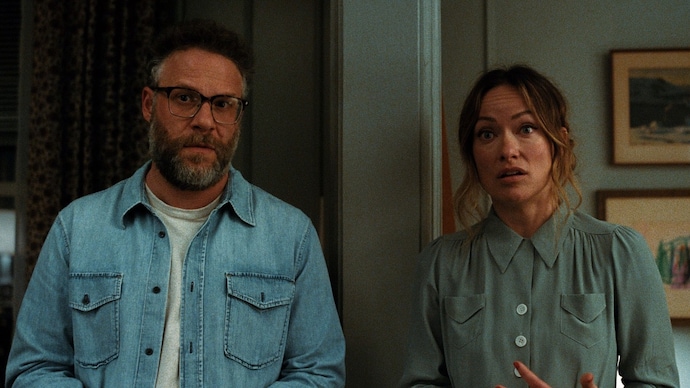
Joe (Seth Rogen) and Angela (Olivia Wilde) seem like any other couple trying to survive married life. She’s preparing an elaborate dinner for their new neighbours, painstakingly putting together a souffle that quickly becomes symbolic of the evening itself. It burns while the couple is busy arguing in the kitchen, setting the tone for a night where nothing goes according to plan. To make matters worse, their guest Pia (Penelope Cruz) turns out to be lactose intolerant and vegan, rendering Angela’s labour of love almost pointless. It’s one of many moments where the film finds humour in everyday disappointments.
The dinner appears spontaneous on the surface, but as the evening unfolds, you can’t help but wonder whether Angela subconsciously knew what her guests were bringing to the table. Their unconventional relationship becomes the catalyst for conversations that perhaps needed to happen long before dessert was served.
What makes The Invite work is that it isn’t obsessed with shocking its audience. Yes, sex, fantasies, attraction and unconventional relationships are discussed openly, but never in a way that feels voyeuristic or sensational. Instead, the conversations become windows into the characters’ insecurities, desires and emotional baggage. The film refuses to pass judgement on anyone, allowing viewers to make up their own minds.
One of its biggest strengths is how naturally it slips into conversations rarely seen in mainstream films. There’s a refreshingly honest discussion about perimenopause and everything women silently endure, from changing bodies to shifting desires. In another instance, the screenplay touches upon inheritance, financial privilege and how receiving assets from parents can sometimes quietly chip away one’s ego and sense of self. These aren’t topics that dominate the narrative, but they enrich it, making the characters feel lived-in rather than written.
Seth Rogen delivers one of his most restrained performances in years. Gone is the loud, goofy comic persona audiences have come to associate with him. Instead, Joe is vulnerable, insecure and often unintentionally funny. One of the film’s biggest laugh-out-loud moments arrives when the possibility of another partner choosing him for an intimate encounter is brought up. Joe’s sheer disbelief that he could be someone’s choice is priceless, and Rogen plays the moment with perfect comic timing.
Edward Norton and Penelope Cruz bring effortless charm to the film. Norton exudes confidence without trying too hard, while Cruz lights up every frame she’s in. Together, they become the spark that forces Joe and Angela to confront the cracks they’ve spent years ignoring.
Olivia Wilde also deserves credit behind the camera. Considering most of the film unfolds inside a single apartment, the visual storytelling never feels repetitive. The camera glides through the living room with ease, making the confined setting feel intimate rather than claustrophobic. One particularly striking visual has a character standing beside a floor lamp while delivering a deeply personal monologue. The framing makes it appear as though they’re standing under a spotlight, quietly performing the truths they’ve kept hidden for years. It’s simple, effective and one of several moments where Wilde’s direction subtly elevates the material.
The film is also consistently funny. Much of its humour stems from sarcasm, awkward pauses, uncomfortable honesty and the absurdity of watching adults navigate emotions they’ve never quite learnt to articulate. There are plenty of moments that will genuinely make you laugh, even as the conversations become increasingly uncomfortable.
Where The Invite loses some of its momentum is in its final act. After spending nearly two hours peeling back the layers of these relationships, the ending feels surprisingly undercooked. Joe and Angela finally confront how far they’ve drifted apart, a reality that many married couples today may find painfully relatable. But given the delicious tension the film builds throughout the evening, you expect a more explosive emotional pay-off. Instead, it settles for a rather lukewarm and expected climax when it could have embraced the drama just a little more.
That doesn’t take away from what The Invite does well. It’s witty, mature and refreshingly honest about love, marriage and the messy reality of long-term relationships. It understands that life after the butterflies is often less about grand gestures and more about difficult conversations that couples keep postponing.
While The Invite doesn’t quite serve the unforgettable finale it promises, it still dishes out enough humour, heart and uncomfortable honesty to make accepting the invitation worthwhile.
“One should always be in love. That is the reason one should never marry” - The Invite opens with Oscar Wilde’s famously cheeky observation. It’s a fitting note to begin with because what follows is less a story about modern marriages and more an exploration of what happens after the honeymoon phase has long disappeared. When routine replaces romance, companionship starts feeling more like coexistence.
Joe (Seth Rogen) and Angela (Olivia Wilde) seem like any other couple trying to survive married life. She’s preparing an elaborate dinner for their new neighbours, painstakingly putting together a souffle that quickly becomes symbolic of the evening itself. It burns while the couple is busy arguing in the kitchen, setting the tone for a night where nothing goes according to plan. To make matters worse, their guest Pia (Penelope Cruz) turns out to be lactose intolerant and vegan, rendering Angela’s labour of love almost pointless. It’s one of many moments where the film finds humour in everyday disappointments.
The dinner appears spontaneous on the surface, but as the evening unfolds, you can’t help but wonder whether Angela subconsciously knew what her guests were bringing to the table. Their unconventional relationship becomes the catalyst for conversations that perhaps needed to happen long before dessert was served.
What makes The Invite work is that it isn’t obsessed with shocking its audience. Yes, sex, fantasies, attraction and unconventional relationships are discussed openly, but never in a way that feels voyeuristic or sensational. Instead, the conversations become windows into the characters’ insecurities, desires and emotional baggage. The film refuses to pass judgement on anyone, allowing viewers to make up their own minds.
One of its biggest strengths is how naturally it slips into conversations rarely seen in mainstream films. There’s a refreshingly honest discussion about perimenopause and everything women silently endure, from changing bodies to shifting desires. In another instance, the screenplay touches upon inheritance, financial privilege and how receiving assets from parents can sometimes quietly chip away one’s ego and sense of self. These aren’t topics that dominate the narrative, but they enrich it, making the characters feel lived-in rather than written.
Seth Rogen delivers one of his most restrained performances in years. Gone is the loud, goofy comic persona audiences have come to associate with him. Instead, Joe is vulnerable, insecure and often unintentionally funny. One of the film’s biggest laugh-out-loud moments arrives when the possibility of another partner choosing him for an intimate encounter is brought up. Joe’s sheer disbelief that he could be someone’s choice is priceless, and Rogen plays the moment with perfect comic timing.
Edward Norton and Penelope Cruz bring effortless charm to the film. Norton exudes confidence without trying too hard, while Cruz lights up every frame she’s in. Together, they become the spark that forces Joe and Angela to confront the cracks they’ve spent years ignoring.
Olivia Wilde also deserves credit behind the camera. Considering most of the film unfolds inside a single apartment, the visual storytelling never feels repetitive. The camera glides through the living room with ease, making the confined setting feel intimate rather than claustrophobic. One particularly striking visual has a character standing beside a floor lamp while delivering a deeply personal monologue. The framing makes it appear as though they’re standing under a spotlight, quietly performing the truths they’ve kept hidden for years. It’s simple, effective and one of several moments where Wilde’s direction subtly elevates the material.
The film is also consistently funny. Much of its humour stems from sarcasm, awkward pauses, uncomfortable honesty and the absurdity of watching adults navigate emotions they’ve never quite learnt to articulate. There are plenty of moments that will genuinely make you laugh, even as the conversations become increasingly uncomfortable.
Where The Invite loses some of its momentum is in its final act. After spending nearly two hours peeling back the layers of these relationships, the ending feels surprisingly undercooked. Joe and Angela finally confront how far they’ve drifted apart, a reality that many married couples today may find painfully relatable. But given the delicious tension the film builds throughout the evening, you expect a more explosive emotional pay-off. Instead, it settles for a rather lukewarm and expected climax when it could have embraced the drama just a little more.
That doesn’t take away from what The Invite does well. It’s witty, mature and refreshingly honest about love, marriage and the messy reality of long-term relationships. It understands that life after the butterflies is often less about grand gestures and more about difficult conversations that couples keep postponing.
While The Invite doesn’t quite serve the unforgettable finale it promises, it still dishes out enough humour, heart and uncomfortable honesty to make accepting the invitation worthwhile.

