The Samarkand Syndrome: Why Babur and family never became 'us'
For the Timurids, or the Mughals of Hindustan, Samarkand remained their home, which they lost and could never get back. Bharat became the stage upon which their grandeur unfolded, while their imagination repeatedly drifted beyond the Hindu Kush toward the orchards, graves and memories of their homeland in Central Asia.
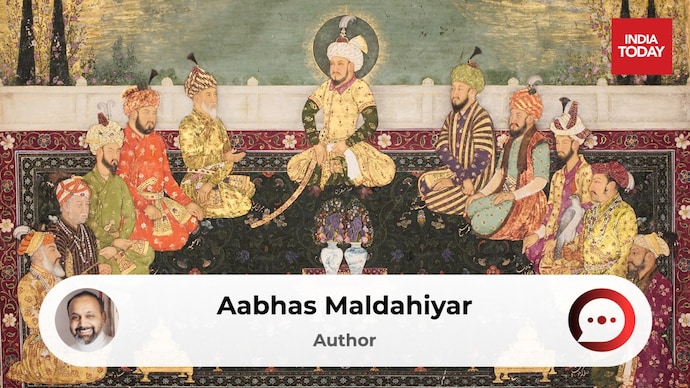
Five centuries after the First Battle of Panipat (1526), Bharat finds itself revisiting the establishment of the Timurid Gurkhaniya Empire, though often under the historically imprecise label of "Mughal". The battle itself has left behind celebrated images of gunpowder, cannons, and a transformed military landscape. Yet some legacies remain less discussed. Among them was Babur's use of villages around Panipat as protective buffers (human shields) during his campaign, an aspect that rarely enters popular memory. But this is not the subject I intend to pursue here.
What concerns me instead is a larger historical assumption that has gradually hardened into conventional wisdom: that the Timurids eventually became Indians, that the dynasty which arrived from Central Asia dissolved itself completely into the soil of Hindustan and came to see India as its unquestioned homeland. The passage of time has made this notion appear almost self-evident.
This essay seeks to question that narrative. For beneath the marble splendour of Agra and the imperial grandeur of Delhi lay another inheritance, one that continued to look northward beyond the Hindu Kush, toward Samarkand, Balkh, and the ancestral landscapes of Timurid memory. To understand whether the Timurids truly became "us", it is perhaps best to begin with the words of the dynasty's founder himself.
So, I begin with Babur's initial reflection on Hindustan:
Hindustan is a country of few charms. Its people have no good looks; of social intercourse, paying and receiving visits; there is none; none of genius and capacity; none of manners; in handicraft and work, there is no form or symmetry, method or quality; there are no good horses, no good dogs, no grapes, musk-melons or first-rate fruits, no ice or cold water, no good bread or cooked food in the bzrs, no hot-baths, no colleges, no candles, torches or candlesticks.
While he cries folly for India, he goes on to say this for Samarkand:
Samarkand, for nearly 140 years, had been the capital of our dynasty. An alien and of what stamp! An Azbeg foe, had taken possession of it! It had slipped from our hands; God gave it again! Plundered and ravaged, our own returned to us.
Indeed, Hindustan did not appear even as a consolation prize for Samarkand—the land Babur regarded as home. Babur himself lays out the reasons with striking clarity in the Baburnama for why he turned toward Hindustan:
1. To fulfil the ambition associated with his forefather Timur and establish Timurid authority in Hindustan under an Islamic political order.
2. Although Kabul was the first place where he assumed the title of Padshah, it generated limited revenue; Hindustan, in his own description, promised abundant wealth, plentiful labour, and a land rich in gold and silver.
3. He had effectively been pushed out of his Central Asian homeland, with his arch-rival Shaibani Khan steadily closing every path back. Thus, despite his enduring longing for Samarkand, the road home had gradually ceased to exist.
For Babur, Hindustan was not the destination of nostalgia; it was the destination of necessity, ambition, and opportunity. Samarkand remained the horizon of memory, while Hindustan became the terrain of survival and empire.
Carrying the old thread of longing across generations, Akbar's chronicler Abu'l Fazl hints that a powerful attachment to Central Asia flowed through Timurid veins. In his words, even Timur, after devastating India, is described as having been "impelled by the love of his native land". This was not merely an emotion confined to one ruler. It became an inherited memory, an ancestral pull that echoed through successive Timurid emperors.
As the dream of Central Asia often appeared brighter than its practical rewards, the corridor between Hindustan and the northwest remained a living artery, a strategic passage that the Timurids sought to preserve under their influence and control. Both Babur and Abu'l Fazl emphasise this reality in their respective writings by representing it as a pathway leading toward memory, legitimacy, and the geography of origin itself.
The argument becomes even more visible when one turns to Timurid writings produced after Babur. Their own words frequently reveal that Central Asia continued to occupy the position of "home" in the Timurid imagination. They use the term wilayat (one's own province or homeland) repeatedly, tying Balkh and Transoxiana into an enduring sense of belonging. This language creates the impression that Hindustan, despite becoming the seat of imperial power, was often seen as an extension of an older world rather than its replacement.
The Maasir al-Umara by Samsam ud Daula Shah Nawaz Khan, a biographical work on Muslim and Hindu officers serving Timurid rulers in India from 1500 to around 1780, refers to Khwaja Abdullah Ahrari of Samarkand as belonging to the wilayat. This detail deserves attention. Shah Nawaz Khan was a courtier of Qamar ud Din Khan, Asif Jah I, the first Nizam of Hyderabad. Had Hindustan been fully internalised as the unquestioned homeland by the eighteenth century, it is difficult to explain why a courtier writing in the Deccan would continue to describe Samarkand as wilayat. The persistence of such terminology suggests that the older geography of belonging had not entirely faded.
The Maasir-i-Alamgiri provides many more such records. Mir Shihab ud Din Siddiqi, a courtier of Aurangzeb born in Bukhara, is described as someone who came from wilayat. The same text states that Khwaja Baha al-Din, the great-grandson of Subhan Quli of Balkh, had arrived from his homeland (az wilayat rasida). Equally, revealing is the manner in which Subhan Quli himself is described as wali (Governor) of Balkh in this text. The importance lies in what such language reveals about political imagination. Even though Subhan Quli functioned in practical terms as ruler of Balkh, the vocabulary employed in Aurangzeb's court framed him as a governor rather than an independent sovereign. Such terminology appears to preserve an older Timurid conception in which regions like Balkh and Transoxiana remained part of an inherited political and emotional universe.
The sword had lost its reach, but memory had not surrendered its territory.
Jahangir's Tuzuk refers to Wali Muhammad as wali-yi-Turan, while the Padshah-nama similarly describes the Uzbek ruler Imam Quli as wali-yi-Turan or "Governor of Turan". Such language reflects a deeper political imagination and a carefully preserved imperial myth that Uzbek-held lands still existed, at least symbolically, within the orbit of Timurid grandeur and inherited claims.
When the dust of Panipat had barely settled in 1526, Babur distributed the fruits of his victory not merely within India but across the lands of memory. Gifts travelled northward to relatives in Central Asia, to Iran, and to holy men in Samarkand, Khurasan, and the Hejaz. Russian scholar AA Semenov sees in these gestures a heart still tied to its homeland, a ruler reluctant to call India home before reclaiming the lands of his ancestors. In a later letter, Babur instructed Humayun that all his subjects in India should aid the effort of reconquest of Homeland.
Seeing an opportunity in the Safavid seizure of Khurasan from the Uzbeks, Babur directed Humayun toward Balkh, Hisar, Samarkand, or Herat, "whichever side favours fortune". Hisar was intended as Humayun's province, Balkh for Kamran, and Samarkand as the restored Timurid capital. In 1528, as Humayun marched with forty thousand men toward Samarkand, Babur asked him to wait, assuring him that they would return to their "hereditary kingdoms" (wilayat-i-mawruthi) once Hindustan had been firmly secured.
Humayun failed to recover Central Asia, and soon lost India itself. One cannot help but wonder whether, had fortune favoured him, his gaze would have turned eastward toward India or northward toward his ancestral lands. Even during exile in Iran, his thoughts repeatedly returned to conquest and restoration. To secure Shah Tahmasp's support, the Timurids surrendered Qandahar to the Safavids. Yet after reaching Kabul in 1549 with Safavid assistance, Humayun unexpectedly turned toward Balkh rather than India. Perhaps the pull of Central Asia still tugged harder than the possession of Hindustan, though Kamran's betrayal ended that dream before it could take shape.
When Akbar ascended the throne in 1556, his early years were consumed by the struggle to secure his hold over India. Surrounded by rebellions and instability, he had little space to openly pursue his dreams of Turan. In time, the possibility narrowed further as the powerful Uzbek ruler Abdullah Khan consolidated Central Asia and placed the ancestral lands of the Timurids beyond easy reach. Yet Abu'l Fazl suggests that Akbar's ambitions had not disappeared, only fallen into dormancy, remarking that "the time of the appearance of designs was in the future".
When the Badakhshani Timurids, Sulayman and Ibrahim, ventured toward Balkh, Abu'l Fazl dismissed their efforts as premature, implying that such a harvest belonged to Akbar alone. On another occasion, Akbar even turned away the envoys of Abdullah Khan because he still entertained thoughts of recovering his ancestral territories. Abu'l Fazl portrays this vision as an echo of Babur's strategy: India was first to be firmly secured, and only then would the Timurid banner advance toward Turan. As he writes, "Should the wide country of India be civilised by means of obedient vassals, (Akbar) would proceed to Turan..."
A point worth noting here, though beyond the immediate scope of this essay, is that Akbar too appears to have framed his role in terms of a civilising mission, much like later European imperial thought. Abu'l Fazl’s language suggests that Hindustan was never a homeland, but rather as a vast realm to be disciplined, ordered, and brought under the mould of Timurid statecraft with headquarters seated somewhere else (Samarkand).
Akbar's own words also reveal that these ideas had not vanished. In 1577, responding to Uzbek mockery regarding Qandahar's loss to the Safavid "outsiders" (biganaha), he replied that Timurid lands had hardly fared better under Uzbek control. A decade later, in 1587, Abu'l Fazl wrote to the Timurid ambassador in Bukhara that "His Majesty has turned his attention to the conquest of Turan", though Akbar remained willing to set aside even broader ambitions if peace with Abdullah Khan could be secured.
Jahangir, too, bequeaths a testament to this ancestral pull. In his memoirs, he confesses that his father Akbar never let slip the dream of Transoxiana, and that he, Jahangir, nursed two intentions:
One, that inasmuch as the conquest of Transoxiana was always in the pure mind of my revered father, though every time he determined on it, things occurred to prevent it. If this business (of getting Kafir rulers to submit) could be settled, and this danger dismissed from my mind, I would leave Parviz in Hindustan, and in reliance on Allah, myself start for my hereditary territories.
In the lofty cadence of his memoirs, he proclaims with customary grandeur:
As I had made up my exalted mind to the conquest of Transoxiana, which was the hereditary kingdom of my ancestors, I desired to free the face of Hindustan from the rubbish of the factious and rebellious, and leaving one of my sons in that country, to go myself with a valiant army in due array, with elephants of mountainous dignity and of lightning speed, and taking ample treasure with me, to undertake the conquest of my ancestral dominions
After this brief expression of imperial ambition, Jahangir's Tuzuk falls strangely silent. The subject of Central Asia scarcely returns. Historian RC Verma argues that this diplomatic lull until 1621 reflected Jahangir's continued desire to reclaim his ancestral lands. His gaze remained fixed on Samarkand even if his throne stood in Lahore. Yet the silence may not have been one-sided, for Imam Quli Khan of Bukhara had earlier suspended relations after a perceived slight.
The estrangement was eventually softened, perhaps through the influence of Nur Jahan. M Athar Ali suggests that in 1621, Imam Quli's mother initiated reconciliation with the Timurid court. The growing Safavid threat likely compelled both Bukhara and Hindustan toward cooperation, allowing political necessity to outweigh wounded pride.
Even in the later years of his reign, Jahangir's interest in Central Asia remained alive. In conversations with Mutribi Samarqandi, he displayed a persistent curiosity about the affairs of the region. This interest was not merely sentimental. At Nur Jahan's urging, Mir Baraka, a Bukharan in Timurid service, was sent to restore ties with Imam Quli and carry imperial respects to the Juybari shaykhs. Baraka remained in Central Asia until 1627 and returned with Abd al-Rahim Khwaja, whose arrival Jahangir valued enough to delay his journey to Kashmir.
Jahangir died soon afterward, but the thread remained unbroken. Shah Jahan ensured continuity by dispatching Hakim Haziq to Bukhara with gifts for the shaykhs, preserving a connection that was political on the surface but still carried the echoes of an older Timurid attachment to their ancestral world.
Shah Jahan's longing too for the ancestral world of Turan was a deeply rooted aspiration. The imperial chronicles, clothed in the language of diplomacy, describe cordial relations with the Uzbeks during the first decade of his reign. Beneath this calm surface, however, lingered unresolved resentment. Nazr Muhammad's (ruler of Balkh and Badhakshan) attempted siege of Kabul during the succession disturbances of 1629 had not been forgotten. Shah Jahan waited patiently for circumstances to shift, while continuing to send generous sums and support to allies in Mawarannahr, quietly nurturing influence beyond the Hindu Kush.
The first clear indication of his intentions appears in a letter written in 1640 by Hasan Khan Shamlu, the Safavid governor of Herat. Responding to a communication from the Timurid court, he referred to subtle hints about recovering the mulk-i-mawruthi, the "hereditary dominions", and the gurkhana-yi-ajdad-i-izam, the resting place of imperial ancestors. Hasan records that Shah Jahan intended to return that very year to Kabul and would send one of his sons ahead to secure Balkh and Badakhshan.
Hasan sought reassurance that the campaign was directed toward Turan and not Khurasan. For the Safavids, the Uzbeks represented a constant strategic threat, and the possibility of Timurid intervention carried significance beyond diplomacy. In another letter, Hasan urged Asaf Khan to specify the date of the proposed march toward Turkistan so that Safavid and Timurid forces might move together and strike at Uzbek power.
Events, however, unfolded differently. The campaign materialised only five years later, and without Safavid participation.
The imperial records of Shah Jahan's Balkh campaign leave little ambiguity regarding its purpose. They do not portray it as an ordinary military expedition or a search for territorial gain. Instead, they connect it directly to Shah Jahan's desire to recover what were repeatedly described as his inherited lands. The roots of this ambition are traced back to the period following Jahangir's death, when Nazr Muhammad's actions at Kabul first revived in him a desire for Balkh and Badakhshan, not merely as strategic territories, but as lands bound to memory, ancestry, and dynastic inheritance.
The Timurid chronicle (Shah Jahan-nama) states:
From the time of the last Emperor Jahangir's death, when Nazr Muhammad Khan had vainly attempted to seize Kabul, the mighty soul of the world-subduing monarch had been bent upon the countries of Balkh and Badakhshan, which were properly his hereditary dominions.
The chronicles attribute this 15-year delay to "impediments of state", a phrase that conceals the relentless burdens of empire. Foremost among these was the grinding struggle in the Deccan, where the Shia Sultanates and rising Maratha power steadily consumed imperial resources. What began as a challenge would eventually tighten around the Timurid state and dominate the closing years of Aurangzeb's reign.
According to A Ansari, Shah Jahan viewed Qandahar as a political keystone. Recovering it from the Safavids would signal to both the Ottomans and the Uzbeks that Timurid ambitions looked beyond Persia and toward the ancestral lands across the Hindu Kush. Only then could a march toward Balkh acquire strategic credibility. RC Verma argues that although internal tensions between Nazr Muhammad and Imam Quli may have tempted Timurid intervention, the larger geopolitical situation, particularly tensions with the Safavids after the struggle over Qandahar, made a major invasion difficult.
Yet Hasan Khan's correspondence suggests that in 1640 Safavid cooperation was actively offered, which disappeared with his death and Shah Safi's renewed focus on Qandahar.
What is most striking is that even the humiliation of abandoning Balkh after scarcely two years did not extinguish Timurid aspirations. Aurangzeb himself had commanded imperial forces there and had witnessed the limits of such dreams more clearly than most. Yet even he, austere in temperament and hardened by campaigns, never entirely abandoned the pull of the ancestral horizon. In a letter to his son, the Crown Prince Muazzam, he entrusted that flame to another bearer:
If a father is unable to finish a work, the son must carry it to completion... This mortal creature harbours a wish unfulfilled. It was the desire of Shah Jahan that I should dispatch one of his grandsons to those lands — with a grand army and the instruments of war.
Even as Aurangzeb's attention increasingly turned toward the Marathas and the Deccan Sultanates, traces in his words and actions suggest that Turan never entirely faded from the Timurid imagination. The ancestral lands remained a distant echo at the edge of the empire, a memory not fully surrendered. The continuing references to mulk-i-mawruthi (hereditary dominions) and gurkhana-yi-ajdad-i-izam (the resting place of great ancestors) indicate that the symbolic and dynastic pull of Central Asia endured, even when military realities made reconquest increasingly impractical.
Italian traveller and scholar, Manucci observed that Aurangzeb still cherished thoughts of conquest of ancestral lands, and this sentiment appears to find support in subtle diplomatic gestures. One such example was the conferring of sarapa or robes of honour upon the ambassadors of Subhan Quli. Such honours were generally reserved for dependents and subordinate rulers. Though wrapped in the language of courtly etiquette, the act carried an imperial undertone, suggesting a symbolic assertion of superiority and perhaps reflecting an older Timurid conception of authority over the Uzbek world.
Aurangzeb also maintained links with the religious and intellectual networks of Central Asia. He preserved ties with scholars and Sufi figures from Balkh, including Abd al Ghaffar Dihbidi, and displayed interest in the educational institutions of Samarkand. French physician and traveller Bernier's observations indicate that Central Asia occupied a place in the Timurid imagination beyond simple territorial ambition. It functioned as a source of legitimacy, memory, lineage, and continuity.
Even if the Timurids of Hindustan never regained the lands of their forefathers, their language and actions reveal a recurring nostalgia. Babur's inheritance was not merely territorial. It was also emotional and ideological. For rulers like Shah Jahan and Aurangzeb, the story of Central Asia remained unfinished. This attachment also found expression in their concern for ancestral memory itself. As descendants of Timur, the emperors of Hindustan assumed responsibility, whether from genuine sentiment or dynastic obligation, for preserving the monuments of their lineage. Foremost among these stood the Gur-i-Amir in Samarkand, Timur's mausoleum. More than a structure of stone, it was a monument of dynastic memory and a surviving fragment of a world they regarded as ancestral.
One revealing instance appears in the Tuzuk-i-Jahangiri. During the embassy of Mir Baraka to Bukhara in 1621, the mission extended beyond diplomacy with Imam Quli Khan. Jahangir instructed that gold be delivered for the maintenance of the mausoleum. The act carried significance beyond charity. It represented a conscious reaffirmation of lineage and ancestral connection.
Decades later, Aurangzeb continued the same tradition. Though his Balkh campaign had failed, and his focus had shifted to the Deccan, reports from Sayyid Oghlan of Central Asia moved him deeply. Learning that the Gur-i-Amir, Timur's mausoleum in Samarkand, had fallen into neglect, he ordered a daily grant of twelve rupees for its restoration, declaring it to be made "on behalf of the souls of our ancestors". The gesture is striking. From a ruler who pursued vigorous campaigns against temples in Hindustan, his concern for preserving the shrine of his ancestral lineage reveals much about the hierarchy of memory and attachment that still shaped Timurid consciousness.
Aurangzeb's connection with Central Asia also extended into the intellectual sphere. His court remained deeply influenced by the traditions of Bukhara and Samarkand. He elevated Mulla Auz to the office of imperial censor, while the Fatawa-i-Alamgiri drew heavily upon Hanafi scholarship from Transoxiana. In 1675, he even commissioned a copy of Bahr al-Asrar, seeking not merely a chronicle of rulers but another glimpse into the world of his ancestors.
The empire had shifted southward, but memory had not entirely followed. Through stone, scholarship, diplomacy, and remembrance, the Timurids of Hindustan remained tethered to their ancestral winds. However, their vast dominion across India, their imagination continued to drift beyond the Hindu Kush, toward the orchards of Transoxiana and the blue domes of Samarkand.
Hindustan gave the Timurids empire, wealth, and power, but Samarkand remained home, lost which they could never get back. India became the stage upon which their grandeur unfolded, while their emotional compass repeatedly pointed beyond the Hindu Kush toward the orchards, graves, and memories of Central Asia. They extracted wealth from Hindustan, destroyed temples, imposed impossible taxes upon Indians, but their imagination never ceased searching for a road back to their ancestral world. This was not passing nostalgia. It was the Timurid condition itself: Indian crowns upon their heads, Samarkand in their hearts.
In the next essay of this series, I will turn to another narrative often accepted without scrutiny: Ganga Jamuni Tehzeeb and the realities that lie beneath its popular telling.
(Aabhas Maldahiyar is the author of Babur: The Quest for Hindustan.)
Five centuries after the First Battle of Panipat (1526), Bharat finds itself revisiting the establishment of the Timurid Gurkhaniya Empire, though often under the historically imprecise label of "Mughal". The battle itself has left behind celebrated images of gunpowder, cannons, and a transformed military landscape. Yet some legacies remain less discussed. Among them was Babur's use of villages around Panipat as protective buffers (human shields) during his campaign, an aspect that rarely enters popular memory. But this is not the subject I intend to pursue here.
What concerns me instead is a larger historical assumption that has gradually hardened into conventional wisdom: that the Timurids eventually became Indians, that the dynasty which arrived from Central Asia dissolved itself completely into the soil of Hindustan and came to see India as its unquestioned homeland. The passage of time has made this notion appear almost self-evident.
This essay seeks to question that narrative. For beneath the marble splendour of Agra and the imperial grandeur of Delhi lay another inheritance, one that continued to look northward beyond the Hindu Kush, toward Samarkand, Balkh, and the ancestral landscapes of Timurid memory. To understand whether the Timurids truly became "us", it is perhaps best to begin with the words of the dynasty's founder himself.
So, I begin with Babur's initial reflection on Hindustan:
Hindustan is a country of few charms. Its people have no good looks; of social intercourse, paying and receiving visits; there is none; none of genius and capacity; none of manners; in handicraft and work, there is no form or symmetry, method or quality; there are no good horses, no good dogs, no grapes, musk-melons or first-rate fruits, no ice or cold water, no good bread or cooked food in the bzrs, no hot-baths, no colleges, no candles, torches or candlesticks.
While he cries folly for India, he goes on to say this for Samarkand:
Samarkand, for nearly 140 years, had been the capital of our dynasty. An alien and of what stamp! An Azbeg foe, had taken possession of it! It had slipped from our hands; God gave it again! Plundered and ravaged, our own returned to us.
Indeed, Hindustan did not appear even as a consolation prize for Samarkand—the land Babur regarded as home. Babur himself lays out the reasons with striking clarity in the Baburnama for why he turned toward Hindustan:
1. To fulfil the ambition associated with his forefather Timur and establish Timurid authority in Hindustan under an Islamic political order.
2. Although Kabul was the first place where he assumed the title of Padshah, it generated limited revenue; Hindustan, in his own description, promised abundant wealth, plentiful labour, and a land rich in gold and silver.
3. He had effectively been pushed out of his Central Asian homeland, with his arch-rival Shaibani Khan steadily closing every path back. Thus, despite his enduring longing for Samarkand, the road home had gradually ceased to exist.
For Babur, Hindustan was not the destination of nostalgia; it was the destination of necessity, ambition, and opportunity. Samarkand remained the horizon of memory, while Hindustan became the terrain of survival and empire.
Carrying the old thread of longing across generations, Akbar's chronicler Abu'l Fazl hints that a powerful attachment to Central Asia flowed through Timurid veins. In his words, even Timur, after devastating India, is described as having been "impelled by the love of his native land". This was not merely an emotion confined to one ruler. It became an inherited memory, an ancestral pull that echoed through successive Timurid emperors.
As the dream of Central Asia often appeared brighter than its practical rewards, the corridor between Hindustan and the northwest remained a living artery, a strategic passage that the Timurids sought to preserve under their influence and control. Both Babur and Abu'l Fazl emphasise this reality in their respective writings by representing it as a pathway leading toward memory, legitimacy, and the geography of origin itself.
The argument becomes even more visible when one turns to Timurid writings produced after Babur. Their own words frequently reveal that Central Asia continued to occupy the position of "home" in the Timurid imagination. They use the term wilayat (one's own province or homeland) repeatedly, tying Balkh and Transoxiana into an enduring sense of belonging. This language creates the impression that Hindustan, despite becoming the seat of imperial power, was often seen as an extension of an older world rather than its replacement.
The Maasir al-Umara by Samsam ud Daula Shah Nawaz Khan, a biographical work on Muslim and Hindu officers serving Timurid rulers in India from 1500 to around 1780, refers to Khwaja Abdullah Ahrari of Samarkand as belonging to the wilayat. This detail deserves attention. Shah Nawaz Khan was a courtier of Qamar ud Din Khan, Asif Jah I, the first Nizam of Hyderabad. Had Hindustan been fully internalised as the unquestioned homeland by the eighteenth century, it is difficult to explain why a courtier writing in the Deccan would continue to describe Samarkand as wilayat. The persistence of such terminology suggests that the older geography of belonging had not entirely faded.
The Maasir-i-Alamgiri provides many more such records. Mir Shihab ud Din Siddiqi, a courtier of Aurangzeb born in Bukhara, is described as someone who came from wilayat. The same text states that Khwaja Baha al-Din, the great-grandson of Subhan Quli of Balkh, had arrived from his homeland (az wilayat rasida). Equally, revealing is the manner in which Subhan Quli himself is described as wali (Governor) of Balkh in this text. The importance lies in what such language reveals about political imagination. Even though Subhan Quli functioned in practical terms as ruler of Balkh, the vocabulary employed in Aurangzeb's court framed him as a governor rather than an independent sovereign. Such terminology appears to preserve an older Timurid conception in which regions like Balkh and Transoxiana remained part of an inherited political and emotional universe.
The sword had lost its reach, but memory had not surrendered its territory.
Jahangir's Tuzuk refers to Wali Muhammad as wali-yi-Turan, while the Padshah-nama similarly describes the Uzbek ruler Imam Quli as wali-yi-Turan or "Governor of Turan". Such language reflects a deeper political imagination and a carefully preserved imperial myth that Uzbek-held lands still existed, at least symbolically, within the orbit of Timurid grandeur and inherited claims.
When the dust of Panipat had barely settled in 1526, Babur distributed the fruits of his victory not merely within India but across the lands of memory. Gifts travelled northward to relatives in Central Asia, to Iran, and to holy men in Samarkand, Khurasan, and the Hejaz. Russian scholar AA Semenov sees in these gestures a heart still tied to its homeland, a ruler reluctant to call India home before reclaiming the lands of his ancestors. In a later letter, Babur instructed Humayun that all his subjects in India should aid the effort of reconquest of Homeland.
Seeing an opportunity in the Safavid seizure of Khurasan from the Uzbeks, Babur directed Humayun toward Balkh, Hisar, Samarkand, or Herat, "whichever side favours fortune". Hisar was intended as Humayun's province, Balkh for Kamran, and Samarkand as the restored Timurid capital. In 1528, as Humayun marched with forty thousand men toward Samarkand, Babur asked him to wait, assuring him that they would return to their "hereditary kingdoms" (wilayat-i-mawruthi) once Hindustan had been firmly secured.
Humayun failed to recover Central Asia, and soon lost India itself. One cannot help but wonder whether, had fortune favoured him, his gaze would have turned eastward toward India or northward toward his ancestral lands. Even during exile in Iran, his thoughts repeatedly returned to conquest and restoration. To secure Shah Tahmasp's support, the Timurids surrendered Qandahar to the Safavids. Yet after reaching Kabul in 1549 with Safavid assistance, Humayun unexpectedly turned toward Balkh rather than India. Perhaps the pull of Central Asia still tugged harder than the possession of Hindustan, though Kamran's betrayal ended that dream before it could take shape.
When Akbar ascended the throne in 1556, his early years were consumed by the struggle to secure his hold over India. Surrounded by rebellions and instability, he had little space to openly pursue his dreams of Turan. In time, the possibility narrowed further as the powerful Uzbek ruler Abdullah Khan consolidated Central Asia and placed the ancestral lands of the Timurids beyond easy reach. Yet Abu'l Fazl suggests that Akbar's ambitions had not disappeared, only fallen into dormancy, remarking that "the time of the appearance of designs was in the future".
When the Badakhshani Timurids, Sulayman and Ibrahim, ventured toward Balkh, Abu'l Fazl dismissed their efforts as premature, implying that such a harvest belonged to Akbar alone. On another occasion, Akbar even turned away the envoys of Abdullah Khan because he still entertained thoughts of recovering his ancestral territories. Abu'l Fazl portrays this vision as an echo of Babur's strategy: India was first to be firmly secured, and only then would the Timurid banner advance toward Turan. As he writes, "Should the wide country of India be civilised by means of obedient vassals, (Akbar) would proceed to Turan..."
A point worth noting here, though beyond the immediate scope of this essay, is that Akbar too appears to have framed his role in terms of a civilising mission, much like later European imperial thought. Abu'l Fazl’s language suggests that Hindustan was never a homeland, but rather as a vast realm to be disciplined, ordered, and brought under the mould of Timurid statecraft with headquarters seated somewhere else (Samarkand).
Akbar's own words also reveal that these ideas had not vanished. In 1577, responding to Uzbek mockery regarding Qandahar's loss to the Safavid "outsiders" (biganaha), he replied that Timurid lands had hardly fared better under Uzbek control. A decade later, in 1587, Abu'l Fazl wrote to the Timurid ambassador in Bukhara that "His Majesty has turned his attention to the conquest of Turan", though Akbar remained willing to set aside even broader ambitions if peace with Abdullah Khan could be secured.
Jahangir, too, bequeaths a testament to this ancestral pull. In his memoirs, he confesses that his father Akbar never let slip the dream of Transoxiana, and that he, Jahangir, nursed two intentions:
One, that inasmuch as the conquest of Transoxiana was always in the pure mind of my revered father, though every time he determined on it, things occurred to prevent it. If this business (of getting Kafir rulers to submit) could be settled, and this danger dismissed from my mind, I would leave Parviz in Hindustan, and in reliance on Allah, myself start for my hereditary territories.
In the lofty cadence of his memoirs, he proclaims with customary grandeur:
As I had made up my exalted mind to the conquest of Transoxiana, which was the hereditary kingdom of my ancestors, I desired to free the face of Hindustan from the rubbish of the factious and rebellious, and leaving one of my sons in that country, to go myself with a valiant army in due array, with elephants of mountainous dignity and of lightning speed, and taking ample treasure with me, to undertake the conquest of my ancestral dominions
After this brief expression of imperial ambition, Jahangir's Tuzuk falls strangely silent. The subject of Central Asia scarcely returns. Historian RC Verma argues that this diplomatic lull until 1621 reflected Jahangir's continued desire to reclaim his ancestral lands. His gaze remained fixed on Samarkand even if his throne stood in Lahore. Yet the silence may not have been one-sided, for Imam Quli Khan of Bukhara had earlier suspended relations after a perceived slight.
The estrangement was eventually softened, perhaps through the influence of Nur Jahan. M Athar Ali suggests that in 1621, Imam Quli's mother initiated reconciliation with the Timurid court. The growing Safavid threat likely compelled both Bukhara and Hindustan toward cooperation, allowing political necessity to outweigh wounded pride.
Even in the later years of his reign, Jahangir's interest in Central Asia remained alive. In conversations with Mutribi Samarqandi, he displayed a persistent curiosity about the affairs of the region. This interest was not merely sentimental. At Nur Jahan's urging, Mir Baraka, a Bukharan in Timurid service, was sent to restore ties with Imam Quli and carry imperial respects to the Juybari shaykhs. Baraka remained in Central Asia until 1627 and returned with Abd al-Rahim Khwaja, whose arrival Jahangir valued enough to delay his journey to Kashmir.
Jahangir died soon afterward, but the thread remained unbroken. Shah Jahan ensured continuity by dispatching Hakim Haziq to Bukhara with gifts for the shaykhs, preserving a connection that was political on the surface but still carried the echoes of an older Timurid attachment to their ancestral world.
Shah Jahan's longing too for the ancestral world of Turan was a deeply rooted aspiration. The imperial chronicles, clothed in the language of diplomacy, describe cordial relations with the Uzbeks during the first decade of his reign. Beneath this calm surface, however, lingered unresolved resentment. Nazr Muhammad's (ruler of Balkh and Badhakshan) attempted siege of Kabul during the succession disturbances of 1629 had not been forgotten. Shah Jahan waited patiently for circumstances to shift, while continuing to send generous sums and support to allies in Mawarannahr, quietly nurturing influence beyond the Hindu Kush.
The first clear indication of his intentions appears in a letter written in 1640 by Hasan Khan Shamlu, the Safavid governor of Herat. Responding to a communication from the Timurid court, he referred to subtle hints about recovering the mulk-i-mawruthi, the "hereditary dominions", and the gurkhana-yi-ajdad-i-izam, the resting place of imperial ancestors. Hasan records that Shah Jahan intended to return that very year to Kabul and would send one of his sons ahead to secure Balkh and Badakhshan.
Hasan sought reassurance that the campaign was directed toward Turan and not Khurasan. For the Safavids, the Uzbeks represented a constant strategic threat, and the possibility of Timurid intervention carried significance beyond diplomacy. In another letter, Hasan urged Asaf Khan to specify the date of the proposed march toward Turkistan so that Safavid and Timurid forces might move together and strike at Uzbek power.
Events, however, unfolded differently. The campaign materialised only five years later, and without Safavid participation.
The imperial records of Shah Jahan's Balkh campaign leave little ambiguity regarding its purpose. They do not portray it as an ordinary military expedition or a search for territorial gain. Instead, they connect it directly to Shah Jahan's desire to recover what were repeatedly described as his inherited lands. The roots of this ambition are traced back to the period following Jahangir's death, when Nazr Muhammad's actions at Kabul first revived in him a desire for Balkh and Badakhshan, not merely as strategic territories, but as lands bound to memory, ancestry, and dynastic inheritance.
The Timurid chronicle (Shah Jahan-nama) states:
From the time of the last Emperor Jahangir's death, when Nazr Muhammad Khan had vainly attempted to seize Kabul, the mighty soul of the world-subduing monarch had been bent upon the countries of Balkh and Badakhshan, which were properly his hereditary dominions.
The chronicles attribute this 15-year delay to "impediments of state", a phrase that conceals the relentless burdens of empire. Foremost among these was the grinding struggle in the Deccan, where the Shia Sultanates and rising Maratha power steadily consumed imperial resources. What began as a challenge would eventually tighten around the Timurid state and dominate the closing years of Aurangzeb's reign.
According to A Ansari, Shah Jahan viewed Qandahar as a political keystone. Recovering it from the Safavids would signal to both the Ottomans and the Uzbeks that Timurid ambitions looked beyond Persia and toward the ancestral lands across the Hindu Kush. Only then could a march toward Balkh acquire strategic credibility. RC Verma argues that although internal tensions between Nazr Muhammad and Imam Quli may have tempted Timurid intervention, the larger geopolitical situation, particularly tensions with the Safavids after the struggle over Qandahar, made a major invasion difficult.
Yet Hasan Khan's correspondence suggests that in 1640 Safavid cooperation was actively offered, which disappeared with his death and Shah Safi's renewed focus on Qandahar.
What is most striking is that even the humiliation of abandoning Balkh after scarcely two years did not extinguish Timurid aspirations. Aurangzeb himself had commanded imperial forces there and had witnessed the limits of such dreams more clearly than most. Yet even he, austere in temperament and hardened by campaigns, never entirely abandoned the pull of the ancestral horizon. In a letter to his son, the Crown Prince Muazzam, he entrusted that flame to another bearer:
If a father is unable to finish a work, the son must carry it to completion... This mortal creature harbours a wish unfulfilled. It was the desire of Shah Jahan that I should dispatch one of his grandsons to those lands — with a grand army and the instruments of war.
Even as Aurangzeb's attention increasingly turned toward the Marathas and the Deccan Sultanates, traces in his words and actions suggest that Turan never entirely faded from the Timurid imagination. The ancestral lands remained a distant echo at the edge of the empire, a memory not fully surrendered. The continuing references to mulk-i-mawruthi (hereditary dominions) and gurkhana-yi-ajdad-i-izam (the resting place of great ancestors) indicate that the symbolic and dynastic pull of Central Asia endured, even when military realities made reconquest increasingly impractical.
Italian traveller and scholar, Manucci observed that Aurangzeb still cherished thoughts of conquest of ancestral lands, and this sentiment appears to find support in subtle diplomatic gestures. One such example was the conferring of sarapa or robes of honour upon the ambassadors of Subhan Quli. Such honours were generally reserved for dependents and subordinate rulers. Though wrapped in the language of courtly etiquette, the act carried an imperial undertone, suggesting a symbolic assertion of superiority and perhaps reflecting an older Timurid conception of authority over the Uzbek world.
Aurangzeb also maintained links with the religious and intellectual networks of Central Asia. He preserved ties with scholars and Sufi figures from Balkh, including Abd al Ghaffar Dihbidi, and displayed interest in the educational institutions of Samarkand. French physician and traveller Bernier's observations indicate that Central Asia occupied a place in the Timurid imagination beyond simple territorial ambition. It functioned as a source of legitimacy, memory, lineage, and continuity.
Even if the Timurids of Hindustan never regained the lands of their forefathers, their language and actions reveal a recurring nostalgia. Babur's inheritance was not merely territorial. It was also emotional and ideological. For rulers like Shah Jahan and Aurangzeb, the story of Central Asia remained unfinished. This attachment also found expression in their concern for ancestral memory itself. As descendants of Timur, the emperors of Hindustan assumed responsibility, whether from genuine sentiment or dynastic obligation, for preserving the monuments of their lineage. Foremost among these stood the Gur-i-Amir in Samarkand, Timur's mausoleum. More than a structure of stone, it was a monument of dynastic memory and a surviving fragment of a world they regarded as ancestral.
One revealing instance appears in the Tuzuk-i-Jahangiri. During the embassy of Mir Baraka to Bukhara in 1621, the mission extended beyond diplomacy with Imam Quli Khan. Jahangir instructed that gold be delivered for the maintenance of the mausoleum. The act carried significance beyond charity. It represented a conscious reaffirmation of lineage and ancestral connection.
Decades later, Aurangzeb continued the same tradition. Though his Balkh campaign had failed, and his focus had shifted to the Deccan, reports from Sayyid Oghlan of Central Asia moved him deeply. Learning that the Gur-i-Amir, Timur's mausoleum in Samarkand, had fallen into neglect, he ordered a daily grant of twelve rupees for its restoration, declaring it to be made "on behalf of the souls of our ancestors". The gesture is striking. From a ruler who pursued vigorous campaigns against temples in Hindustan, his concern for preserving the shrine of his ancestral lineage reveals much about the hierarchy of memory and attachment that still shaped Timurid consciousness.
Aurangzeb's connection with Central Asia also extended into the intellectual sphere. His court remained deeply influenced by the traditions of Bukhara and Samarkand. He elevated Mulla Auz to the office of imperial censor, while the Fatawa-i-Alamgiri drew heavily upon Hanafi scholarship from Transoxiana. In 1675, he even commissioned a copy of Bahr al-Asrar, seeking not merely a chronicle of rulers but another glimpse into the world of his ancestors.
The empire had shifted southward, but memory had not entirely followed. Through stone, scholarship, diplomacy, and remembrance, the Timurids of Hindustan remained tethered to their ancestral winds. However, their vast dominion across India, their imagination continued to drift beyond the Hindu Kush, toward the orchards of Transoxiana and the blue domes of Samarkand.
Hindustan gave the Timurids empire, wealth, and power, but Samarkand remained home, lost which they could never get back. India became the stage upon which their grandeur unfolded, while their emotional compass repeatedly pointed beyond the Hindu Kush toward the orchards, graves, and memories of Central Asia. They extracted wealth from Hindustan, destroyed temples, imposed impossible taxes upon Indians, but their imagination never ceased searching for a road back to their ancestral world. This was not passing nostalgia. It was the Timurid condition itself: Indian crowns upon their heads, Samarkand in their hearts.
In the next essay of this series, I will turn to another narrative often accepted without scrutiny: Ganga Jamuni Tehzeeb and the realities that lie beneath its popular telling.
(Aabhas Maldahiyar is the author of Babur: The Quest for Hindustan.)

