Sense of the past, vision for the future can propel India-Slovakia relations
Prime Minister Narendra Modi's Slovakia visit marks the first by an Indian premier since 1993. The trip is being framed as a chance to turn warm but underused ties into a broader strategic partnership.
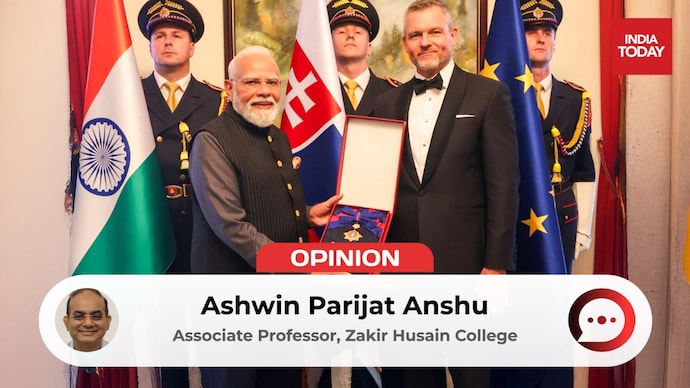
Prime Minister Narendra Modi’s visit to Slovakia in mid-June carries both a sense of history and a sense of history in the making. He became the first Indian Prime Minister to visit Slovakia since the country emerged as an independent nation in 1993. At a time when nations across the world are seeking to unlock new possibilities through bilateral and multilateral partnerships, this visit signals a willingness on both sides to move beyond established diplomatic patterns and explore new avenues of cooperation.
Slovakia, despite its relatively small size, is an industrial powerhouse within Europe and enjoys global recognition for its leadership in automobile manufacturing. India, on the other hand, remains one of the world’s fastest-growing major economies and continues to be a bright spot at a time when many economies are grappling with uncertainty and slowing growth. The complementarities between the two economies create opportunities that have remained largely underexplored for decades.
Official statements have long described India–Slovakia relations as “traditionally warm and friendly.” Yet the reality is that the relationship often suffered from structural neglect, low political visibility, and the absence of a coherent strategic vision from both sides. Economic exchanges remained modest, high-level political visits were rare, and the immense potential of cooperation in trade, technology, education, and culture remained untapped.
A Shared Sense of History
When relations between nations draw upon their historical consciousness, it rises above the strategic and geopolitical to acquire a sense of destiny. One of the earliest indications that both countries were seeking to usher in a new phase of engagement came with the visit of President Draupadi Murmu to Slovakia in April 2025. Observers noted a warmth that went beyond diplomatic protocol. The Indian President received an exceptionally cordial welcome marked by symbolic gestures and cultural hospitality. Such displays were not merely ceremonial but reflected a deeper recognition of shared values and mutual respect.
Indeed, India and Slovakia possess a remarkable cultural affinity rooted in their respective historical experiences. Both societies draw strength from civilisational memories that predate the emergence of the modern nation-state. In this sense, each country sees itself not merely as a political entity but as the inheritor of a much older cultural tradition.
For Slovaks, the memory of Great Moravia—the first major Slavic political formation in Central Europe—occupies a place comparable to the role played by the epics, ancient kingdoms, and classical traditions in India’s historical consciousness. The recollection of Great Moravia helped sustain Slovak cultural identity during periods of foreign domination and Magyarization. Just as India’s cultural heritage became a source of resilience during colonial rule, Slovak historical memory served as a foundation for preserving linguistic and cultural autonomy.
An important feature of Slovak national revival was its rootedness in popular folk culture. Rather than seeking legitimacy through classical Latin traditions or elite cosmopolitan norms, national revivalists such as Ludovit Stur and Jan Kollar celebrated the Slovak language, folklore, and peasant traditions. Their efforts helped create a modern national consciousness while remaining firmly anchored in indigenous cultural resources.
India’s Intellectual Influence
The Slovak national awakening also coincided with a period when many European intellectuals developed a fascination with India’s ancient civilisation. Sanskrit, Indian philosophy, and the Upanishads captured the imagination of scholars and romantics across Europe.
Ludovit Stur, the leading figure of the Slovak national revival, drew inspiration from the study of Sanskrit and Indian thought. The logical structure and grammatical sophistication of Sanskrit contributed to his understanding of language and informed his efforts to codify modern Slovak. His engagement with Indian philosophy reflected a broader European recognition of India as one of humanity’s great civilisational centres.
The fascination with Indo-European roots led Jan Holly and Jan Kollar to imagine India as the original homeland of the Slavs. Jan Kollar’s long poem Slavy Dcera (The Daughter of Slava) glorifies the Goddess Slava, which he presents as the symbol of the Slavonic race. He claimed that the Goddess Slava was the Indian Goddess Svaha.
Such intellectual exchanges may appear distant today, but they constitute an important cultural bridge between India and Slovakia. It is not surprising that Indology today figures in Slovakia in major universities and independent research institutes
Building the Future
Slovakia, like India, has braved considerable odds to break free from the subordination of bigger powers. It has not looked backed ever since. At its peak Slovakian GDP growth measured upwards of 10 percent that propelled it to be a very significant player in European economy, belying its relatively small size. Slovakia’s strengths in advanced manufacturing, automotive production, engineering, and industrial innovation complement India’s growing capabilities in technology, digital services, renewable energy, pharmaceuticals, and skilled human resources.
Given the historical affinity between Indian and Slovakian people, the elevation of the relationship to a ‘comprehensive partnership’ is a move that lays the groundwork of future. A pointer to the maturing of the relationship and renewed trust between the sides is a firm resolve to cooperate in an increasingly fragile security environment through several agreements in defence and security cooperation.
Prime Minister Modi’s historic visit should therefore be seen not as an isolated diplomatic event but as the beginning of a new chapter. A shared sense of the past, combined with a clear vision for the future, can provide the momentum needed to transform a traditionally cordial relationship into a dynamic and consequential partnership for the twenty-first century.
(Dr. Ashwin Parijat Anshu is associate professor in the department of history in Zakir Husain Delhi College.)
Prime Minister Narendra Modi’s visit to Slovakia in mid-June carries both a sense of history and a sense of history in the making. He became the first Indian Prime Minister to visit Slovakia since the country emerged as an independent nation in 1993. At a time when nations across the world are seeking to unlock new possibilities through bilateral and multilateral partnerships, this visit signals a willingness on both sides to move beyond established diplomatic patterns and explore new avenues of cooperation.
Slovakia, despite its relatively small size, is an industrial powerhouse within Europe and enjoys global recognition for its leadership in automobile manufacturing. India, on the other hand, remains one of the world’s fastest-growing major economies and continues to be a bright spot at a time when many economies are grappling with uncertainty and slowing growth. The complementarities between the two economies create opportunities that have remained largely underexplored for decades.
Official statements have long described India–Slovakia relations as “traditionally warm and friendly.” Yet the reality is that the relationship often suffered from structural neglect, low political visibility, and the absence of a coherent strategic vision from both sides. Economic exchanges remained modest, high-level political visits were rare, and the immense potential of cooperation in trade, technology, education, and culture remained untapped.
A Shared Sense of History
When relations between nations draw upon their historical consciousness, it rises above the strategic and geopolitical to acquire a sense of destiny. One of the earliest indications that both countries were seeking to usher in a new phase of engagement came with the visit of President Draupadi Murmu to Slovakia in April 2025. Observers noted a warmth that went beyond diplomatic protocol. The Indian President received an exceptionally cordial welcome marked by symbolic gestures and cultural hospitality. Such displays were not merely ceremonial but reflected a deeper recognition of shared values and mutual respect.
Indeed, India and Slovakia possess a remarkable cultural affinity rooted in their respective historical experiences. Both societies draw strength from civilisational memories that predate the emergence of the modern nation-state. In this sense, each country sees itself not merely as a political entity but as the inheritor of a much older cultural tradition.
For Slovaks, the memory of Great Moravia—the first major Slavic political formation in Central Europe—occupies a place comparable to the role played by the epics, ancient kingdoms, and classical traditions in India’s historical consciousness. The recollection of Great Moravia helped sustain Slovak cultural identity during periods of foreign domination and Magyarization. Just as India’s cultural heritage became a source of resilience during colonial rule, Slovak historical memory served as a foundation for preserving linguistic and cultural autonomy.
An important feature of Slovak national revival was its rootedness in popular folk culture. Rather than seeking legitimacy through classical Latin traditions or elite cosmopolitan norms, national revivalists such as Ludovit Stur and Jan Kollar celebrated the Slovak language, folklore, and peasant traditions. Their efforts helped create a modern national consciousness while remaining firmly anchored in indigenous cultural resources.
India’s Intellectual Influence
The Slovak national awakening also coincided with a period when many European intellectuals developed a fascination with India’s ancient civilisation. Sanskrit, Indian philosophy, and the Upanishads captured the imagination of scholars and romantics across Europe.
Ludovit Stur, the leading figure of the Slovak national revival, drew inspiration from the study of Sanskrit and Indian thought. The logical structure and grammatical sophistication of Sanskrit contributed to his understanding of language and informed his efforts to codify modern Slovak. His engagement with Indian philosophy reflected a broader European recognition of India as one of humanity’s great civilisational centres.
The fascination with Indo-European roots led Jan Holly and Jan Kollar to imagine India as the original homeland of the Slavs. Jan Kollar’s long poem Slavy Dcera (The Daughter of Slava) glorifies the Goddess Slava, which he presents as the symbol of the Slavonic race. He claimed that the Goddess Slava was the Indian Goddess Svaha.
Such intellectual exchanges may appear distant today, but they constitute an important cultural bridge between India and Slovakia. It is not surprising that Indology today figures in Slovakia in major universities and independent research institutes
Building the Future
Slovakia, like India, has braved considerable odds to break free from the subordination of bigger powers. It has not looked backed ever since. At its peak Slovakian GDP growth measured upwards of 10 percent that propelled it to be a very significant player in European economy, belying its relatively small size. Slovakia’s strengths in advanced manufacturing, automotive production, engineering, and industrial innovation complement India’s growing capabilities in technology, digital services, renewable energy, pharmaceuticals, and skilled human resources.
Given the historical affinity between Indian and Slovakian people, the elevation of the relationship to a ‘comprehensive partnership’ is a move that lays the groundwork of future. A pointer to the maturing of the relationship and renewed trust between the sides is a firm resolve to cooperate in an increasingly fragile security environment through several agreements in defence and security cooperation.
Prime Minister Modi’s historic visit should therefore be seen not as an isolated diplomatic event but as the beginning of a new chapter. A shared sense of the past, combined with a clear vision for the future, can provide the momentum needed to transform a traditionally cordial relationship into a dynamic and consequential partnership for the twenty-first century.
(Dr. Ashwin Parijat Anshu is associate professor in the department of history in Zakir Husain Delhi College.)

