Why Britain can't hold on to its PMs
The roots of Britain's current political instability can be traced to Brexit, which marks its tenth anniversary this week.
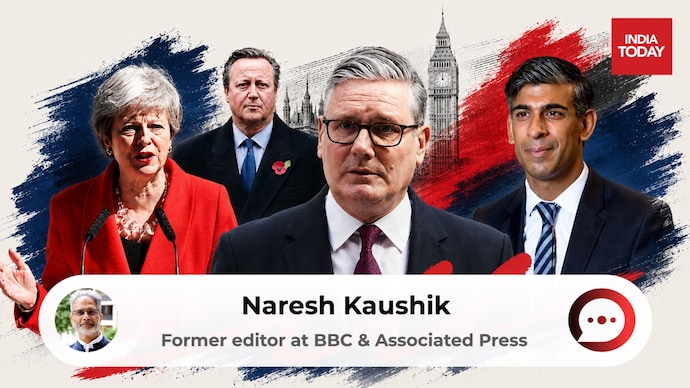
Britain is preparing to have a new prime minister, the seventh in just over ten years.
After insisting for weeks that he would not quit, Keir Starmer announced his resignation on the morning of June 22. Hours after the announcement, Andy Burnham, a newly elected MP from Manchester, took his seat in the House of Commons (the British equivalent of the Lok Sabha). Burnham, until recently the mayor of Manchester, is set to succeed Starmer.
This is the fourth time in seven years that a British prime minister has been ousted not by voters but by their party — Labour, in Starmer's case. Standing outside 10 Downing Street, he made it clear he was not going of his own accord but had been forced: “The question my party is asking now is whether I am best placed to lead us into the next general election. I have heard the answer of my parliamentary party to that question, and I accept that answer with good grace.”
With his resignation, Starmer has bowed to the inevitable after a growing rebellion against him, sparked by Labour's heavy losses in the local elections, just two years after his landslide victory in the 2024 parliamentary elections. Many voters abandoned Labour in favour of far-right Reform UK, which has consistently topped opinion polls for more than a year.
Andy Burnham is seen as the only Labour leader who can take on Reform, led by maverick anti-immigration activist Nigel Farage. Last week, Burnham defeated the Reform candidate by a huge margin in the Makerfield by-election in Manchester, further pressuring Starmer to quit.
IT BEGAN WITH BREXIT
The roots of Britain’s current political instability can be traced to Brexit, which marks its tenth anniversary this week. A few months after addressing a successful joint public meeting with Prime Minister Narendra Modi at London’s Wembley Stadium, Britain’s then-prime minister, David Cameron, decided to hold a referendum on whether to leave the UK’s membership of the European Union.
Cameron was fed up with the daily anti-Europe campaign by right-wingers in his party who believed EU membership was holding back the country’s progress and allowing an unlimited number of migrants into Britain from Europe. He was confident of winning the June 2016 referendum in favour of remaining in the EU.
But the Brexit campaign, with the slogan “take back control” of Britain’s destiny, led by Boris Johnson of the Conservatives and Nigel Farage, carried the day. By a small majority, British voters decided to leave the EU. Cameron had to resign.
Instead of calming the political temperature, Brexit deepened divisions within the Conservative Party. Cameron’s successor, Theresa May, also resigned. Johnson succeeded her, but his conduct during the Covid-19 pandemic prompted a rebellion, leading to his resignation after just over three years.
The next Conservative leader was Liz Truss, who won the party election against Rishi Sunak and became prime minister. But she pandered to the party’s far-right and produced a budget that wreaked havoc in the markets, forcing her to leave office after just 44 days.
Rishi Sunak was crowned as leader and prime minister without an election, as he was seen as the only person capable of steering the economy. Yet daily attacks on him by the party’s right-wing MPs left him so weak that he presided over the worst defeat in his party’s history for a hundred years.
IMMIGRATION AND THE RISE OF REFORM
Brexit was supposed to bring economic prosperity and greater control over Britain’s borders. But it worsened the British economy, as the largest market for its products was lost. Imports from the EU became more expensive. Promised investments were also absent. To make matters worse, both legal and illegal migration increased.
Under Boris Johnson, the government allowed hundreds of thousands of skilled migrants to fill jobs left by EU nationals who returned home after Brexit. Net migration reached a record 7,45,000 in 2022, according to Migration Watch UK!
Farage launched a scathing attack on what he called the Boris wave of migrants. The Conservative governments were also criticised for failing to control illegal migration, mainly arriving by small boats from France. One of the main reasons the Sunak-led government suffered historic losses in the 2024 elections was its inability to control the crossings. Millions of Conservative voters and hundreds of its members, including some former ministers, defected to Reform.
Farage and his party have never looked back. His campaign has fuelled such anti-migrant sentiment in the country that most voters still believe migration is rising, even though, under Starmer, net migration in 2025 fell to 1,71,000, the lowest since the pandemic. In last month’s local elections, which hastened Starmer’s downfall, Reform’s success has been largely credited to the anti-migration campaign.
PARTY INFIGHTING
But Starmer’s problems can’t be blamed solely on the migration issue. To his credit, his government has taken a tough line, not too far from Reform’s, on controlling both illegal and net migration.
However, as right-wing members had damaged the Conservative Party and undermined their governments, Labour’s left-wing members worked hard to damage Starmer. They forced him to U-turn on multiple issues. To improve fiscal health, Starmer wanted to raise taxes, cut the huge welfare budget, and maintain a cap on government financial support for up to two children, but he was forced to reverse those plans.
There have also been divisions within the party over support for Israel. Many pro-Palestinian members were unhappy with Starmer for his support for Israel. He was aware of allegations of anti-Semitism against the party under his predecessor, Jeremy Corbyn, and didn’t want to lose Jewish members of Labour. Some members even broke from Labour and contested local elections independently on a pro-Gaza platform.
WILL BURNHAM BE ANY BETTER?
Unless there is a contest, Andy Burnham is going to be crowned Britain’s next prime minister, like Sunak, without having to fight a leadership election. Wes Streeting, who resigned as health secretary and announced he would challenge for the leadership, has already declared his support for Burnham. His welcome by more than 200 Labour MPs on Monday suggests that he is on his way to lead the party and the country.
Burnham is a much more experienced politician than Starmer, who became prime minister without having served even as a junior minister. Burnham served as a minister in the previous Labour government and has extensive experience of running Britain’s third-largest city, Manchester, as mayor.
He was responsible for the city’s regeneration and economic development. He faced criticism for not doing enough to control and bring to justice Pakistani-origin grooming gangs that sexually exploited young white girls in the town of Manchester. He denied those charges.
Not much, though, is clear about Burnham’s foreign policy. He is likely to continue Britain’s support for Ukraine and to increase cooperation with the EU. In the past, he backed Britain’s eventual rejoining of the bloc, but in recent weeks, he has tried to downplay it. As the prime minister, Burnham may not have very cordial relations with Trump, who is not a fan of left-oriented politicians.
SHOULD INDIA BE CONCERNED?
Some Indians are concerned that he may be less India-friendly than Starmer, who signed the India-UK trade deal last year. They fear the Pakistani lobby may try to influence him, but as a seasoned politician, Burnham is unlikely to be swayed. As mayor, he has worked with Manchester’s Indian community and even led a delegation to India in 2022 to boost the city’s trade and cultural ties. That led to Indian investment in Manchester. As prime minister, one expects Burnham to strengthen the UK’s relations with India further.
Burnham’s main focus will be to reunite his Labour Party and to face the challenge from Reform UK. Unlike Starmer, Burnham is a better communicator, but will he be able to deliver on his party's promises? Britain’s economy needs tough decisions, and the business community is a little sceptical of him because of his past statements about increased borrowing and higher taxes. He has tried to calm them by promising to respect financial discipline.
The enthusiasm on the left wing of Labour about Burnham suggests it expects him to follow a socialist agenda. But Britain’s electorate is more centrist. That’s the reason it chose to vote for Labour, led by Starmer in 2024. If Burnham confronts the left, as Starmer did, and tries to bring in tax and welfare reforms, he will be accused of betrayal. That could begin his downfall, and Britain may end up having yet another leader before the next general election. Impatience with leaders runs deep in political parties.
Britain is preparing to have a new prime minister, the seventh in just over ten years.
After insisting for weeks that he would not quit, Keir Starmer announced his resignation on the morning of June 22. Hours after the announcement, Andy Burnham, a newly elected MP from Manchester, took his seat in the House of Commons (the British equivalent of the Lok Sabha). Burnham, until recently the mayor of Manchester, is set to succeed Starmer.
This is the fourth time in seven years that a British prime minister has been ousted not by voters but by their party — Labour, in Starmer's case. Standing outside 10 Downing Street, he made it clear he was not going of his own accord but had been forced: “The question my party is asking now is whether I am best placed to lead us into the next general election. I have heard the answer of my parliamentary party to that question, and I accept that answer with good grace.”
With his resignation, Starmer has bowed to the inevitable after a growing rebellion against him, sparked by Labour's heavy losses in the local elections, just two years after his landslide victory in the 2024 parliamentary elections. Many voters abandoned Labour in favour of far-right Reform UK, which has consistently topped opinion polls for more than a year.
Andy Burnham is seen as the only Labour leader who can take on Reform, led by maverick anti-immigration activist Nigel Farage. Last week, Burnham defeated the Reform candidate by a huge margin in the Makerfield by-election in Manchester, further pressuring Starmer to quit.
IT BEGAN WITH BREXIT
The roots of Britain’s current political instability can be traced to Brexit, which marks its tenth anniversary this week. A few months after addressing a successful joint public meeting with Prime Minister Narendra Modi at London’s Wembley Stadium, Britain’s then-prime minister, David Cameron, decided to hold a referendum on whether to leave the UK’s membership of the European Union.
Cameron was fed up with the daily anti-Europe campaign by right-wingers in his party who believed EU membership was holding back the country’s progress and allowing an unlimited number of migrants into Britain from Europe. He was confident of winning the June 2016 referendum in favour of remaining in the EU.
But the Brexit campaign, with the slogan “take back control” of Britain’s destiny, led by Boris Johnson of the Conservatives and Nigel Farage, carried the day. By a small majority, British voters decided to leave the EU. Cameron had to resign.
Instead of calming the political temperature, Brexit deepened divisions within the Conservative Party. Cameron’s successor, Theresa May, also resigned. Johnson succeeded her, but his conduct during the Covid-19 pandemic prompted a rebellion, leading to his resignation after just over three years.
The next Conservative leader was Liz Truss, who won the party election against Rishi Sunak and became prime minister. But she pandered to the party’s far-right and produced a budget that wreaked havoc in the markets, forcing her to leave office after just 44 days.
Rishi Sunak was crowned as leader and prime minister without an election, as he was seen as the only person capable of steering the economy. Yet daily attacks on him by the party’s right-wing MPs left him so weak that he presided over the worst defeat in his party’s history for a hundred years.
IMMIGRATION AND THE RISE OF REFORM
Brexit was supposed to bring economic prosperity and greater control over Britain’s borders. But it worsened the British economy, as the largest market for its products was lost. Imports from the EU became more expensive. Promised investments were also absent. To make matters worse, both legal and illegal migration increased.
Under Boris Johnson, the government allowed hundreds of thousands of skilled migrants to fill jobs left by EU nationals who returned home after Brexit. Net migration reached a record 7,45,000 in 2022, according to Migration Watch UK!
Farage launched a scathing attack on what he called the Boris wave of migrants. The Conservative governments were also criticised for failing to control illegal migration, mainly arriving by small boats from France. One of the main reasons the Sunak-led government suffered historic losses in the 2024 elections was its inability to control the crossings. Millions of Conservative voters and hundreds of its members, including some former ministers, defected to Reform.
Farage and his party have never looked back. His campaign has fuelled such anti-migrant sentiment in the country that most voters still believe migration is rising, even though, under Starmer, net migration in 2025 fell to 1,71,000, the lowest since the pandemic. In last month’s local elections, which hastened Starmer’s downfall, Reform’s success has been largely credited to the anti-migration campaign.
PARTY INFIGHTING
But Starmer’s problems can’t be blamed solely on the migration issue. To his credit, his government has taken a tough line, not too far from Reform’s, on controlling both illegal and net migration.
However, as right-wing members had damaged the Conservative Party and undermined their governments, Labour’s left-wing members worked hard to damage Starmer. They forced him to U-turn on multiple issues. To improve fiscal health, Starmer wanted to raise taxes, cut the huge welfare budget, and maintain a cap on government financial support for up to two children, but he was forced to reverse those plans.
There have also been divisions within the party over support for Israel. Many pro-Palestinian members were unhappy with Starmer for his support for Israel. He was aware of allegations of anti-Semitism against the party under his predecessor, Jeremy Corbyn, and didn’t want to lose Jewish members of Labour. Some members even broke from Labour and contested local elections independently on a pro-Gaza platform.
WILL BURNHAM BE ANY BETTER?
Unless there is a contest, Andy Burnham is going to be crowned Britain’s next prime minister, like Sunak, without having to fight a leadership election. Wes Streeting, who resigned as health secretary and announced he would challenge for the leadership, has already declared his support for Burnham. His welcome by more than 200 Labour MPs on Monday suggests that he is on his way to lead the party and the country.
Burnham is a much more experienced politician than Starmer, who became prime minister without having served even as a junior minister. Burnham served as a minister in the previous Labour government and has extensive experience of running Britain’s third-largest city, Manchester, as mayor.
He was responsible for the city’s regeneration and economic development. He faced criticism for not doing enough to control and bring to justice Pakistani-origin grooming gangs that sexually exploited young white girls in the town of Manchester. He denied those charges.
Not much, though, is clear about Burnham’s foreign policy. He is likely to continue Britain’s support for Ukraine and to increase cooperation with the EU. In the past, he backed Britain’s eventual rejoining of the bloc, but in recent weeks, he has tried to downplay it. As the prime minister, Burnham may not have very cordial relations with Trump, who is not a fan of left-oriented politicians.
SHOULD INDIA BE CONCERNED?
Some Indians are concerned that he may be less India-friendly than Starmer, who signed the India-UK trade deal last year. They fear the Pakistani lobby may try to influence him, but as a seasoned politician, Burnham is unlikely to be swayed. As mayor, he has worked with Manchester’s Indian community and even led a delegation to India in 2022 to boost the city’s trade and cultural ties. That led to Indian investment in Manchester. As prime minister, one expects Burnham to strengthen the UK’s relations with India further.
Burnham’s main focus will be to reunite his Labour Party and to face the challenge from Reform UK. Unlike Starmer, Burnham is a better communicator, but will he be able to deliver on his party's promises? Britain’s economy needs tough decisions, and the business community is a little sceptical of him because of his past statements about increased borrowing and higher taxes. He has tried to calm them by promising to respect financial discipline.
The enthusiasm on the left wing of Labour about Burnham suggests it expects him to follow a socialist agenda. But Britain’s electorate is more centrist. That’s the reason it chose to vote for Labour, led by Starmer in 2024. If Burnham confronts the left, as Starmer did, and tries to bring in tax and welfare reforms, he will be accused of betrayal. That could begin his downfall, and Britain may end up having yet another leader before the next general election. Impatience with leaders runs deep in political parties.

