Why Nasa's Artemis-III crew has no female astronaut? Nasa chief answers
Nasa unveiled an all-male Artemis III crew and defended the selection process. The announcement prompted questions over representation, even as officials said mission needs came first.
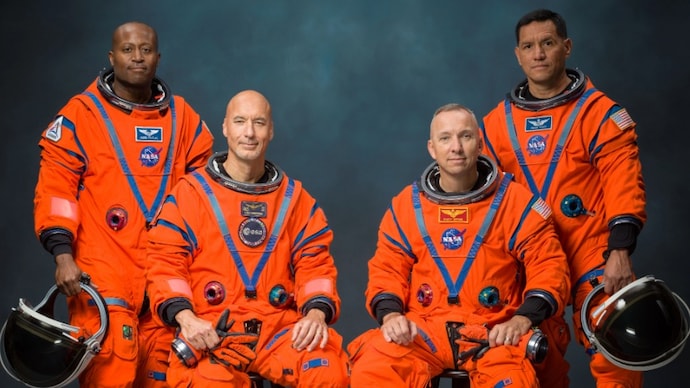
Nasa's announcement of the four astronauts selected for the historic Artemis III mission sparked excitement across the space community, but it also raised a question: why is the crew entirely male despite the agency's recent emphasis on diversity?
The Artemis III crew, unveiled this week, includes Nasa astronauts Randy Bresnik, Andre Douglas and Frank Rubio, along with European Space Agency astronaut Luca Parmitano. The mission is expected to conduct critical lunar landing system tests and pave the way for future human landings on the Moon.
Following the announcement, some scientists, space enthusiasts and science communicators expressed disappointment that no women were selected for the mission, especially after astronaut Christina Koch's presence on Artemis-II mission.
The decision drew attention because women make up roughly 40% of Nasa's active astronaut corps, and female astronauts have become a regular presence on International Space Station missions in recent years.
Responding to the criticism, Nasa Administrator Jared Isaacman said the selection was based solely on mission requirements and astronaut qualifications.
"I don't think anyone should be reading into this," Isaacman told reporters after the crew reveal. "We'll assemble the best astronauts to undertake and complete the objectives."
In a longer statement posted on social media, Isaacman emphasised that Nasa's Astronaut Office independently chooses crews based on factors such as experience, technical expertise, training and mission readiness. He noted that the agency's most recent astronaut class was more than 50% female and that women hold many leadership positions across Nasa.
According to Nasa officials, Artemis III is a highly technical mission focused on testing lunar landing systems developed by SpaceX and Blue Origin. Several members of the crew have extensive military and flight-testing backgrounds that are considered particularly valuable for the mission.
The selected astronauts bring decades of experience. Bresnik and Parmitano have both commanded the International Space Station, while Rubio holds the US record for the longest single spaceflight at 371 days. Douglas, meanwhile, previously served as a backup astronaut for Artemis II.
Nasa astronaut Bob Hines, who was named backup pilot for Artemis III, said the agency prioritises mission capability above all else during crew selection.
"I know that they look and they try and find the best capabilities of people that we have available in the Astronaut Office in order to accomplish the mission," Hines said.
Nasa officials stressed that the all-male Artemis III crew should not be interpreted as a shift away from diversity efforts, noting that future lunar missions are expected to include astronauts from a wide range of backgrounds as the Artemis program continues.
Nasa's announcement of the four astronauts selected for the historic Artemis III mission sparked excitement across the space community, but it also raised a question: why is the crew entirely male despite the agency's recent emphasis on diversity?
The Artemis III crew, unveiled this week, includes Nasa astronauts Randy Bresnik, Andre Douglas and Frank Rubio, along with European Space Agency astronaut Luca Parmitano. The mission is expected to conduct critical lunar landing system tests and pave the way for future human landings on the Moon.
Following the announcement, some scientists, space enthusiasts and science communicators expressed disappointment that no women were selected for the mission, especially after astronaut Christina Koch's presence on Artemis-II mission.
The decision drew attention because women make up roughly 40% of Nasa's active astronaut corps, and female astronauts have become a regular presence on International Space Station missions in recent years.
Responding to the criticism, Nasa Administrator Jared Isaacman said the selection was based solely on mission requirements and astronaut qualifications.
"I don't think anyone should be reading into this," Isaacman told reporters after the crew reveal. "We'll assemble the best astronauts to undertake and complete the objectives."
In a longer statement posted on social media, Isaacman emphasised that Nasa's Astronaut Office independently chooses crews based on factors such as experience, technical expertise, training and mission readiness. He noted that the agency's most recent astronaut class was more than 50% female and that women hold many leadership positions across Nasa.
According to Nasa officials, Artemis III is a highly technical mission focused on testing lunar landing systems developed by SpaceX and Blue Origin. Several members of the crew have extensive military and flight-testing backgrounds that are considered particularly valuable for the mission.
The selected astronauts bring decades of experience. Bresnik and Parmitano have both commanded the International Space Station, while Rubio holds the US record for the longest single spaceflight at 371 days. Douglas, meanwhile, previously served as a backup astronaut for Artemis II.
Nasa astronaut Bob Hines, who was named backup pilot for Artemis III, said the agency prioritises mission capability above all else during crew selection.
"I know that they look and they try and find the best capabilities of people that we have available in the Astronaut Office in order to accomplish the mission," Hines said.
Nasa officials stressed that the all-male Artemis III crew should not be interpreted as a shift away from diversity efforts, noting that future lunar missions are expected to include astronauts from a wide range of backgrounds as the Artemis program continues.

