AC blasts on the rise in Delhi-NCR: How the heatwave is turning ACs into a hazard
A Noida AC blast has raised safety concerns as the region faces extreme heat. Here's why air conditioners explode, and how to prevent them.
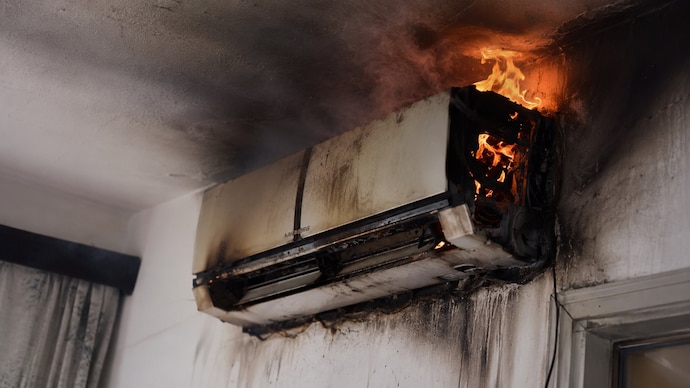
A major fire erupted on the 21st floor of a residential building in Noida's Sector 119 on Monday, June 29, with reports pointing to an air conditioner explosion as the trigger.
No casualties were reported, but the scene renewed worries about hidden dangers in cooling appliances that are regularly being pushed to the limits by the extreme temperatures.
As temperatures soar across northern India, AC blasts and related fires are emerging as a serious summer hazard.
Many households now treat air conditioners as essential rather than luxury items, running them for long hours. This constant strain is exposing weaknesses in units, especially older or poorly maintained ones.
But what exactly causes these strained ACs to explode?
HOW DOES HEAT MAKE ACs EXPLODE?
Air conditioners can explode when internal pressure and heat build beyond safe limits.
The compressor, located in the outdoor unit, is the main culprit. In intense heat, it works overtime to pump refrigerant and remove warmth from indoors.
Overheating causes the compressor to strain, raising internal pressure.
Furthermore, if the condenser coils are clogged with dust and dirt, which is likely if the unit has been used for a long period, heat cannot escape properly.
This leads to further pressure build-up which then causes refrigerant gas leaks, often from worn pipes or joints, fuelling the problem.
When this gas meets a spark from faulty wiring or a failing capacitor, it can ignite suddenly, producing a loud explosion and fire.
Electrical faults also make things worse.
Prolonged running melts insulation on wires, while voltage fluctuations common in peak summer create shorts.
All in all, a combination of mechanical stress, gas leaks, and electrical sparks turns an AC into a potential bomb.
RISING AC BLASTS IN DELHI-NCR
This year has seen several high-profile AC-related fires.
In Hauz Khas, an AC blast caused a fire and claimed the life of a retired IAS officer. A devastating fire in Vivek Vihar, also linked to an AC unit, killed nine people.
Other cases in areas like New Friends Colony and Noida have added to the tally, with fire services noting electrical issues, including AC faults, in a large percentage of summer emergencies.
Many incidents involve older models or units that were never serviced properly. Cheap or incorrect refrigerant refills and blocked outdoor units worsen the risks during extended operation.
Understanding these mechanics helps explain why seemingly routine appliances become dangerous.
As more families depend on ACs, regular checks on compressors, wiring, coils, and gas levels are proving critical to preventing such blasts.
The Noida fire serves as a reminder of what can go wrong when cooling systems are pushed to their limits.
A major fire erupted on the 21st floor of a residential building in Noida's Sector 119 on Monday, June 29, with reports pointing to an air conditioner explosion as the trigger.
No casualties were reported, but the scene renewed worries about hidden dangers in cooling appliances that are regularly being pushed to the limits by the extreme temperatures.
As temperatures soar across northern India, AC blasts and related fires are emerging as a serious summer hazard.
Many households now treat air conditioners as essential rather than luxury items, running them for long hours. This constant strain is exposing weaknesses in units, especially older or poorly maintained ones.
But what exactly causes these strained ACs to explode?
HOW DOES HEAT MAKE ACs EXPLODE?
Air conditioners can explode when internal pressure and heat build beyond safe limits.
The compressor, located in the outdoor unit, is the main culprit. In intense heat, it works overtime to pump refrigerant and remove warmth from indoors.
Overheating causes the compressor to strain, raising internal pressure.
Furthermore, if the condenser coils are clogged with dust and dirt, which is likely if the unit has been used for a long period, heat cannot escape properly.
This leads to further pressure build-up which then causes refrigerant gas leaks, often from worn pipes or joints, fuelling the problem.
When this gas meets a spark from faulty wiring or a failing capacitor, it can ignite suddenly, producing a loud explosion and fire.
Electrical faults also make things worse.
Prolonged running melts insulation on wires, while voltage fluctuations common in peak summer create shorts.
All in all, a combination of mechanical stress, gas leaks, and electrical sparks turns an AC into a potential bomb.
RISING AC BLASTS IN DELHI-NCR
This year has seen several high-profile AC-related fires.
In Hauz Khas, an AC blast caused a fire and claimed the life of a retired IAS officer. A devastating fire in Vivek Vihar, also linked to an AC unit, killed nine people.
Other cases in areas like New Friends Colony and Noida have added to the tally, with fire services noting electrical issues, including AC faults, in a large percentage of summer emergencies.
Many incidents involve older models or units that were never serviced properly. Cheap or incorrect refrigerant refills and blocked outdoor units worsen the risks during extended operation.
Understanding these mechanics helps explain why seemingly routine appliances become dangerous.
As more families depend on ACs, regular checks on compressors, wiring, coils, and gas levels are proving critical to preventing such blasts.
The Noida fire serves as a reminder of what can go wrong when cooling systems are pushed to their limits.

