Why must aeroplane seats be upright for takeoff and landing? It's flight science
Aviation rules require every seat back upright for takeoff and landing. Here is what actually happens to your body if your seat stays reclined when a flight suddenly stops.
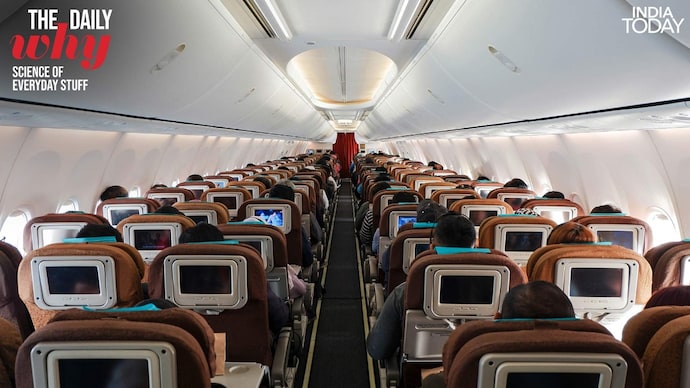
Every frequent flier has heard the line at least once: "Please put your seat back into the fully upright position for takeoff and landing."
Most passengers treat it as a small, faintly annoying ritual, somewhere between fastening a seatbelt and switching a phone to flight mode, but it is not.
It is one of the most carefully studied rules in aviation, built on decades of crash tests, cadaver studies and full-scale evacuation drills.
WHY DO YOU HAVE TO SIT UP STRAIGHT FOR TAKEOFF AND LANDING?
Takeoff and landing are the two riskiest moments of any flight. Your seat is only built to protect you properly when it is standing straight up.
Every airline seat has to pass a tough safety test before it is ever allowed on a plane, laid out in a rule called 14 CFR 25.562, issued by the US Federal Aviation Administration (FAA).
Engineers strap a crash test dummy into the seat, then slam it downward hard and fast, roughly mimicking a rough but survivable landing.
Here is the key part. That test is only ever done with the seat locked fully upright. In that position, the seat, its frame, and the tracks holding it to the floor all work together as one strong, solid piece.
Tilt the seat back even a little, and none of that holds true anymore. The seat simply was not tested, or built, to protect you properly in a recline.
So think of it this way: an upright seat is a seat doing its job as designed. A reclined seat, during those risky minutes, is a seat nobody has proven will keep you safe.
WHAT ACTUALLY HAPPENS TO YOUR BODY IF THE SEAT IS RECLINED?
Picture your seatbelt as a single, simple tool. It is a two-point lap belt, not the three-point harness in a car, and it is designed to catch you across the hip bones, the strongest part of your skeleton.
When you sit upright, your pelvis sits squarely against the seat's back, and the belt rides low and snug across those hip bones. At a sudden stop, the force travels into bone, not organs.
Recline the seat and your hips slide slightly forward. The angle between your torso and thighs opens up, and under hard deceleration, your body can slip beneath the belt instead of being caught by it.
Engineers call this submarining, and FAA test dummies actually carry small pelvic sensors just to catch it happening. Once the belt rides up over soft tissue instead of bone, crash forces move into the abdomen and lower spine, exactly where you do not want them.
There is a second, simpler problem too: pure physics.
The further your head and torso have to travel before the belt or the brace position stops you, the more speed and force build up before impact. A reclined seat hands your body a longer runway to gather momentum on, right before something solid stops it.
WHY DOES THE SEAT POSITION MATTER FOR EVACUATION, NOT JUST THE CRASH ITSELF?
Surviving the impact is only half the safety picture. Aircraft manufacturers must also prove, under 14 CFR 25.803, that a full cabin can be evacuated to the ground in 90 seconds or less, using only half the exits, in a test that simulates darkness and blocked aisles.
Every inch matters in that count. A reclined seat back eats into the legroom of the row behind, forces that passenger to fight their way past a protruding backrest, and can strike them directly if the seat pivots under impact.
Multiply a few lost seconds by every row in the cabin, and a survivable accident can become a fatal one simply because people could not get out fast enough.
This is precisely why, under 14 CFR 121.311(d), seats ahead of emergency exit rows are usually locked with limited or no recline, and why cabin crew treat straightening seats as a non-negotiable check before every takeoff and landing, not a matter of etiquette.
WHY ARE THESE RULES ONLY FOR TAKEOFF AND LANDING, NOT THE WHOLE FLIGHT?
Because that is when accidents actually happen. Takeoff, climb, approach and landing account for a hugely disproportionate share of aviation accidents relative to how little time they occupy in a typical flight, since these are the phases closest to the ground, with the least time to recover from anything going wrong.
Cruising altitude, by contrast, is statistically among the safest places a human being can be, which is exactly why airlines let you recline once you get there.
None of this makes the rule dramatic. Most flights land without anyone ever needing that extra half a second the upright position buys.
But the entire system, the seat, the belt, the brace position and the 90-second exit standard, is engineered around one assumption holding true every single time: that when the crew asks you to sit up, you actually do.
#TheDailyWhy
Every frequent flier has heard the line at least once: "Please put your seat back into the fully upright position for takeoff and landing."
Most passengers treat it as a small, faintly annoying ritual, somewhere between fastening a seatbelt and switching a phone to flight mode, but it is not.
It is one of the most carefully studied rules in aviation, built on decades of crash tests, cadaver studies and full-scale evacuation drills.
WHY DO YOU HAVE TO SIT UP STRAIGHT FOR TAKEOFF AND LANDING?
Takeoff and landing are the two riskiest moments of any flight. Your seat is only built to protect you properly when it is standing straight up.
Every airline seat has to pass a tough safety test before it is ever allowed on a plane, laid out in a rule called 14 CFR 25.562, issued by the US Federal Aviation Administration (FAA).
Engineers strap a crash test dummy into the seat, then slam it downward hard and fast, roughly mimicking a rough but survivable landing.
Here is the key part. That test is only ever done with the seat locked fully upright. In that position, the seat, its frame, and the tracks holding it to the floor all work together as one strong, solid piece.
Tilt the seat back even a little, and none of that holds true anymore. The seat simply was not tested, or built, to protect you properly in a recline.
So think of it this way: an upright seat is a seat doing its job as designed. A reclined seat, during those risky minutes, is a seat nobody has proven will keep you safe.
WHAT ACTUALLY HAPPENS TO YOUR BODY IF THE SEAT IS RECLINED?
Picture your seatbelt as a single, simple tool. It is a two-point lap belt, not the three-point harness in a car, and it is designed to catch you across the hip bones, the strongest part of your skeleton.
When you sit upright, your pelvis sits squarely against the seat's back, and the belt rides low and snug across those hip bones. At a sudden stop, the force travels into bone, not organs.
Recline the seat and your hips slide slightly forward. The angle between your torso and thighs opens up, and under hard deceleration, your body can slip beneath the belt instead of being caught by it.
Engineers call this submarining, and FAA test dummies actually carry small pelvic sensors just to catch it happening. Once the belt rides up over soft tissue instead of bone, crash forces move into the abdomen and lower spine, exactly where you do not want them.
There is a second, simpler problem too: pure physics.
The further your head and torso have to travel before the belt or the brace position stops you, the more speed and force build up before impact. A reclined seat hands your body a longer runway to gather momentum on, right before something solid stops it.
WHY DOES THE SEAT POSITION MATTER FOR EVACUATION, NOT JUST THE CRASH ITSELF?
Surviving the impact is only half the safety picture. Aircraft manufacturers must also prove, under 14 CFR 25.803, that a full cabin can be evacuated to the ground in 90 seconds or less, using only half the exits, in a test that simulates darkness and blocked aisles.
Every inch matters in that count. A reclined seat back eats into the legroom of the row behind, forces that passenger to fight their way past a protruding backrest, and can strike them directly if the seat pivots under impact.
Multiply a few lost seconds by every row in the cabin, and a survivable accident can become a fatal one simply because people could not get out fast enough.
This is precisely why, under 14 CFR 121.311(d), seats ahead of emergency exit rows are usually locked with limited or no recline, and why cabin crew treat straightening seats as a non-negotiable check before every takeoff and landing, not a matter of etiquette.
WHY ARE THESE RULES ONLY FOR TAKEOFF AND LANDING, NOT THE WHOLE FLIGHT?
Because that is when accidents actually happen. Takeoff, climb, approach and landing account for a hugely disproportionate share of aviation accidents relative to how little time they occupy in a typical flight, since these are the phases closest to the ground, with the least time to recover from anything going wrong.
Cruising altitude, by contrast, is statistically among the safest places a human being can be, which is exactly why airlines let you recline once you get there.
None of this makes the rule dramatic. Most flights land without anyone ever needing that extra half a second the upright position buys.
But the entire system, the seat, the belt, the brace position and the 90-second exit standard, is engineered around one assumption holding true every single time: that when the crew asks you to sit up, you actually do.
#TheDailyWhy
Every frequent flier has heard the line at least once: "Please put your seat back into the fully upright position for takeoff and landing."
Most passengers treat it as a small, faintly annoying ritual, somewhere between fastening a seatbelt and switching a phone to flight mode, but it is not.
It is one of the most carefully studied rules in aviation, built on decades of crash tests, cadaver studies and full-scale evacuation drills.
WHY DO YOU HAVE TO SIT UP STRAIGHT FOR TAKEOFF AND LANDING?
Takeoff and landing are the two riskiest moments of any flight. Your seat is only built to protect you properly when it is standing straight up.
Every airline seat has to pass a tough safety test before it is ever allowed on a plane, laid out in a rule called 14 CFR 25.562, issued by the US Federal Aviation Administration (FAA).
Engineers strap a crash test dummy into the seat, then slam it downward hard and fast, roughly mimicking a rough but survivable landing.
Here is the key part. That test is only ever done with the seat locked fully upright. In that position, the seat, its frame, and the tracks holding it to the floor all work together as one strong, solid piece.
Tilt the seat back even a little, and none of that holds true anymore. The seat simply was not tested, or built, to protect you properly in a recline.
So think of it this way: an upright seat is a seat doing its job as designed. A reclined seat, during those risky minutes, is a seat nobody has proven will keep you safe.
WHAT ACTUALLY HAPPENS TO YOUR BODY IF THE SEAT IS RECLINED?
Picture your seatbelt as a single, simple tool. It is a two-point lap belt, not the three-point harness in a car, and it is designed to catch you across the hip bones, the strongest part of your skeleton.
When you sit upright, your pelvis sits squarely against the seat's back, and the belt rides low and snug across those hip bones. At a sudden stop, the force travels into bone, not organs.
Recline the seat and your hips slide slightly forward. The angle between your torso and thighs opens up, and under hard deceleration, your body can slip beneath the belt instead of being caught by it.
Engineers call this submarining, and FAA test dummies actually carry small pelvic sensors just to catch it happening. Once the belt rides up over soft tissue instead of bone, crash forces move into the abdomen and lower spine, exactly where you do not want them.
There is a second, simpler problem too: pure physics.
The further your head and torso have to travel before the belt or the brace position stops you, the more speed and force build up before impact. A reclined seat hands your body a longer runway to gather momentum on, right before something solid stops it.
WHY DOES THE SEAT POSITION MATTER FOR EVACUATION, NOT JUST THE CRASH ITSELF?
Surviving the impact is only half the safety picture. Aircraft manufacturers must also prove, under 14 CFR 25.803, that a full cabin can be evacuated to the ground in 90 seconds or less, using only half the exits, in a test that simulates darkness and blocked aisles.
Every inch matters in that count. A reclined seat back eats into the legroom of the row behind, forces that passenger to fight their way past a protruding backrest, and can strike them directly if the seat pivots under impact.
Multiply a few lost seconds by every row in the cabin, and a survivable accident can become a fatal one simply because people could not get out fast enough.
This is precisely why, under 14 CFR 121.311(d), seats ahead of emergency exit rows are usually locked with limited or no recline, and why cabin crew treat straightening seats as a non-negotiable check before every takeoff and landing, not a matter of etiquette.
WHY ARE THESE RULES ONLY FOR TAKEOFF AND LANDING, NOT THE WHOLE FLIGHT?
Because that is when accidents actually happen. Takeoff, climb, approach and landing account for a hugely disproportionate share of aviation accidents relative to how little time they occupy in a typical flight, since these are the phases closest to the ground, with the least time to recover from anything going wrong.
Cruising altitude, by contrast, is statistically among the safest places a human being can be, which is exactly why airlines let you recline once you get there.
None of this makes the rule dramatic. Most flights land without anyone ever needing that extra half a second the upright position buys.
But the entire system, the seat, the belt, the brace position and the 90-second exit standard, is engineered around one assumption holding true every single time: that when the crew asks you to sit up, you actually do.
#TheDailyWhy

