Indian-origin astronaut Anil Menon shows what it takes to workout in space
Anil Menon shared a workout video from the International Space Station and explained the toll of microgravity on the body. His remarks underscored why daily exercise is essential for astronaut health on longer missions.
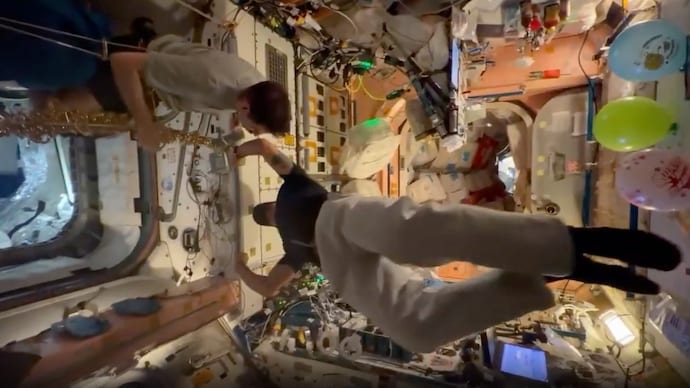
Indian-origin NASA astronaut Anil Menon has highlighted the importance of exercise in space, sharing a video of himself working out aboard the International Space Station (ISS) and explaining how the human body can deteriorate in microgravity without regular physical activity.
“Stay Hard!” Menon wrote while sharing the video, emphasising the focus, determination and grit required to maintain a workout routine in orbit.
“Exercise on station takes focus, determination, and grit,” he said, explaining that the absence of regular exercise can have serious consequences for the human body in space.
According to Menon, without exercise, astronauts can lose around 3 per cent of their bone mass every month, along with 10–15 per cent of muscle mass and body weight. He also highlighted a decline of more than 10 per cent in VO2 max, a measure of the body's ability to use oxygen during physical activity.
These changes are among the physiological challenges astronauts face during extended space missions. In microgravity, the body does not have to work against gravity in the same way it does on Earth. As a result, bones and muscles receive less mechanical loading, contributing to muscle atrophy and bone loss. Cardiovascular fitness can also decline.
Exercise is therefore a crucial part of an astronaut's daily routine aboard the ISS. Crew members use specialised equipment designed for microgravity to perform resistance training and cardiovascular workouts, helping maintain muscle strength, bone health and endurance during their time in orbit.
A LITTLE PUSH GOES A LONG WAY
Menon also acknowledged the role played by fellow astronaut Navy Captain Jack Hathaway in pushing him to improve his fitness.
“Captain Jack Hathaway was a friend and, at times, a personal trainer and coach that pushed me to new levels like David Goggins,” Menon said, referring to the American endurance athlete known for his demanding approach to physical training.
Maintaining fitness in space is not simply about athletic performance. It helps astronauts preserve their ability to carry out demanding tasks during missions and prepares them for the physical challenges of returning to Earth's gravity.
As space agencies plan longer missions, including journeys to the Moon and eventually Mars, protecting astronaut health will become increasingly important.

