Company trying to revive extinct animal hatches 26 chicks from artificial eggs
Colossal Biosciences has hatched 26 healthy chicks using a fully artificial egg system. The result addresses a major avian bioengineering challenge, although de-extinction still needs more advances.
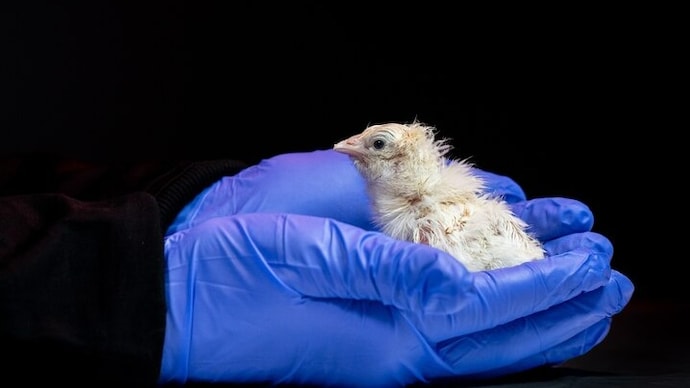
Colossal Biosciences announced that it has successfully hatched 26 healthy chicks using a fully artificial egg system designed to mimic the functions of a natural eggshell.
The Dallas-based de-extinction company said the achievement marks a foundational milestone in its long-term effort to resurrect extinct species, including the South Island giant moa and the Dodo.
At the heart of the breakthrough is a specially engineered “artificial egg” made using a silicone-based membrane enclosed inside a rigid support structure. The membrane acts like a biological eggshell, allowing oxygen to pass through while retaining moisture and preventing contamination.
According to Colossal Chief Biology Officer Andrew Pask, replicating the breathing function of a natural eggshell was one of the biggest scientific challenges.
“It’s a really specialised, very thin membrane that enables there to be really effective gas exchange, which is what the eggshell is unbelievably engineered for,” Pask said.
Unlike previous shell-free incubation systems that required large amounts of supplemental oxygen — often damaging embryos in the process — the new artificial egg appears capable of sustaining development under more natural conditions.
The design also includes a transparent observation window that allows scientists to monitor embryo development without disturbing the internal environment. Importantly, the technology is scalable.
Researchers say it can theoretically support eggs ranging from tiny hummingbird-sized eggs to the massive, soccer-ball-sized eggs once laid by the giant moa, a bird that stood nearly 12 feet tall before going extinct around 600 years ago.
The process, however, does not yet create birds entirely in laboratories. Scientists still rely on eggs laid naturally by hens. Within 24 to 48 hours after laying, viable eggs are selected and their contents transferred into the artificial incubation system. All biological processes before laying, including fertilisation and early embryo formation, still occur inside living birds.
Experts say the technology solves a major engineering challenge for avian biotechnology and conservation science, even though true “de-extinction” remains far more complex.
To recreate extinct birds such as the dodo or moa, researchers would first need to genetically modify living relatives at extremely early cellular stages. According to molecular geneticist Hans Cheng, once an egg is laid, the embryo already contains roughly 50,000 cells, far too many for precise genome editing using current techniques.
Still, the successful hatching of chicks from artificial eggs demonstrates that scientists are overcoming one of the biggest obstacles in avian bioengineering: creating a safe artificial environment capable of supporting life from embryo to hatchling.
For Colossal Biosciences, the achievement represents another step toward turning science fiction-like de-extinction projects into scientific reality.
Colossal Biosciences announced that it has successfully hatched 26 healthy chicks using a fully artificial egg system designed to mimic the functions of a natural eggshell.
The Dallas-based de-extinction company said the achievement marks a foundational milestone in its long-term effort to resurrect extinct species, including the South Island giant moa and the Dodo.
At the heart of the breakthrough is a specially engineered “artificial egg” made using a silicone-based membrane enclosed inside a rigid support structure. The membrane acts like a biological eggshell, allowing oxygen to pass through while retaining moisture and preventing contamination.
According to Colossal Chief Biology Officer Andrew Pask, replicating the breathing function of a natural eggshell was one of the biggest scientific challenges.
“It’s a really specialised, very thin membrane that enables there to be really effective gas exchange, which is what the eggshell is unbelievably engineered for,” Pask said.
Unlike previous shell-free incubation systems that required large amounts of supplemental oxygen — often damaging embryos in the process — the new artificial egg appears capable of sustaining development under more natural conditions.
The design also includes a transparent observation window that allows scientists to monitor embryo development without disturbing the internal environment. Importantly, the technology is scalable.
Researchers say it can theoretically support eggs ranging from tiny hummingbird-sized eggs to the massive, soccer-ball-sized eggs once laid by the giant moa, a bird that stood nearly 12 feet tall before going extinct around 600 years ago.
The process, however, does not yet create birds entirely in laboratories. Scientists still rely on eggs laid naturally by hens. Within 24 to 48 hours after laying, viable eggs are selected and their contents transferred into the artificial incubation system. All biological processes before laying, including fertilisation and early embryo formation, still occur inside living birds.
Experts say the technology solves a major engineering challenge for avian biotechnology and conservation science, even though true “de-extinction” remains far more complex.
To recreate extinct birds such as the dodo or moa, researchers would first need to genetically modify living relatives at extremely early cellular stages. According to molecular geneticist Hans Cheng, once an egg is laid, the embryo already contains roughly 50,000 cells, far too many for precise genome editing using current techniques.
Still, the successful hatching of chicks from artificial eggs demonstrates that scientists are overcoming one of the biggest obstacles in avian bioengineering: creating a safe artificial environment capable of supporting life from embryo to hatchling.
For Colossal Biosciences, the achievement represents another step toward turning science fiction-like de-extinction projects into scientific reality.

