Monsoon's Delhi knock delayed: Why rain is making North India wait longer than expected
The monsoon should have reached Delhi on June 27, but the capital is still waiting as dry desert winds and a developing El Nino stall the rain across north India. Here is the science behind the delay and when the showers are finally expected to arrive.
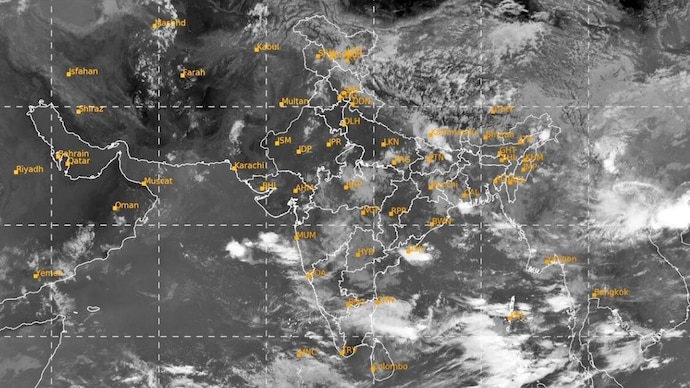
Delhi woke up to clear blue skies and sweltering heat on June 27 instead of the rain that typically marks the arrival of the southwest monsoon.
June 27 is the India Meteorological Department’s (IMD) long-term average date for the monsoon’s onset over the national capital, calculated using decades of weather records.
However, the seasonal rains this year failed to reach the city on schedule, extending the spell of hot and humid conditions across Delhi.
WHY IS THE MONSOON DELAYED IN DELHI THIS YEAR?
The southwest monsoon is not a single wall of rain that sweeps north. It travels in pulses, carried by the monsoon trough, a long belt of low pressure stretching across the country.
The trough is tugged northward by low pressure areas, swirling weather systems that form over the warm Bay of Bengal and draw moist sea air inland.
This year, those systems have refused to form. Without them, the trough has stayed pinned far to the south, while dry, hot westerly winds from the deserts of Pakistan and west Asia rule the skies of northwest India.
These winds sink rather than rise, and it is rising air that builds rain clouds. The outcome is clear skies and relentless heat.
WHAT IS EL NINO, AND HOW DOES IT WEAKEN THE MONSOON?
Behind the local stall sits a far larger force. The IMD says El Nino conditions are developing in the Pacific Ocean.
El Nino is the unusual warming of the surface waters of the central and eastern Pacific, thousands of kilometres from India.
That warming reshuffles winds across the whole tropics. It tends to weaken the cross equatorial flow, the powerful stream of air that crosses the equator near Africa and turns into the moisture-laden southwest monsoon.
A weaker flow carries less moisture to India, and in the past, El Nino years have often brought below normal rain.
WILL MONSOON 2026 BE BELOW NORMAL?
Quite possibly. The IMD expects June to September rainfall to be about 90 per cent of the Long Period Average, the fifty-year benchmark used to define a normal monsoon. Anything under 96 per cent counts as below normal.
Two more switches are stuck in the wrong position. The Madden Julian Oscillation, a roving band of cloud and rain that circles the equator, spent much of June in a phase that suppresses Indian rainfall.
The Indian Ocean Dipole, a temperature seesaw across the Indian Ocean that can sometimes rescue a weak monsoon, is currently neutral.
By the end of June, the country was running a rainfall deficit of around 42 per cent.
WHEN WILL IT RAIN IN DELHI?
The wait may be nearly over. The IMD expects conditions to turn favourable for the monsoon to push into Gujarat, Madhya Pradesh, Uttar Pradesh and Uttarakhand within days.
Forecasters are watching the Bay of Bengal, where a fresh low pressure area is expected to brew and finally shove the trough north.
If it does, Delhi should get its first true monsoon showers in the first week of July.
Late, but a relief the parched capital badly needs.
Delhi woke up to clear blue skies and sweltering heat on June 27 instead of the rain that typically marks the arrival of the southwest monsoon.
June 27 is the India Meteorological Department’s (IMD) long-term average date for the monsoon’s onset over the national capital, calculated using decades of weather records.
However, the seasonal rains this year failed to reach the city on schedule, extending the spell of hot and humid conditions across Delhi.
WHY IS THE MONSOON DELAYED IN DELHI THIS YEAR?
The southwest monsoon is not a single wall of rain that sweeps north. It travels in pulses, carried by the monsoon trough, a long belt of low pressure stretching across the country.
The trough is tugged northward by low pressure areas, swirling weather systems that form over the warm Bay of Bengal and draw moist sea air inland.
This year, those systems have refused to form. Without them, the trough has stayed pinned far to the south, while dry, hot westerly winds from the deserts of Pakistan and west Asia rule the skies of northwest India.
These winds sink rather than rise, and it is rising air that builds rain clouds. The outcome is clear skies and relentless heat.
WHAT IS EL NINO, AND HOW DOES IT WEAKEN THE MONSOON?
Behind the local stall sits a far larger force. The IMD says El Nino conditions are developing in the Pacific Ocean.
El Nino is the unusual warming of the surface waters of the central and eastern Pacific, thousands of kilometres from India.
That warming reshuffles winds across the whole tropics. It tends to weaken the cross equatorial flow, the powerful stream of air that crosses the equator near Africa and turns into the moisture-laden southwest monsoon.
A weaker flow carries less moisture to India, and in the past, El Nino years have often brought below normal rain.
WILL MONSOON 2026 BE BELOW NORMAL?
Quite possibly. The IMD expects June to September rainfall to be about 90 per cent of the Long Period Average, the fifty-year benchmark used to define a normal monsoon. Anything under 96 per cent counts as below normal.
Two more switches are stuck in the wrong position. The Madden Julian Oscillation, a roving band of cloud and rain that circles the equator, spent much of June in a phase that suppresses Indian rainfall.
The Indian Ocean Dipole, a temperature seesaw across the Indian Ocean that can sometimes rescue a weak monsoon, is currently neutral.
By the end of June, the country was running a rainfall deficit of around 42 per cent.
WHEN WILL IT RAIN IN DELHI?
The wait may be nearly over. The IMD expects conditions to turn favourable for the monsoon to push into Gujarat, Madhya Pradesh, Uttar Pradesh and Uttarakhand within days.
Forecasters are watching the Bay of Bengal, where a fresh low pressure area is expected to brew and finally shove the trough north.
If it does, Delhi should get its first true monsoon showers in the first week of July.
Late, but a relief the parched capital badly needs.

