Europe's 2nd heatwave grips England, France and Germany. The science behind it
England, France and Germany are baking in the second European heatwave of 2026, driven by a powerful heat dome that has stalled over the continent. Forecasters at England's Met Office, Meteo-France and Germany's DWD warn of record-threatening temperatures and dangerous tropical nights with little relief in sight.
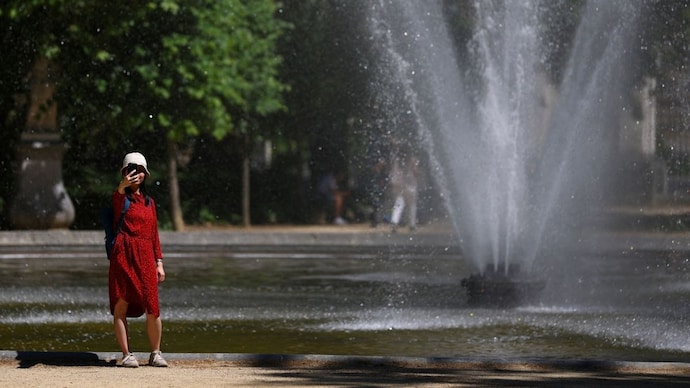
Summer in Europe does not officially begin until June 21. The heat did not wait for the invitation this year.
For the second time this year, a fierce heatwave has clamped down on Western Europe, and England, France and Germany are all sweltering at once.
Forecasters say there is little relief in sight before the week is out.
The numbers are startling for June. Meteo-France has placed 60 departments under an orange canicule, its second-highest heat alert, and warns that some may turn red, the highest level, from June 21.
Canicule is simply the French word for a heatwave, a run of dangerously hot days and nights. The agency expects June 22 to be the worst, with temperatures of 37 to 42 degrees Celsius, and says the day could become the hottest ever recorded in France in any month.
Across the Channel, the Met Office has issued an amber extreme heat warning, its second-highest, for southern England and south-eastern Wales on June 22 and 23.
Temperatures could touch 34 degrees, nudging the June record of 35.6 degrees set in 1976.
In Germany, the national weather service, the DWD, has warned almost the entire country, with the south-west reaching 38 degrees and violent thunderstorms, hail and heavy rain expected to follow.
WHAT IS A HEAT DOME
The culprit has a name: a heat dome. Picture a lid clamped on a simmering pot. A vast area of high pressure parks itself over the continent and refuses to budge. Inside it, air slowly sinks.
As it sinks it is squeezed, and squeezed air heats up, just as a bicycle pump warms when pressed.
The sinking air also scatters clouds, so the Sun beats down unfiltered.
With the lid stuck in place, heat simply piles up. Warm air dragged north from the Sahara makes it worse.
THE DANGER THAT COMES AT NIGHT
The cruelty is not only in the afternoon.
Forecasters are warning of tropical nights, when the temperature never falls below 20 degrees. The human body relies on cooler nights to shed the day's heat and recover.
When that relief never comes, the strain on the heart and circulation builds, and it is the elderly and the sick who suffer most.
Unusually warm seas around Europe, themselves in the grip of marine heatwaves, are keeping coastal nights stifling too.
A CONTINENT RUNNING A FEVER
None of this is a freak. The World Meteorological Organisation calls Europe the fastest-warming continent on Earth, heating at roughly twice the global average.
A warmer world does not invent heatwaves, but it loads the dice, making them hotter, longer and more frequent, and dragging them earlier into the year.
This is the second major European heatwave of 2026, and the calendar still says spring.
For now, England, France and Germany can only wait for the dome to drift away. Until it does, the advice is old and unglamorous. Drink water, stay out of the afternoon Sun, and look in on those who cannot cool themselves.
Summer in Europe does not officially begin until June 21. The heat did not wait for the invitation this year.
For the second time this year, a fierce heatwave has clamped down on Western Europe, and England, France and Germany are all sweltering at once.
Forecasters say there is little relief in sight before the week is out.
The numbers are startling for June. Meteo-France has placed 60 departments under an orange canicule, its second-highest heat alert, and warns that some may turn red, the highest level, from June 21.
Canicule is simply the French word for a heatwave, a run of dangerously hot days and nights. The agency expects June 22 to be the worst, with temperatures of 37 to 42 degrees Celsius, and says the day could become the hottest ever recorded in France in any month.
Across the Channel, the Met Office has issued an amber extreme heat warning, its second-highest, for southern England and south-eastern Wales on June 22 and 23.
Temperatures could touch 34 degrees, nudging the June record of 35.6 degrees set in 1976.
In Germany, the national weather service, the DWD, has warned almost the entire country, with the south-west reaching 38 degrees and violent thunderstorms, hail and heavy rain expected to follow.
WHAT IS A HEAT DOME
The culprit has a name: a heat dome. Picture a lid clamped on a simmering pot. A vast area of high pressure parks itself over the continent and refuses to budge. Inside it, air slowly sinks.
As it sinks it is squeezed, and squeezed air heats up, just as a bicycle pump warms when pressed.
The sinking air also scatters clouds, so the Sun beats down unfiltered.
With the lid stuck in place, heat simply piles up. Warm air dragged north from the Sahara makes it worse.
THE DANGER THAT COMES AT NIGHT
The cruelty is not only in the afternoon.
Forecasters are warning of tropical nights, when the temperature never falls below 20 degrees. The human body relies on cooler nights to shed the day's heat and recover.
When that relief never comes, the strain on the heart and circulation builds, and it is the elderly and the sick who suffer most.
Unusually warm seas around Europe, themselves in the grip of marine heatwaves, are keeping coastal nights stifling too.
A CONTINENT RUNNING A FEVER
None of this is a freak. The World Meteorological Organisation calls Europe the fastest-warming continent on Earth, heating at roughly twice the global average.
A warmer world does not invent heatwaves, but it loads the dice, making them hotter, longer and more frequent, and dragging them earlier into the year.
This is the second major European heatwave of 2026, and the calendar still says spring.
For now, England, France and Germany can only wait for the dome to drift away. Until it does, the advice is old and unglamorous. Drink water, stay out of the afternoon Sun, and look in on those who cannot cool themselves.

