Paris breaks 147-year-old record as Europe swelters in killer heatwave
France's national weather service has issued its highest-level red heat alerts for more than half the country, warning of dangers especially to the elderly, children, and those with health conditions.
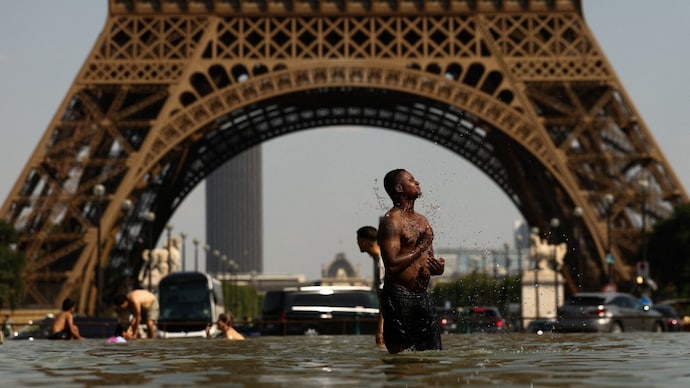
A scorching heatwave is gripping much of Europe, shattering temperature records and putting millions at risk.
France has been one of the worst-hit nations as the crisis unfolds.
The nation has recorded its hottest days ever in recent days, with Paris seeing more days above 40°C this week than in the entire 147-year period from 1872 to 2019.
The heatwave has been caused by a large area of high pressure that traps hot air, called a heat dome, and has brought clear skies, intense sunshine, and unusually high temperatures for the season.
The climate event has once again reignited conversations about human-caused climate change and what it means for the future.
The warming climate is a particular concern for Europe, which remains highly vulnerable to climate change impacts, and is also warming faster than most other continents, making such extreme events more common and severe. France is an apt example.
HOW HOT IS FRANCE?
France has been hit the hardest amid the ongoing heatwave.
The country's national average temperature this week, measured across dozens of stations by combining day and night readings, reached 29.8°C, breaking the previous record.
It tied or broke this mark again the next day.
Local highs climbed to 44.3°C in Pissos in southwestern France, marking the highest temperature recorded during this event.
In Paris, temperatures topped 40°C on consecutive days, an unprecedented occurrence for June.
Parts of western and southwestern France saw highs between 39°C and 43°C.
Meteo-France, the national weather service, issued its highest-level red heat alerts for more than half the country, warning of dangers especially to the elderly, children, and those with health conditions.
WHY IS EUROPE VULNERABLE TO HEATWAVES?
The heatwave has acutely affected regions like France, along with Italy and Spain, where occurrences like these are extremely rare, or at least they used to be.
The infrastructure and the general way of life in these regions have historically been designed and created according to the climate, which is now rapidly changing, and millions are struggling to keep up.
For example, many European homes, especially older ones in cities like Paris, lack air conditioning, making the heat feel even more punishing, similar to how some parts of India cope without reliable power during peak summer.
The ongoing heatwave has not only made people sweat, but has also proved to be fatal, causing numerous deaths.
Dozens of drowning deaths in France have been reported as people rushed to rivers, lakes, and canals to cool off, often in unsupervised areas.
Furthermore, at least 40 heat-related deaths have been linked to the heatwave so far in the country, including vulnerable groups and incidents like children left in hot cars.
HOW BAD IS THE EUROPE HEATWAVE?
Similar records were broken in the UK, including the one where the nation saw the hottest June days in recorded history. Spain and Italy also issued alerts and saw extremely high temperatures, straining the vulnerable population.
The heatwave has conjured memories of past deadly European heatwaves, like the one in 2003.
As for the current one, a thing that stands out is the timing, as this particular heatwave has arrived unusually early in the season.
Scientists link these events to climate change, which makes heatwaves more intense, frequent, and longer. While single events aren't solely caused by warming, it's clear that Europe is seeing rising extremes more frequently.
A scorching heatwave is gripping much of Europe, shattering temperature records and putting millions at risk.
France has been one of the worst-hit nations as the crisis unfolds.
The nation has recorded its hottest days ever in recent days, with Paris seeing more days above 40°C this week than in the entire 147-year period from 1872 to 2019.
The heatwave has been caused by a large area of high pressure that traps hot air, called a heat dome, and has brought clear skies, intense sunshine, and unusually high temperatures for the season.
The climate event has once again reignited conversations about human-caused climate change and what it means for the future.
The warming climate is a particular concern for Europe, which remains highly vulnerable to climate change impacts, and is also warming faster than most other continents, making such extreme events more common and severe. France is an apt example.
HOW HOT IS FRANCE?
France has been hit the hardest amid the ongoing heatwave.
The country's national average temperature this week, measured across dozens of stations by combining day and night readings, reached 29.8°C, breaking the previous record.
It tied or broke this mark again the next day.
Local highs climbed to 44.3°C in Pissos in southwestern France, marking the highest temperature recorded during this event.
In Paris, temperatures topped 40°C on consecutive days, an unprecedented occurrence for June.
Parts of western and southwestern France saw highs between 39°C and 43°C.
Meteo-France, the national weather service, issued its highest-level red heat alerts for more than half the country, warning of dangers especially to the elderly, children, and those with health conditions.
WHY IS EUROPE VULNERABLE TO HEATWAVES?
The heatwave has acutely affected regions like France, along with Italy and Spain, where occurrences like these are extremely rare, or at least they used to be.
The infrastructure and the general way of life in these regions have historically been designed and created according to the climate, which is now rapidly changing, and millions are struggling to keep up.
For example, many European homes, especially older ones in cities like Paris, lack air conditioning, making the heat feel even more punishing, similar to how some parts of India cope without reliable power during peak summer.
The ongoing heatwave has not only made people sweat, but has also proved to be fatal, causing numerous deaths.
Dozens of drowning deaths in France have been reported as people rushed to rivers, lakes, and canals to cool off, often in unsupervised areas.
Furthermore, at least 40 heat-related deaths have been linked to the heatwave so far in the country, including vulnerable groups and incidents like children left in hot cars.
HOW BAD IS THE EUROPE HEATWAVE?
Similar records were broken in the UK, including the one where the nation saw the hottest June days in recorded history. Spain and Italy also issued alerts and saw extremely high temperatures, straining the vulnerable population.
The heatwave has conjured memories of past deadly European heatwaves, like the one in 2003.
As for the current one, a thing that stands out is the timing, as this particular heatwave has arrived unusually early in the season.
Scientists link these events to climate change, which makes heatwaves more intense, frequent, and longer. While single events aren't solely caused by warming, it's clear that Europe is seeing rising extremes more frequently.

