From robotic arm to diamond art: Skyroot Vikram-I to carry these payloads to space
Skyroot Aerospace has unveiled the payloads for Vikram-I's maiden orbital mission, ranging from a robotic arm to miniature tribute art. The flight reflects the widening role of private space missions in serving technology developers, global customers and creative projects.
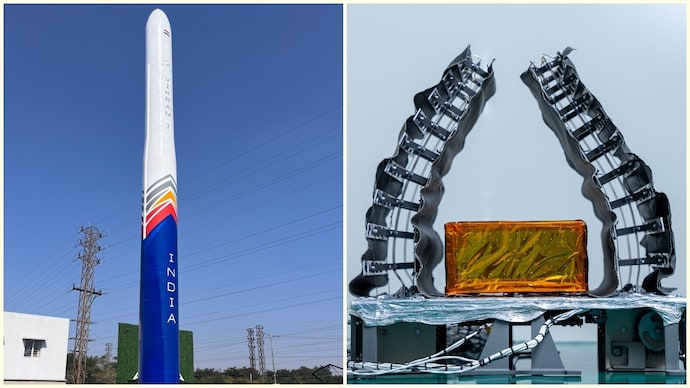
India's private space ambitions are set to take another giant leap as Skyroot Aerospace's Vikram-I prepares for its maiden orbital mission carrying an unusual mix of cutting-edge technology demonstrations and artistic tributes to India's scientific legacy.
Ahead of the historic launch, Skyroot announced that Vikram-I will carry payloads from Grahaa Space, Cosmoserve Space, DCubed GmbH, Cosmos Diamonds, and Skyroot's own SCOPE mission, alongside a miniature artwork celebrating India's greatest scientists.
The payload manifest reflects how commercial space missions are evolving beyond satellite launches to become testbeds for new technologies and creative expressions.
One of the headline payloads is Embrace, developed by Cosmoserve Space. The mission will demonstrate an in-orbit robotic arm, a technology expected to play an increasingly important role in satellite servicing, inspection, debris removal and future space manufacturing.
Unlike free-flying robotic systems, the arm will remain attached to Vikram-I's payload deck while carrying out its planned demonstration during the mission.
Another Indian payload, SOLARAS, developed by Grahaa Space, is a 1U CubeSat designed to demonstrate space technologies in orbit. Germany's DCubed GmbH is also flying two payloads, uD3PP and mD3RN, to showcase in-orbit technology demonstrations, highlighting the international participation aboard India's first privately built orbital launch vehicle.
Skyroot will also fly its own payload, Scope, which is expected to validate technologies developed by the company, although detailed specifications have not yet been disclosed.
Beyond technology, Vikram-I will carry two payloads celebrating art and India's scientific heritage.
The first is Cosmic Bloom, developed by Cosmos Diamonds, featuring a diamond jewellery creation mounted on an aluminium base plate. The payload is intended to symbolize the fusion of craftsmanship, engineering and space exploration.
The second is Microart, created by artist Ajay Kumar Mattewada. The miniature artwork is cast in the shape of a rocket using 18-karat gold and contains microscopic sculptures of Sir CV Raman, Dr Vikram Sarabhai, after whom Vikram-I is named, and former president Dr APJ Abdul Kalam.
Each sculpture measures just 700 by 980 microns, making them smaller than a grain of rice.
The artwork pays tribute to three pioneers whose contributions laid the foundation for India's scientific and space programmes.
Vikram-I's maiden mission marks a defining moment for India's commercial space sector. Besides demonstrating Skyroot's launch capabilities, the flight showcases how private missions can serve universities, startups, international customers, technology developers and even artists.
If successful, the mission will cement Skyroot's place as the first Indian private company to place payloads into orbit, opening a new chapter in the country's rapidly growing commercial space ecosystem.
India's private space ambitions are set to take another giant leap as Skyroot Aerospace's Vikram-I prepares for its maiden orbital mission carrying an unusual mix of cutting-edge technology demonstrations and artistic tributes to India's scientific legacy.
Ahead of the historic launch, Skyroot announced that Vikram-I will carry payloads from Grahaa Space, Cosmoserve Space, DCubed GmbH, Cosmos Diamonds, and Skyroot's own SCOPE mission, alongside a miniature artwork celebrating India's greatest scientists.
The payload manifest reflects how commercial space missions are evolving beyond satellite launches to become testbeds for new technologies and creative expressions.
One of the headline payloads is Embrace, developed by Cosmoserve Space. The mission will demonstrate an in-orbit robotic arm, a technology expected to play an increasingly important role in satellite servicing, inspection, debris removal and future space manufacturing.
Unlike free-flying robotic systems, the arm will remain attached to Vikram-I's payload deck while carrying out its planned demonstration during the mission.
Another Indian payload, SOLARAS, developed by Grahaa Space, is a 1U CubeSat designed to demonstrate space technologies in orbit. Germany's DCubed GmbH is also flying two payloads, uD3PP and mD3RN, to showcase in-orbit technology demonstrations, highlighting the international participation aboard India's first privately built orbital launch vehicle.
Skyroot will also fly its own payload, Scope, which is expected to validate technologies developed by the company, although detailed specifications have not yet been disclosed.
Beyond technology, Vikram-I will carry two payloads celebrating art and India's scientific heritage.
The first is Cosmic Bloom, developed by Cosmos Diamonds, featuring a diamond jewellery creation mounted on an aluminium base plate. The payload is intended to symbolize the fusion of craftsmanship, engineering and space exploration.
The second is Microart, created by artist Ajay Kumar Mattewada. The miniature artwork is cast in the shape of a rocket using 18-karat gold and contains microscopic sculptures of Sir CV Raman, Dr Vikram Sarabhai, after whom Vikram-I is named, and former president Dr APJ Abdul Kalam.
Each sculpture measures just 700 by 980 microns, making them smaller than a grain of rice.
The artwork pays tribute to three pioneers whose contributions laid the foundation for India's scientific and space programmes.
Vikram-I's maiden mission marks a defining moment for India's commercial space sector. Besides demonstrating Skyroot's launch capabilities, the flight showcases how private missions can serve universities, startups, international customers, technology developers and even artists.
If successful, the mission will cement Skyroot's place as the first Indian private company to place payloads into orbit, opening a new chapter in the country's rapidly growing commercial space ecosystem.

