Why the 2026 El Nino in Pacific Ocean has earned the nickname Godzilla
Godzilla El Nino sounds like a movie monster, but the science behind the nickname is real. Here is what a Godzilla El Nino means, who first coined the phrase, and why the word is back in 2026.
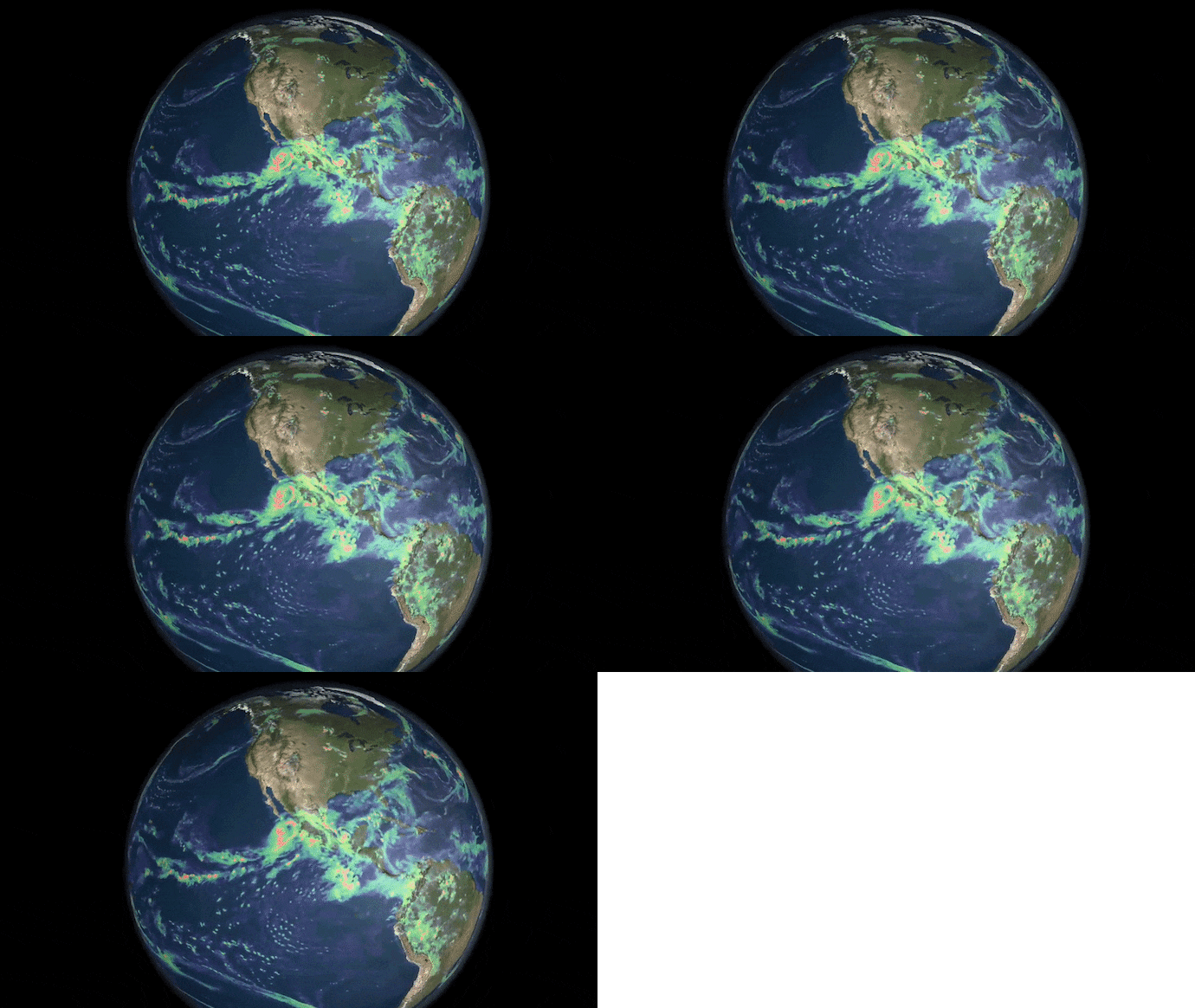
It is the kind of name that belongs on a cinema poster, not a weather bulletin. Yet every few years, when the Pacific Ocean begins to simmer, the same word surfaces in headlines around the world: Godzilla. A Godzilla El Nino.
The phrase sounds like pure hype. The science underneath it is real.
WHAT IS EL NINO?
Start with El Nino itself. It is the warm phase of a natural climate cycle called the El Nino Southern Oscillation, or ENSO, a slow see-saw of warming and cooling in the tropical Pacific.
Normally, steady winds called the trade winds push warm surface water westward, towards Asia and Australia.
During El Nino, those winds weaken, and the warm water slides back eastward, towards South America.
The name is old and rather tender. Peruvian fishermen noticed the warm water tended to arrive around Christmas, and called it El Nino, Spanish for the little boy, a nod to the infant Christ.
WHERE THE NAME GODZILLA COMES FROM
The monster came much later, and from California. In August 2015, as an unusually strong El Nino built in the Pacific, Bill Patzert, a climatologist at Nasa’s Jet Propulsion Laboratory, reached for a bigger word. This, he said, had the potential to be a Godzilla El Nino.
It was never a scientific term. Patzert borrowed the name of the giant Japanese film monster to capture something numbers alone could not, the sheer scale of disruption a powerful El Nino can unleash. The label stuck, and it has been dusted off ever since whenever a big one looms.
WHAT MAKES AN EL NINO A GODZILLA
Scientists measure an El Nino’s muscle in a stretch of the central Pacific called the Nino 3.4 region, tracking how far the sea surface climbs above its normal temperature.
A rise of half a degree Celsius marks an El Nino. The strongest events, sometimes called super El Ninos, push two degrees or more above normal.
Only a handful have ever reached that scale, the giants of 1982-83, 1997-98 and 2015-16.
These were the true Godzillas, linked to floods, droughts, wildfires and record heat across the planet. The 1997-98 event alone reshaped an entire Californian winter and was, at the time, the strongest ever recorded.
WHY THE WORD IS BACK IN 2026
The name has returned because forecasters see another powerful El Nino taking shape.
The World Meteorological Organization, the United Nations weather body, puts the odds of one developing this year at about 80 per cent by mid-year, climbing towards 90 per cent later on.
Some forecasts suggest it could rival, or even beat, the records.
For India, that carries an extra weight, because strong El Nino years often mean a weaker monsoon. Whether 2026 truly earns the title is not yet settled.
But the word does its job. Strip away the drama and Godzilla is simply shorthand, a one-word warning that this El Nino could be a monster.
It is the kind of name that belongs on a cinema poster, not a weather bulletin. Yet every few years, when the Pacific Ocean begins to simmer, the same word surfaces in headlines around the world: Godzilla. A Godzilla El Nino.
The phrase sounds like pure hype. The science underneath it is real.
WHAT IS EL NINO?
Start with El Nino itself. It is the warm phase of a natural climate cycle called the El Nino Southern Oscillation, or ENSO, a slow see-saw of warming and cooling in the tropical Pacific.
Normally, steady winds called the trade winds push warm surface water westward, towards Asia and Australia.
During El Nino, those winds weaken, and the warm water slides back eastward, towards South America.
The name is old and rather tender. Peruvian fishermen noticed the warm water tended to arrive around Christmas, and called it El Nino, Spanish for the little boy, a nod to the infant Christ.
WHERE THE NAME GODZILLA COMES FROM
The monster came much later, and from California. In August 2015, as an unusually strong El Nino built in the Pacific, Bill Patzert, a climatologist at Nasa’s Jet Propulsion Laboratory, reached for a bigger word. This, he said, had the potential to be a Godzilla El Nino.
It was never a scientific term. Patzert borrowed the name of the giant Japanese film monster to capture something numbers alone could not, the sheer scale of disruption a powerful El Nino can unleash. The label stuck, and it has been dusted off ever since whenever a big one looms.
WHAT MAKES AN EL NINO A GODZILLA
Scientists measure an El Nino’s muscle in a stretch of the central Pacific called the Nino 3.4 region, tracking how far the sea surface climbs above its normal temperature.
A rise of half a degree Celsius marks an El Nino. The strongest events, sometimes called super El Ninos, push two degrees or more above normal.
Only a handful have ever reached that scale, the giants of 1982-83, 1997-98 and 2015-16.
These were the true Godzillas, linked to floods, droughts, wildfires and record heat across the planet. The 1997-98 event alone reshaped an entire Californian winter and was, at the time, the strongest ever recorded.
WHY THE WORD IS BACK IN 2026
The name has returned because forecasters see another powerful El Nino taking shape.
The World Meteorological Organization, the United Nations weather body, puts the odds of one developing this year at about 80 per cent by mid-year, climbing towards 90 per cent later on.
Some forecasts suggest it could rival, or even beat, the records.
For India, that carries an extra weight, because strong El Nino years often mean a weaker monsoon. Whether 2026 truly earns the title is not yet settled.
But the word does its job. Strip away the drama and Godzilla is simply shorthand, a one-word warning that this El Nino could be a monster.

