Himalayas burning with fever: Jammu & Kashmir warmed by 1°C in just 20 years
Scientists have uncovered an alarming shift unfolding across the Himalayas, with changes that could affect millions in no time.
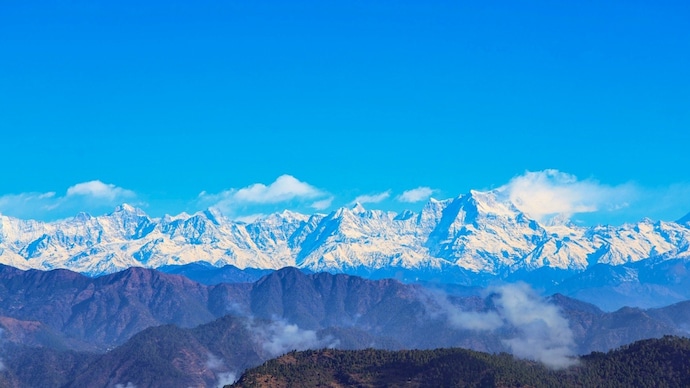
The Himalayas are heating up at an alarming pace, and parts of Jammu and Kashmir have warmed by nearly 1°C in just two decades, with high-altitude regions experiencing the fastest rise in temperatures, a new study has found.
Scientists warn that the trend could speed up glacier melt, disrupt river flows and threaten water security for millions who depend on Himalayan rivers.
Published in the journal Scientific Reports, the study analysed weather station observations and atmospheric data collected between 1980 and 2024.
Researchers from the Centre for Ocean, River, Atmosphere and Land Sciences (CORAL) at the Indian Institute of Technology (IIT) Kharagpur found that mountain towns such as Bhaderwah, Pahalgam and Gulmarg are warming much faster than lower-lying areas like Jammu.
MOUNTAINS WARMING FASTER THAN PLAINS
The researchers observed a phenomenon known as elevation-dependent warming, where higher-altitude regions heat up more quickly than surrounding lowlands.
At some mid-altitude stations, average temperatures increased by as much as 0.3°C every decade, while nighttime temperatures before the monsoon rose by up to 0.6°C per decade.
Warmer nights are particularly worrying because they reduce the natural cooling needed to preserve snow and ice.
According to the study, shrinking snow cover means less sunlight is reflected into space, causing the land to absorb more heat, a process known as the snow-albedo feedback.
Increasing atmospheric moisture is also trapping more heat near the surface, accelerating warming.
A GRAVE WARNING FOR THE HIMALAYAS
Often called the "Water Tower of Asia," the Himalayas feed major river systems that support hundreds of millions of people across northern India and neighbouring countries.
Faster warming could accelerate glacier retreat, reduce seasonal snow storage, alter river flows and increase the risk of floods, landslides and water shortages.
The findings also align with a growing body of research showing that the Hindu Kush-Himalayan region is warming faster than the global average, placing one of the world's most climate-sensitive ecosystems under increasing stress.
Scientists urge stronger climate monitoring and adaptation measures, noting that they are now essential to help mountain communities prepare for the changes already underway.
The Himalayas are heating up at an alarming pace, and parts of Jammu and Kashmir have warmed by nearly 1°C in just two decades, with high-altitude regions experiencing the fastest rise in temperatures, a new study has found.
Scientists warn that the trend could speed up glacier melt, disrupt river flows and threaten water security for millions who depend on Himalayan rivers.
Published in the journal Scientific Reports, the study analysed weather station observations and atmospheric data collected between 1980 and 2024.
Researchers from the Centre for Ocean, River, Atmosphere and Land Sciences (CORAL) at the Indian Institute of Technology (IIT) Kharagpur found that mountain towns such as Bhaderwah, Pahalgam and Gulmarg are warming much faster than lower-lying areas like Jammu.
MOUNTAINS WARMING FASTER THAN PLAINS
The researchers observed a phenomenon known as elevation-dependent warming, where higher-altitude regions heat up more quickly than surrounding lowlands.
At some mid-altitude stations, average temperatures increased by as much as 0.3°C every decade, while nighttime temperatures before the monsoon rose by up to 0.6°C per decade.
Warmer nights are particularly worrying because they reduce the natural cooling needed to preserve snow and ice.
According to the study, shrinking snow cover means less sunlight is reflected into space, causing the land to absorb more heat, a process known as the snow-albedo feedback.
Increasing atmospheric moisture is also trapping more heat near the surface, accelerating warming.
A GRAVE WARNING FOR THE HIMALAYAS
Often called the "Water Tower of Asia," the Himalayas feed major river systems that support hundreds of millions of people across northern India and neighbouring countries.
Faster warming could accelerate glacier retreat, reduce seasonal snow storage, alter river flows and increase the risk of floods, landslides and water shortages.
The findings also align with a growing body of research showing that the Hindu Kush-Himalayan region is warming faster than the global average, placing one of the world's most climate-sensitive ecosystems under increasing stress.
Scientists urge stronger climate monitoring and adaptation measures, noting that they are now essential to help mountain communities prepare for the changes already underway.

