India to get hydrogen train soon: The science that powers it on the tracks
India is launching its first indigenous hydrogen fuel cell train on the Jind to Sonipat route. This article explains the science behind the technology and why it matters for Indian Railways.
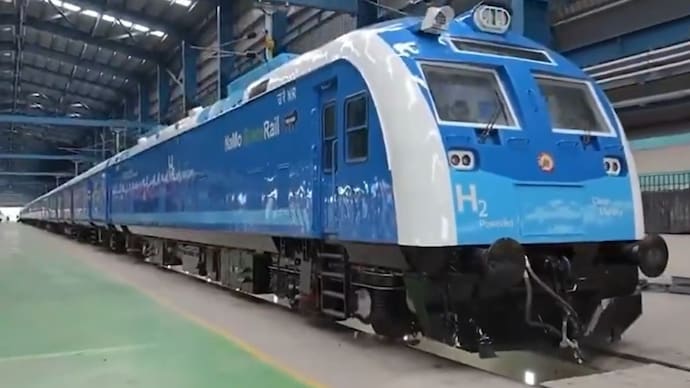
India is taking a giant leap toward a cleaner future as the first indigenous hydrogen fuel cell trainset is gearing up for its debut.
Recently approved for pilot operations on the Jind to Sonipat section in Haryana, this 10-car train is more than just a new mode of transport.
It represents a bold shift for Indian Railways as the nation moves to replace traditional diesel engines with cutting-edge technology that emits nothing but water vapour.
THE SCIENCE BEHIND THE STEAMLESS TRAIN
Many commuters might wonder how a train can run on hydrogen without burning it like fuel in a car. The secret lies in a component called a hydrogen fuel cell.
You can think of a fuel cell as a clever energy box that generates electricity through a controlled chemical reaction.
It takes hydrogen stored in tanks on the train and mixes it with oxygen pulled from the air.
This process does not involve combustion or fire. Instead, it uses a thin membrane, a specialist material that acts like a microscopic gatekeeper, to separate electrons from hydrogen atoms.
This flow of electrons creates a steady stream of electricity that powers the train motors.
Because it relies on this electrochemical process rather than burning diesel, the only byproduct at the tailpipe is pure water vapour. This is why it is often called a zero-emission transport solution, provided the hydrogen itself is produced using green energy.
A POWERFUL INDIGENOUS DESIGN
This new train is not just a small prototype. It is a ten-coach broad gauge set, making it one of the most powerful hydrogen train designs in the world. With a total propulsion power of 2,400 kilowatts, it is built to handle the heavy demands of the Indian rail network.
Engineers at the Integral Coach Factory in Chennai designed this train from the ground up, ensuring that every safety feature, from high-tech leak detectors to flame sensors, meets rigorous international standards.
THE INFRASTRUCTURE CHALLENGE
A train is only as good as its fuel supply. To support this pilot, a dedicated facility has been established in Jind. It includes a green hydrogen production plant that uses electrolysis, a method where electricity is used to split water molecules into hydrogen and oxygen.
By using renewable energy for this process, Indian Railways ensures that the fuel is as clean as the engine that burns it.
While this project is a significant milestone, it is currently in the validation phase.
The pilot run will help experts understand how the train performs in the intense heat and dust of the Indian summer, as well as how efficiently it can handle daily operations.
It is a calculated step toward a future where our railways are quieter, cleaner, and entirely self-reliant.
India is taking a giant leap toward a cleaner future as the first indigenous hydrogen fuel cell trainset is gearing up for its debut.
Recently approved for pilot operations on the Jind to Sonipat section in Haryana, this 10-car train is more than just a new mode of transport.
It represents a bold shift for Indian Railways as the nation moves to replace traditional diesel engines with cutting-edge technology that emits nothing but water vapour.
THE SCIENCE BEHIND THE STEAMLESS TRAIN
Many commuters might wonder how a train can run on hydrogen without burning it like fuel in a car. The secret lies in a component called a hydrogen fuel cell.
You can think of a fuel cell as a clever energy box that generates electricity through a controlled chemical reaction.
It takes hydrogen stored in tanks on the train and mixes it with oxygen pulled from the air.
This process does not involve combustion or fire. Instead, it uses a thin membrane, a specialist material that acts like a microscopic gatekeeper, to separate electrons from hydrogen atoms.
This flow of electrons creates a steady stream of electricity that powers the train motors.
Because it relies on this electrochemical process rather than burning diesel, the only byproduct at the tailpipe is pure water vapour. This is why it is often called a zero-emission transport solution, provided the hydrogen itself is produced using green energy.
A POWERFUL INDIGENOUS DESIGN
This new train is not just a small prototype. It is a ten-coach broad gauge set, making it one of the most powerful hydrogen train designs in the world. With a total propulsion power of 2,400 kilowatts, it is built to handle the heavy demands of the Indian rail network.
Engineers at the Integral Coach Factory in Chennai designed this train from the ground up, ensuring that every safety feature, from high-tech leak detectors to flame sensors, meets rigorous international standards.
THE INFRASTRUCTURE CHALLENGE
A train is only as good as its fuel supply. To support this pilot, a dedicated facility has been established in Jind. It includes a green hydrogen production plant that uses electrolysis, a method where electricity is used to split water molecules into hydrogen and oxygen.
By using renewable energy for this process, Indian Railways ensures that the fuel is as clean as the engine that burns it.
While this project is a significant milestone, it is currently in the validation phase.
The pilot run will help experts understand how the train performs in the intense heat and dust of the Indian summer, as well as how efficiently it can handle daily operations.
It is a calculated step toward a future where our railways are quieter, cleaner, and entirely self-reliant.

