To empty the Cancer Train, India has a plan to first vaccinate its soil
Every night, a train leaves Bathinda for a cancer hospital in Bikaner, a symbol of Punjab's fears about decades of chemical farming. A new facility in Vadodara is using the science behind Covid-19 vaccines to keep biofertiliser microbes alive.
Every night, a passenger train pulls out of Bathinda station in Punjab and heads for Bikaner in Rajasthan, where a government hospital offers cancer treatment that many families in the cotton belt cannot find or afford closer to home.
Over the years, it has earned a name nobody wanted: the Cancer Train.
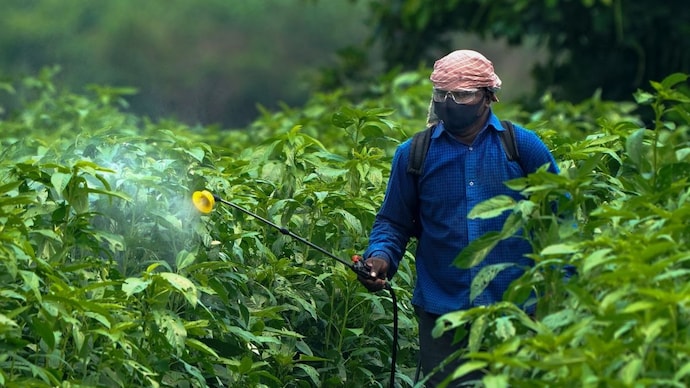
Punjab's Malwa region has long been associated, in public debate and in several studies, with elevated cancer cases, often linked to the intensive use of agricultural chemicals and to contaminated groundwater.
The science on direct causation remains contested, and some recent data have complicated the picture.
But the train, and the fear it carries, has become a symbol of a deeper anxiety about what decades of chemical-heavy farming may have done to the land and the people who live off it.
It is an image that Mahesh Bhagchandka, Chairman, IPL Biologicals, returns to again and again. "The chemical use in Punjab has been the highest in India," Bhagchandka tells IndiaToday.in. "In the soil, the water, the air, everywhere."
In late May this year, his agri-biologicals company inaugurated a Rs 400-crore manufacturing facility in Vadodara, Gujarat. The plant makes biofertilisers, biopesticides, and microbial-based crop health products.
But what makes it worth examining is not what it makes. It is how, and whether the science behind it holds up.
THE PROMISE THAT KEEPS DYING IN THE BOTTLE
A biofertiliser is not a chemical. It is a living organism, a microbe which, when added to the soil, survives, multiplies, and performs a useful function: releasing nutrients, fighting disease, or helping the soil hold water. The concept is elegant. The execution, in India, has often failed.
Most biofertilisers die before they reach the farm. Heat, time, and a patchy supply chain kill the organisms inside the bottle long before a farmer opens it. The farmer sees no result, loses trust, and goes back to chemicals.
Dr Vimala Prakash, who heads the company's Technology and Innovation Centre and describes her 25 years in the field as a passion with a purpose, is precise about the method. She says that the picture is now out of date.
"These were the myths that long surrounded biofertilisers," Dr Prakash tells IndiaToday.in. "But the industry has become research-focused, putting its best expertise into quality products and long-lasting solutions. Companies like IPL Biologicals have been doing this for three decades."
Dr Anil Kumar Saxena, former Director of the ICAR-National Bureau of Agriculturally Important Microorganisms, has watched the technology evolve to fight exactly this problem.
Until 2014, he says, most products were carrier-based and lasted barely six months. Liquid formulations that followed pushed shelf life to about a year.
Now, freeze-dried cell concentrates are extending it further still. But the real weakness, Dr Saxena argues, lies elsewhere.
"When we talk about the weak link, it is not the manufacturing process. It basically starts from the source of the culture," Dr Saxena tells IndiaToday.in. A product, he explains, is only as good as the strain inside it and the formulation built around it.
A LESSON BORROWED FROM THE VACCINE VIAL
When scientists made Covid-19 vaccines, they solved a problem farmers know all too well: keeping something biological alive long enough to reach the person who needs it.
One answer was lyophilisation, better known as freeze-drying. By removing water at very low temperatures, it holds the living material in a state of suspended animation, ready to revive the moment water is added.
IPL Biologicals claims that it uses the same process to make high-density biofertilisers in powder form, each gram carrying billions of living microbes, which it stores at room temperature to maintain shelf life.
"We are not just freeze-drying the microbes," says Dr Prakash. "We add specific protectants and cryo-protectants that shield the organism through the process."
Here, the scientists part ways.
Professor Prasun Mukherjee, former Head of the Nuclear Agriculture and Biotechnology Division at the Bhabha Atomic Research Centre, is sceptical.
"Freeze-drying of vaccines and microbe-based biofertilisers are not the same," Professor Mukherjee tells IndiaToday.in.
In his view, it is not a viable technology for biofertilisers, because it raises costs and because microbes can lose significant viability during the process.
Dr Saxena sees it differently. Freeze-dried cell concentrates, he says, represent a genuine advance, offering longer shelf life and better quality than the liquid products that came before them.
IPL Biologicals says it has since optimised the process, making the technology viable, both scientifically and economically. "This is the very technology we have built our new plant around," says Dr Prakash.
THE HUNT FOR THE PERFECT MICROBE
At the centre of IPL's science is a platform it calls Microbot technology. In plain terms, it is the company's method of finding naturally occurring microbes, selecting the toughest and most useful, and growing them at scale without altering their genes.
Scientists look in unusual places, including soil, compost, and infected insects, then test each strain for tolerance to heat and to high and low pH.
The company says it takes almost seven years to bring one product to market. That patience is unusual in an industry often accused of rushing products to the shelf, and it reflects a level of scientific investment few Indian agri-input firms can claim.
The bacteria include phosphate-solubilising, potassium-mobilising and zinc-solubilising strains, which unlock nutrients already in the soil and convert them into forms roots can absorb. The fungi include Trichoderma, which fights soil-borne disease, and Metarhizium, which controls pests.
Other microbes include Beauveria bassiana and Verticillium.
"Once we have the best strains, we combine them with our formulation technology so they survive and perform across different conditions, from Punjab to Tamil Nadu," says Dr Prakash.
It is precisely this claim that Dr Saxena urges caution on. India's soils, he points out, are wildly different, alkaline in the north, acidic in the south and northeast, with farming practices that vary just as much. "There are not many cultures which can be used pan-India," he says.
A strain must be tested across the country, through the kind of All India Coordinated Research trials that exist for this purpose, before such a claim can stand. "But at present, companies are selling products where single strains are being used, and they are being sold to be used throughout the country," Dr Saxena says.
It is a quiet but pointed warning that marketing may be running ahead of science.
THE FIRST MICROBES A SEED EVER MEETS
One of the company's more striking ideas does not go into the soil at all. It goes onto the seed. NutriBioCoat, which the company says it introduced in 2021 as India's first microbial seed coating, wraps each seed in beneficial microbes before sowing.
As the seed germinates, it releases compounds called root exudates that draw the microbes into partnership with the young plant. "As the plant grows, these microbes start multiplying in the rhizosphere," says Dr Prakash, referring to the thin, active layer of soil around the roots.
The blend of microbes changes from crop to crop, she says, whether cotton, soybean, chilli or tomato.
WHAT LINGERS BENEATH, SEASON AFTER SEASON
A deeper question is what happens underground when commercial strains are added to a field year after year. Do they crowd out the native organisms that have lived there for generations?
Professor Mukherjee is reassuring but candid about the gaps. "The soil ecosystem is biologically buffered, and there is a high likelihood of restoration of the ecosystem with time," he says.
He knows of no long-term study, but in his experience, the introduced microbe declines over time rather than taking over.
He also corrects a common belief about rice: beneficial microbes do survive in waterlogged paddy, he says, because the root zone where they work holds oxygen.
For its part, IPL Biologicals says its own field research, not independently published or reviewed, shows that continuous use of its products changes the soil's microbiome over time.
A FARM FACTORY THAT BEHAVES LIKE A HOSPITAL
The production line runs with almost no human intervention. Fermenters from 100 to 5,000 litres are controlled by software called SCADA, which monitors temperature, pressure, pH and oxygen in real time.
Quality labs run under HEPA filtration, the contamination standard used in pharmaceutical plants, and the original mother cultures are kept in a deep freezer at minus 80 degrees Celsius.
Every batch, the company says, is tested for the number of viable microbes per gram, along with contamination, pH and moisture before it can leave the facility.
By the company's account, government inspectors told Bhagchandka the plant did not merely meet Good Manufacturing Practice, the quality standard normally reserved for pharmaceutical drug-making, but exceeded it. That claim could not be independently verified.
The facility also generates 500 kW of solar power, which Dr Prakash confirms is a supplementary source rather than the main supply, and treats and reuses its wastewater with zero discharge.
On the environmental side, the plant goes well beyond what Indian regulation requires, recycling every drop of its water and drawing part of its energy from the Sun.
The company's products are now being registered in markets including Brazil, Argentina, the United States and the European Union.
Notably, IPL Biologicals does not genetically modify its microbes.
This philosophy, in Dr Prakash's words, is "nature to nature", identifying a useful organism, multiplying it, and returning it to the soil unchanged, an approach that sidesteps the controversy that has long dogged genetically modified crops in India.
THE LONGER ARGUMENT
The economics are formidable. India's fertiliser subsidy is among the government's largest expenses, around Rs 1.7 lakh crore a year, having peaked above Rs 2.2 lakh crore in 2022-23.
Because subsidised urea sells for a fraction of its real cost, farmers have every incentive to keep using it. PM Modi has appealed to farmers to cut chemical fertiliser use, most recently calling for a 50 per cent reduction.
Yet such appeals have been made repeatedly since 2019, and over that period, consumption has risen by about 15 per cent.
Bhagchandka has been making this argument for three decades. "I have been saying this to the government for 30 years," he says. He reaches for an example that still haunts Indian farming. "India failed Bt cotton. It was good technology. But the farmers were never trained properly," he says.
It is a lesson, he adds, that shaped his company's approach: never ask a farmer to gamble. He describes the pitch simply. Keep 90 per cent of your chemicals, Bhagchandka says he tells farmers, try just 10 per cent biological, and watch the results before deciding to use more.
The Cancer Train still runs every night from Bathinda. What fills it has been decades in the making, and whether biology can begin to reverse it is a question science has not yet settled.
In an industrial park outside Vadodara, a factory full of living microbes is betting that it can. India's farmers, and the soil beneath them, will be the ones to deliver the verdict.
(The author visited the IPL Biologicals facility in Vadodara at the company's invitation.)
Every night, a passenger train pulls out of Bathinda station in Punjab and heads for Bikaner in Rajasthan, where a government hospital offers cancer treatment that many families in the cotton belt cannot find or afford closer to home.
Over the years, it has earned a name nobody wanted: the Cancer Train.
Punjab's Malwa region has long been associated, in public debate and in several studies, with elevated cancer cases, often linked to the intensive use of agricultural chemicals and to contaminated groundwater.
The science on direct causation remains contested, and some recent data have complicated the picture.
But the train, and the fear it carries, has become a symbol of a deeper anxiety about what decades of chemical-heavy farming may have done to the land and the people who live off it.
It is an image that Mahesh Bhagchandka, Chairman, IPL Biologicals, returns to again and again. "The chemical use in Punjab has been the highest in India," Bhagchandka tells IndiaToday.in. "In the soil, the water, the air, everywhere."
In late May this year, his agri-biologicals company inaugurated a Rs 400-crore manufacturing facility in Vadodara, Gujarat. The plant makes biofertilisers, biopesticides, and microbial-based crop health products.
But what makes it worth examining is not what it makes. It is how, and whether the science behind it holds up.
THE PROMISE THAT KEEPS DYING IN THE BOTTLE
A biofertiliser is not a chemical. It is a living organism, a microbe which, when added to the soil, survives, multiplies, and performs a useful function: releasing nutrients, fighting disease, or helping the soil hold water. The concept is elegant. The execution, in India, has often failed.
Most biofertilisers die before they reach the farm. Heat, time, and a patchy supply chain kill the organisms inside the bottle long before a farmer opens it. The farmer sees no result, loses trust, and goes back to chemicals.
Dr Vimala Prakash, who heads the company's Technology and Innovation Centre and describes her 25 years in the field as a passion with a purpose, is precise about the method. She says that the picture is now out of date.
"These were the myths that long surrounded biofertilisers," Dr Prakash tells IndiaToday.in. "But the industry has become research-focused, putting its best expertise into quality products and long-lasting solutions. Companies like IPL Biologicals have been doing this for three decades."
Dr Anil Kumar Saxena, former Director of the ICAR-National Bureau of Agriculturally Important Microorganisms, has watched the technology evolve to fight exactly this problem.
Until 2014, he says, most products were carrier-based and lasted barely six months. Liquid formulations that followed pushed shelf life to about a year.
Now, freeze-dried cell concentrates are extending it further still. But the real weakness, Dr Saxena argues, lies elsewhere.
"When we talk about the weak link, it is not the manufacturing process. It basically starts from the source of the culture," Dr Saxena tells IndiaToday.in. A product, he explains, is only as good as the strain inside it and the formulation built around it.
A LESSON BORROWED FROM THE VACCINE VIAL
When scientists made Covid-19 vaccines, they solved a problem farmers know all too well: keeping something biological alive long enough to reach the person who needs it.
One answer was lyophilisation, better known as freeze-drying. By removing water at very low temperatures, it holds the living material in a state of suspended animation, ready to revive the moment water is added.
IPL Biologicals claims that it uses the same process to make high-density biofertilisers in powder form, each gram carrying billions of living microbes, which it stores at room temperature to maintain shelf life.
"We are not just freeze-drying the microbes," says Dr Prakash. "We add specific protectants and cryo-protectants that shield the organism through the process."
Here, the scientists part ways.
Professor Prasun Mukherjee, former Head of the Nuclear Agriculture and Biotechnology Division at the Bhabha Atomic Research Centre, is sceptical.
"Freeze-drying of vaccines and microbe-based biofertilisers are not the same," Professor Mukherjee tells IndiaToday.in.
In his view, it is not a viable technology for biofertilisers, because it raises costs and because microbes can lose significant viability during the process.
Dr Saxena sees it differently. Freeze-dried cell concentrates, he says, represent a genuine advance, offering longer shelf life and better quality than the liquid products that came before them.
IPL Biologicals says it has since optimised the process, making the technology viable, both scientifically and economically. "This is the very technology we have built our new plant around," says Dr Prakash.
THE HUNT FOR THE PERFECT MICROBE
At the centre of IPL's science is a platform it calls Microbot technology. In plain terms, it is the company's method of finding naturally occurring microbes, selecting the toughest and most useful, and growing them at scale without altering their genes.
Scientists look in unusual places, including soil, compost, and infected insects, then test each strain for tolerance to heat and to high and low pH.
The company says it takes almost seven years to bring one product to market. That patience is unusual in an industry often accused of rushing products to the shelf, and it reflects a level of scientific investment few Indian agri-input firms can claim.
The bacteria include phosphate-solubilising, potassium-mobilising and zinc-solubilising strains, which unlock nutrients already in the soil and convert them into forms roots can absorb. The fungi include Trichoderma, which fights soil-borne disease, and Metarhizium, which controls pests.
Other microbes include Beauveria bassiana and Verticillium.
"Once we have the best strains, we combine them with our formulation technology so they survive and perform across different conditions, from Punjab to Tamil Nadu," says Dr Prakash.
It is precisely this claim that Dr Saxena urges caution on. India's soils, he points out, are wildly different, alkaline in the north, acidic in the south and northeast, with farming practices that vary just as much. "There are not many cultures which can be used pan-India," he says.
A strain must be tested across the country, through the kind of All India Coordinated Research trials that exist for this purpose, before such a claim can stand. "But at present, companies are selling products where single strains are being used, and they are being sold to be used throughout the country," Dr Saxena says.
It is a quiet but pointed warning that marketing may be running ahead of science.
THE FIRST MICROBES A SEED EVER MEETS
One of the company's more striking ideas does not go into the soil at all. It goes onto the seed. NutriBioCoat, which the company says it introduced in 2021 as India's first microbial seed coating, wraps each seed in beneficial microbes before sowing.
As the seed germinates, it releases compounds called root exudates that draw the microbes into partnership with the young plant. "As the plant grows, these microbes start multiplying in the rhizosphere," says Dr Prakash, referring to the thin, active layer of soil around the roots.
The blend of microbes changes from crop to crop, she says, whether cotton, soybean, chilli or tomato.
WHAT LINGERS BENEATH, SEASON AFTER SEASON
A deeper question is what happens underground when commercial strains are added to a field year after year. Do they crowd out the native organisms that have lived there for generations?
Professor Mukherjee is reassuring but candid about the gaps. "The soil ecosystem is biologically buffered, and there is a high likelihood of restoration of the ecosystem with time," he says.
He knows of no long-term study, but in his experience, the introduced microbe declines over time rather than taking over.
He also corrects a common belief about rice: beneficial microbes do survive in waterlogged paddy, he says, because the root zone where they work holds oxygen.
For its part, IPL Biologicals says its own field research, not independently published or reviewed, shows that continuous use of its products changes the soil's microbiome over time.
A FARM FACTORY THAT BEHAVES LIKE A HOSPITAL
The production line runs with almost no human intervention. Fermenters from 100 to 5,000 litres are controlled by software called SCADA, which monitors temperature, pressure, pH and oxygen in real time.
Quality labs run under HEPA filtration, the contamination standard used in pharmaceutical plants, and the original mother cultures are kept in a deep freezer at minus 80 degrees Celsius.
Every batch, the company says, is tested for the number of viable microbes per gram, along with contamination, pH and moisture before it can leave the facility.
By the company's account, government inspectors told Bhagchandka the plant did not merely meet Good Manufacturing Practice, the quality standard normally reserved for pharmaceutical drug-making, but exceeded it. That claim could not be independently verified.
The facility also generates 500 kW of solar power, which Dr Prakash confirms is a supplementary source rather than the main supply, and treats and reuses its wastewater with zero discharge.
On the environmental side, the plant goes well beyond what Indian regulation requires, recycling every drop of its water and drawing part of its energy from the Sun.
The company's products are now being registered in markets including Brazil, Argentina, the United States and the European Union.
Notably, IPL Biologicals does not genetically modify its microbes.
This philosophy, in Dr Prakash's words, is "nature to nature", identifying a useful organism, multiplying it, and returning it to the soil unchanged, an approach that sidesteps the controversy that has long dogged genetically modified crops in India.
THE LONGER ARGUMENT
The economics are formidable. India's fertiliser subsidy is among the government's largest expenses, around Rs 1.7 lakh crore a year, having peaked above Rs 2.2 lakh crore in 2022-23.
Because subsidised urea sells for a fraction of its real cost, farmers have every incentive to keep using it. PM Modi has appealed to farmers to cut chemical fertiliser use, most recently calling for a 50 per cent reduction.
Yet such appeals have been made repeatedly since 2019, and over that period, consumption has risen by about 15 per cent.
Bhagchandka has been making this argument for three decades. "I have been saying this to the government for 30 years," he says. He reaches for an example that still haunts Indian farming. "India failed Bt cotton. It was good technology. But the farmers were never trained properly," he says.
It is a lesson, he adds, that shaped his company's approach: never ask a farmer to gamble. He describes the pitch simply. Keep 90 per cent of your chemicals, Bhagchandka says he tells farmers, try just 10 per cent biological, and watch the results before deciding to use more.
The Cancer Train still runs every night from Bathinda. What fills it has been decades in the making, and whether biology can begin to reverse it is a question science has not yet settled.
In an industrial park outside Vadodara, a factory full of living microbes is betting that it can. India's farmers, and the soil beneath them, will be the ones to deliver the verdict.
(The author visited the IPL Biologicals facility in Vadodara at the company's invitation.)

