How much rain must July bring to erase India's 40% monsoon deficit?
India's monsoon opened with a nearly 40 per cent rainfall deficit in June. Know what the IMD says about how much rain July will need to deliver to erase the deficit.
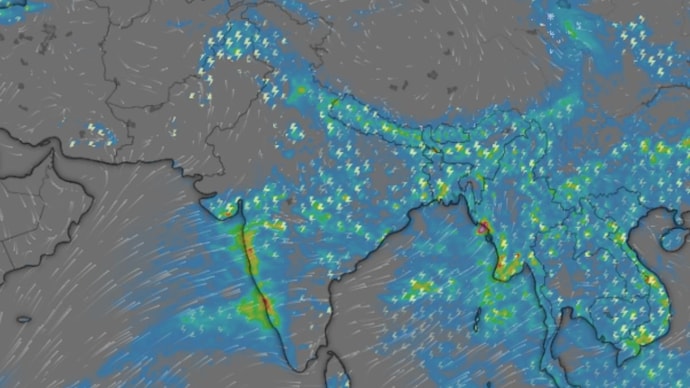
India's monsoon has opened with its steepest shortfall in years. Against a Long Period Average of 165.4 mm, the benchmark for what a normal June should deliver, based on rainfall recorded between 1971 and 2020, the country received just 99.5 mm this June.
A shortfall of nearly 40 per cent, one of the driest starts to the monsoon in recent memory.
The number lands harder against what came before it. For two summers running, in 2024 and 2025, the monsoon showed up on time and gave generously, filling reservoirs and carrying crops through their most fragile weeks. This June, that habit broke.
The question now is not whether July will rain. It is whether it can rain enough to pay off the debt June left behind.
HOW MUCH RAIN IS NEEDED TO COMPENSATE FOR THE DEFICIT?
Think of the monsoon as a household budget spread across four months. Each month has a target, and if one month falls short, the shortfall does not disappear. It gets carried forward, and the following month must cover both its own target and the hole left by the one before it.
July's own target, its Long Period Average, is 280.4 mm. Add that to June's target of 165.4 mm, and a normal two months of monsoon should produce 445.8 mm. June has already handed over only 99.5 mm of that.
For July to settle the account and bring the two months back to normal, it alone would need to produce 346.3 mm of rain.
That number is not a modest ask. It works out to about 123.5 per cent of July's own average, comfortably inside the range meteorologists classify as excess rainfall, the kind usually associated with unusually active weather systems, not routine monsoon flow.
WHY THE FORECAST IS WORKING AGAINST THE MATH
IMD's own outlook for July does not point towards excess. It points the other way, forecasting rainfall below 94 per cent of the Long Period Average. Run the numbers in that scenario and July would deliver around 263.6 mm, leaving the June-July total near 363.1 mm, a combined shortfall of roughly 18.6 per cent.
Even a perfectly average July, one that hits exactly 100 per cent of its target with nothing extra, would still leave the two months about 15 per cent short of where they ought to be.
The reason July is expected to underperform rather than overcorrect comes down to a familiar culprit sitting in the middle of the Pacific Ocean.
El Nino, the periodic warming of surface waters across the central and eastern Pacific, weakens the wind and pressure systems that normally pull moisture towards the Indian subcontinent.
In past years, a counterbalancing pattern called the Indian Ocean Dipole, essentially a temperature seesaw between the western and eastern Indian Ocean, has sometimes stepped in to compensate.
This year, the Dipole is expected to remain neutral through the season, offering no such rescue.
WHAT A WEAK MONSOON IN JULY MEANS BEYOND THE RAIN GAUGE
July typically supplies close to a third of the season's total rainfall and carries much of the weight for sowing kharif crops such as paddy, pulses and oilseeds. A weak July does not just leave a gap in the ledger. It pushes that gap onto August and September, the two months that together must already deliver nearly half the season's rain under normal circumstances.
The strain is compounded by what is already sitting in the country's reservoirs, currently running about 25 per cent lower than they were at this point last year. Combine that with the season's high temperatures, which accelerate evaporation, and even the rain that does fall has less staying power than it would in a cooler year.
IS A LATE MONSOON RECOVERY STILL POSSIBLE?
The monsoon does not move as a single uniform sheet across the country. It arrives in bursts, and a handful of well-placed low-pressure systems over the Bay of Bengal or the Arabian Sea could still push some regions well past their targets even while the national average stays depressed. But history offers a caution here.
Once a monsoon opens with a deficit as steep as June's, a complete statistical recovery within the same season has historically been the exception, not the rule.
For now, the country is left watching the sky do arithmetic it may not be able to finish.
India's monsoon has opened with its steepest shortfall in years. Against a Long Period Average of 165.4 mm, the benchmark for what a normal June should deliver, based on rainfall recorded between 1971 and 2020, the country received just 99.5 mm this June.
A shortfall of nearly 40 per cent, one of the driest starts to the monsoon in recent memory.
The number lands harder against what came before it. For two summers running, in 2024 and 2025, the monsoon showed up on time and gave generously, filling reservoirs and carrying crops through their most fragile weeks. This June, that habit broke.
The question now is not whether July will rain. It is whether it can rain enough to pay off the debt June left behind.
HOW MUCH RAIN IS NEEDED TO COMPENSATE FOR THE DEFICIT?
Think of the monsoon as a household budget spread across four months. Each month has a target, and if one month falls short, the shortfall does not disappear. It gets carried forward, and the following month must cover both its own target and the hole left by the one before it.
July's own target, its Long Period Average, is 280.4 mm. Add that to June's target of 165.4 mm, and a normal two months of monsoon should produce 445.8 mm. June has already handed over only 99.5 mm of that.
For July to settle the account and bring the two months back to normal, it alone would need to produce 346.3 mm of rain.
That number is not a modest ask. It works out to about 123.5 per cent of July's own average, comfortably inside the range meteorologists classify as excess rainfall, the kind usually associated with unusually active weather systems, not routine monsoon flow.
WHY THE FORECAST IS WORKING AGAINST THE MATH
IMD's own outlook for July does not point towards excess. It points the other way, forecasting rainfall below 94 per cent of the Long Period Average. Run the numbers in that scenario and July would deliver around 263.6 mm, leaving the June-July total near 363.1 mm, a combined shortfall of roughly 18.6 per cent.
Even a perfectly average July, one that hits exactly 100 per cent of its target with nothing extra, would still leave the two months about 15 per cent short of where they ought to be.
The reason July is expected to underperform rather than overcorrect comes down to a familiar culprit sitting in the middle of the Pacific Ocean.
El Nino, the periodic warming of surface waters across the central and eastern Pacific, weakens the wind and pressure systems that normally pull moisture towards the Indian subcontinent.
In past years, a counterbalancing pattern called the Indian Ocean Dipole, essentially a temperature seesaw between the western and eastern Indian Ocean, has sometimes stepped in to compensate.
This year, the Dipole is expected to remain neutral through the season, offering no such rescue.
WHAT A WEAK MONSOON IN JULY MEANS BEYOND THE RAIN GAUGE
July typically supplies close to a third of the season's total rainfall and carries much of the weight for sowing kharif crops such as paddy, pulses and oilseeds. A weak July does not just leave a gap in the ledger. It pushes that gap onto August and September, the two months that together must already deliver nearly half the season's rain under normal circumstances.
The strain is compounded by what is already sitting in the country's reservoirs, currently running about 25 per cent lower than they were at this point last year. Combine that with the season's high temperatures, which accelerate evaporation, and even the rain that does fall has less staying power than it would in a cooler year.
IS A LATE MONSOON RECOVERY STILL POSSIBLE?
The monsoon does not move as a single uniform sheet across the country. It arrives in bursts, and a handful of well-placed low-pressure systems over the Bay of Bengal or the Arabian Sea could still push some regions well past their targets even while the national average stays depressed. But history offers a caution here.
Once a monsoon opens with a deficit as steep as June's, a complete statistical recovery within the same season has historically been the exception, not the rule.
For now, the country is left watching the sky do arithmetic it may not be able to finish.

