India to set up 7 space labs in universities to train next-gen rocket scientists
India is setting up seven space laboratories across universities and colleges to give students hands-on training in satellite systems, rocketry, and mission design. Union Minister Dr Jitendra Singh reviewed the plan as India's private space sector crossed USD 600 million in investment and 400 startups.
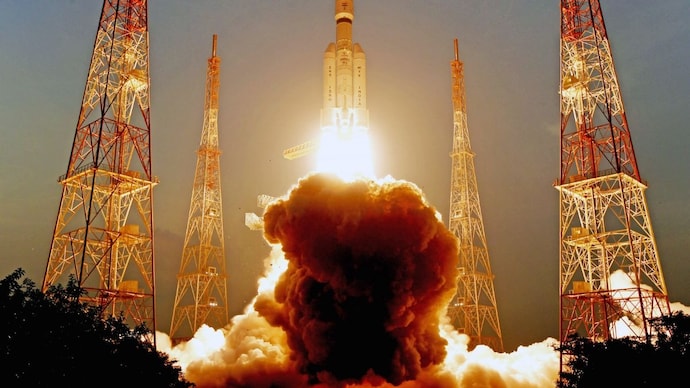
India is set to roll out its first batch of seven space laboratories across universities and colleges, in a bold push to nurture the next generation of rocket scientists, satellite engineers, and mission designers.
Union Minister of State (Independent Charge) for Science and Technology and Earth Sciences Jitendra Singh reviewed the plan on Sunday, signalling that hands-on exposure to satellite systems, rocketry, and mission design will soon become a campus reality.
The initiative comes as India's space sector, opened up to non-government players, has attracted more than USD 600 million in private investment over the past five years.
WHY IS INDIA SETTING UP SPACE LABS IN UNIVERSITIES?
The labs are designed to plug a critical talent gap.
As India’s private space ecosystem balloons, demand for skilled engineers in launch vehicles, satellite manufacturing, and ground infrastructure has shot up.
Until now, students aspiring to build rockets or design payloads (the equipment a satellite carries to do its job, such as cameras, antennas, or sensors) had few practical avenues.
The seven pilot labs will offer real-world exposure to mission design, the engineering process of planning a satellite's purpose, orbit, and lifespan.
HOW MUCH HAS INDIA'S PRIVATE SPACE SECTOR GROWN?
The growth has been staggering. Space startups have leapt from single digits in 2019 to over 400 by early 2026.
These firms now build everything from launch vehicles and satellites to ground stations and data services.
India's space partnerships now span 45 countries, with recent agreements signed with Singapore and the UAE.
WHAT FUNDS ARE BACKING INDIAN SPACE STARTUPS?
A Rs 1,000 crore venture capital fund, operationalised with SIDBI (Small Industries Development Bank of India), is being aimed at growth-stage startups.
A separate Rs 500 crore Technology Adoption Fund helps early-stage innovations become commercial products, while a seed scheme offers grants of up to Rs 1 crore for ideation and prototypes.
So far, IN-SPACe (the Indian National Space Promotion and Authorisation Centre, which regulates and promotes private space activity) has cleared 129 authorisations out of more than 1,000 applications.
Around 900 professionals have already been certified through 17 specialised training programmes covering satellite manufacturing, launch systems, and even space cybersecurity.
The campus space lab era has arrived.
India is set to roll out its first batch of seven space laboratories across universities and colleges, in a bold push to nurture the next generation of rocket scientists, satellite engineers, and mission designers.
Union Minister of State (Independent Charge) for Science and Technology and Earth Sciences Jitendra Singh reviewed the plan on Sunday, signalling that hands-on exposure to satellite systems, rocketry, and mission design will soon become a campus reality.
The initiative comes as India's space sector, opened up to non-government players, has attracted more than USD 600 million in private investment over the past five years.
WHY IS INDIA SETTING UP SPACE LABS IN UNIVERSITIES?
The labs are designed to plug a critical talent gap.
As India’s private space ecosystem balloons, demand for skilled engineers in launch vehicles, satellite manufacturing, and ground infrastructure has shot up.
Until now, students aspiring to build rockets or design payloads (the equipment a satellite carries to do its job, such as cameras, antennas, or sensors) had few practical avenues.
The seven pilot labs will offer real-world exposure to mission design, the engineering process of planning a satellite's purpose, orbit, and lifespan.
HOW MUCH HAS INDIA'S PRIVATE SPACE SECTOR GROWN?
The growth has been staggering. Space startups have leapt from single digits in 2019 to over 400 by early 2026.
These firms now build everything from launch vehicles and satellites to ground stations and data services.
India's space partnerships now span 45 countries, with recent agreements signed with Singapore and the UAE.
WHAT FUNDS ARE BACKING INDIAN SPACE STARTUPS?
A Rs 1,000 crore venture capital fund, operationalised with SIDBI (Small Industries Development Bank of India), is being aimed at growth-stage startups.
A separate Rs 500 crore Technology Adoption Fund helps early-stage innovations become commercial products, while a seed scheme offers grants of up to Rs 1 crore for ideation and prototypes.
So far, IN-SPACe (the Indian National Space Promotion and Authorisation Centre, which regulates and promotes private space activity) has cleared 129 authorisations out of more than 1,000 applications.
Around 900 professionals have already been certified through 17 specialised training programmes covering satellite manufacturing, launch systems, and even space cybersecurity.
The campus space lab era has arrived.

