North India to see thunderstorms, hail and dust Thursday, temperatures to drop
A western disturbance is set to bring thunderstorms, hailstorms, dust storms and gusty winds to north India on June 11, with Delhi expecting cooler weather and evening rain. IMD also forecasts very heavy rainfall across the northeast and south as the monsoon advances.
Brace yourself, north India. If Wednesday felt like standing inside an oven, Thursday could swing the other way, with thunder, dust and a sudden splash of rain.
The India Meteorological Department (IMD) says a western disturbance is moving in, and June 11 promises plenty of drama.
So what exactly is a western disturbance? Think of it as a travelling storm born over the Mediterranean Sea. It rides the high-altitude winds that circle the planet, picking up moisture along the way.
When it bumps into the Himalayas, that moisture has nowhere to go but down, spilling rain over the plains and snow on the peaks. According to the IMD, this one will keep northwest India wet until June 13.
The main act on June 11 is rough weather across Punjab, Haryana, Chandigarh, Delhi and Rajasthan. IMD warns of a thundersquall, a violent burst of wind that arrives suddenly and lasts at least a minute, with speeds touching 60 to 70 kmph and gusting to 80 kmph.
Add hailstorms over Himachal Pradesh, Uttarakhand, Jammu and Kashmir and parts of Uttar Pradesh, plus dust storms sweeping Uttar Pradesh and Rajasthan, and the day looks anything but ordinary.
DELHI SET FOR A COOLER, STORMIER DAY
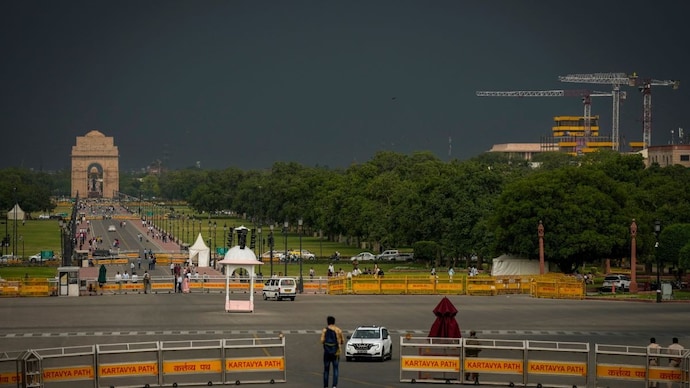
Delhiites can expect some respite. IMD pegs the maximum near 40 to 42 degrees Celsius, with a partly cloudy sky giving way to thunderstorms, lightning and gusty winds of 50 to 60 kmph by evening.
One word of caution, though. West Rajasthan may still simmer under heat wave conditions before the rain arrives.
Down south and in the east, it is the monsoon doing the heavy lifting.
IMD expects very heavy rainfall over Arunachal Pradesh, Assam, Meghalaya, Sub-Himalayan West Bengal and Sikkim, along with heavy showers drenching Kerala, coastal Karnataka and Tamil Nadu.
The advice is simple. Stay indoors during squalls, avoid sheltering under trees, and unplug appliances during lightning. Farmers should secure harvested produce against hail.
Forecasts can shift quickly, so keep one eye on the sky.
Brace yourself, north India. If Wednesday felt like standing inside an oven, Thursday could swing the other way, with thunder, dust and a sudden splash of rain.
The India Meteorological Department (IMD) says a western disturbance is moving in, and June 11 promises plenty of drama.
So what exactly is a western disturbance? Think of it as a travelling storm born over the Mediterranean Sea. It rides the high-altitude winds that circle the planet, picking up moisture along the way.
When it bumps into the Himalayas, that moisture has nowhere to go but down, spilling rain over the plains and snow on the peaks. According to the IMD, this one will keep northwest India wet until June 13.
The main act on June 11 is rough weather across Punjab, Haryana, Chandigarh, Delhi and Rajasthan. IMD warns of a thundersquall, a violent burst of wind that arrives suddenly and lasts at least a minute, with speeds touching 60 to 70 kmph and gusting to 80 kmph.
Add hailstorms over Himachal Pradesh, Uttarakhand, Jammu and Kashmir and parts of Uttar Pradesh, plus dust storms sweeping Uttar Pradesh and Rajasthan, and the day looks anything but ordinary.
DELHI SET FOR A COOLER, STORMIER DAY
Delhiites can expect some respite. IMD pegs the maximum near 40 to 42 degrees Celsius, with a partly cloudy sky giving way to thunderstorms, lightning and gusty winds of 50 to 60 kmph by evening.
One word of caution, though. West Rajasthan may still simmer under heat wave conditions before the rain arrives.
Down south and in the east, it is the monsoon doing the heavy lifting.
IMD expects very heavy rainfall over Arunachal Pradesh, Assam, Meghalaya, Sub-Himalayan West Bengal and Sikkim, along with heavy showers drenching Kerala, coastal Karnataka and Tamil Nadu.
The advice is simple. Stay indoors during squalls, avoid sheltering under trees, and unplug appliances during lightning. Farmers should secure harvested produce against hail.
Forecasts can shift quickly, so keep one eye on the sky.

