In 1997, India's ocean saved the monsoon from El Nino. This year, it won't
In 1997, one of the strongest El Ninos ever recorded could not break India's monsoon because the Indian Ocean pushed back. The IOD is flat this year. El Nino is still building. And the September peak is heading straight for India's standing crops.
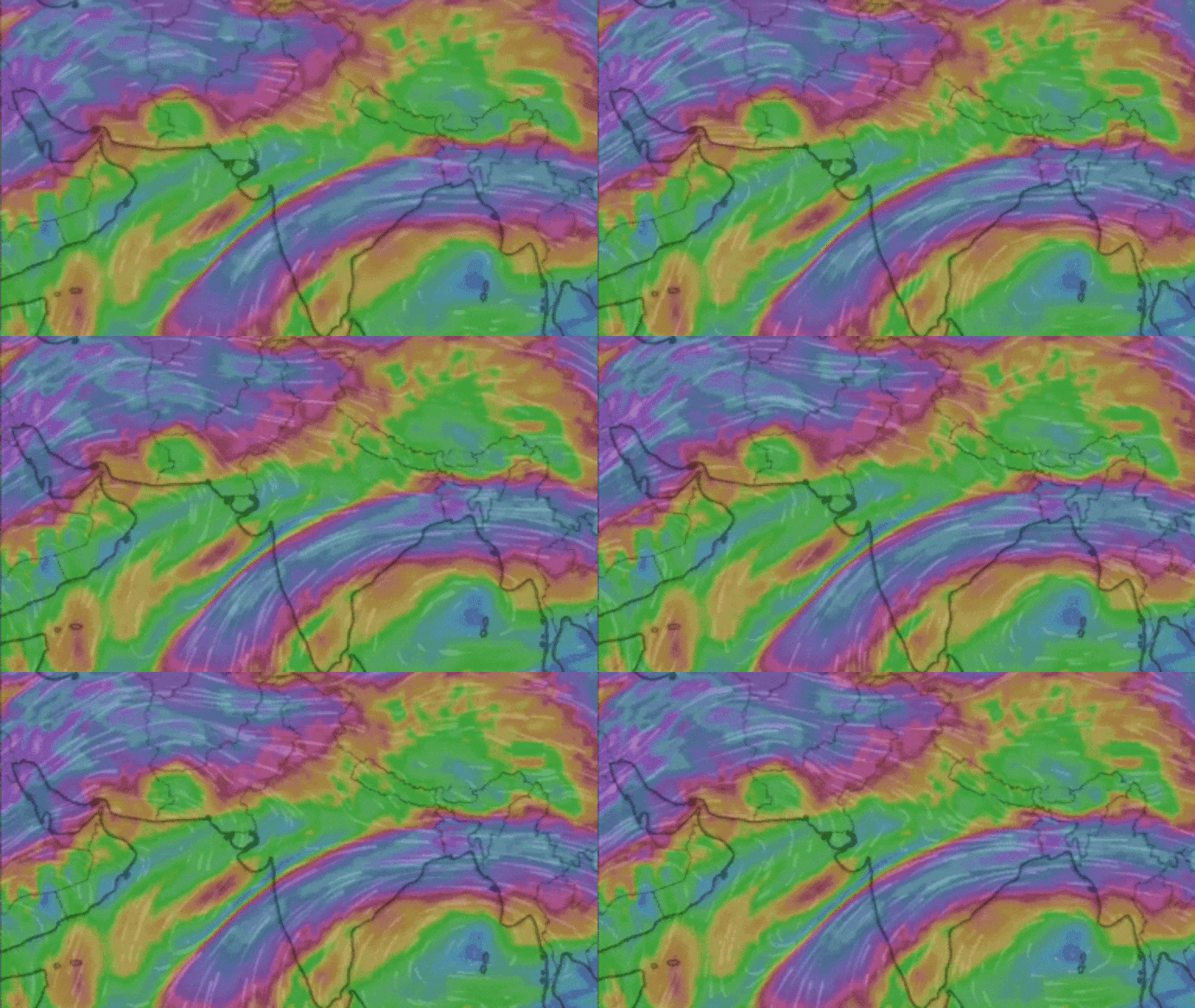
The strongest El Nino in decades could not break India's monsoon in 1997 because the Indian Ocean quietly pushed back. In 2026, the Indian Ocean is sitting completely still.
In 1997, the Pacific Ocean threw one of the worst El Ninos in recorded history at India's monsoon. Scientists braced for drought. Farmers prepared for the worst. And then, almost inexplicably, India's rains arrived 2 per cent above normal.
The reason, researchers later pieced together, was that India's own ocean had intervened.
In 2026, that same ocean has nothing to offer. And the consequences could shape everything from what India grows this year to what it pays at the grocery store.
THE VILLAIN: EL NINO
Every few years, something strange happens in the Pacific Ocean.
The vast belt of east-to-west winds that normally pushes warm surface water toward Indonesia and Australia begins to weaken.
Without those winds doing their job, warm water drifts back eastward and pools along the coast of South America instead. A large stretch of the central Pacific heats up.
This is El Nino, Spanish for "the little boy," a name given by South American fishermen centuries ago when they noticed unusually warm waters arriving around Christmas, disrupting their catch.
What sounds like a distant oceanic quirk has consequences that travel halfway across the planet.
The Indian monsoon is powered by a simple mechanism: as the subcontinent bakes each summer, moist air rushes in from the Indian Ocean to fill the rising heat over land, and that rush of moisture is what brings the rain.
El Nino disrupts this by shifting the atmosphere's rising columns of warm air, which generate clouds and rainfall, away from South Asia and toward the central Pacific instead. Less moisture reaches India. The monsoon weakens.
Historically, roughly 60 per cent of El Nino years between 1951 and 2022 delivered below-average monsoon rainfall across India.
THE GUARDIAN: INDIA'S OWN OCEAN
But El Nino does not always win. Sometimes, India has a defender.
The Indian Ocean, sitting right at India’s doorstep, occasionally develops its own temperature imbalance.
The western side, near the coast of East Africa, warms up. The eastern side, near Indonesia, cools down. This east-west temperature contrast is called the Indian Ocean Dipole, or IOD.
Dipole simply means two opposite poles, like two ends of a battery, one warm, one cool.
When this happens, the warmer western Indian Ocean draws moisture-laden winds in toward the subcontinent with extra force.
It is as if the ocean is leaning in India's direction, pushing rain toward it.
This positive phase of the IOD sees greater-than-average sea surface temperatures and greater rainfall in the western Indian Ocean region, with a corresponding cooling of waters in the eastern Indian Ocean.
In plain terms: a positive IOD tips the scales back toward India when El Nino is trying to tip them away.
A positive IOD enhances Indian monsoon rainfall and can counter El Nino's negative effects.
A negative IOD suppresses the monsoon, and combined with El Nino, creates the worst possible scenario for India, as seen in 2002 and 2015.
THE TWO YEARS THAT TELL THE WHOLE STORY
The years 1997 and 2015 are what scientists return to again and again when explaining this dynamic, because both had the same ingredients and produced opposite results.
Both years saw powerful El Nino conditions in the Pacific.
Both years also had a positive IOD developing in the Indian Ocean.
The year 1997 delivered above-normal rains to India, while 2015 ended at 86 per cent of the long-period average, a confirmed deficient year that left reservoirs depleted and crops damaged across multiple states.
The difference came down to the strength of the IOD.
In 1997, it was strong enough. The warm waters off East Africa pushed back hard enough against El Nino's pull, and India's monsoon held.
In 2015, the IOD was present but not powerful enough to compensate. El Nino dominated. The rains failed.
In 2026, India is not even getting the weaker version of that shield.
As of May 24, the IOD index stood at minus 0.34 degrees Celsius.
Most climate models indicate it is likely to remain neutral at least until early winter, with a positive IOD possible only during winter and spring, months after the June-to-September monsoon season is entirely over.
The see-saw is flat. India has no backup.
THE ESCALATION NOBODY WANTS
With no IOD to absorb the damage, El Nino's timeline becomes critical.
The IMD's own models show a weak El Nino in June, a weak-to-moderate phase through July and August, and a moderate-to-strong phase from September onward.
September is precisely when standing kharif crops, which include rice, pulses, cotton, and oilseeds sown at the monsoon's start, are converting accumulated nutrients into actual grain.
Farmers call this grain-filling, and it is the most water-sensitive stage in the entire crop cycle.
Lose the rain then, and you do not just lose this year's sowing area. You lose the yield of everything already in the ground.
The IMD has already cut its 2026 southwest monsoon forecast to 90 per cent of the long-period average, down from 92 per cent in April, placing the season firmly in the below-normal category.
The long-period average, based on data from 1971 to 2020, is 87 centimetres of rainfall across the June-to-September season.
The probability of an outright deficient monsoon, or rainfall that falls below even that already-reduced number, now stands at 60 per cent.
In any normal year, history puts those odds at 16 per cent.
In 1997, India's ocean saved it. This year, the same ocean has gone quiet. And El Nino, still building toward its peak, has nothing standing in its way.
The strongest El Nino in decades could not break India's monsoon in 1997 because the Indian Ocean quietly pushed back. In 2026, the Indian Ocean is sitting completely still.
In 1997, the Pacific Ocean threw one of the worst El Ninos in recorded history at India's monsoon. Scientists braced for drought. Farmers prepared for the worst. And then, almost inexplicably, India's rains arrived 2 per cent above normal.
The reason, researchers later pieced together, was that India's own ocean had intervened.
In 2026, that same ocean has nothing to offer. And the consequences could shape everything from what India grows this year to what it pays at the grocery store.
THE VILLAIN: EL NINO
Every few years, something strange happens in the Pacific Ocean.
The vast belt of east-to-west winds that normally pushes warm surface water toward Indonesia and Australia begins to weaken.
Without those winds doing their job, warm water drifts back eastward and pools along the coast of South America instead. A large stretch of the central Pacific heats up.
This is El Nino, Spanish for "the little boy," a name given by South American fishermen centuries ago when they noticed unusually warm waters arriving around Christmas, disrupting their catch.
What sounds like a distant oceanic quirk has consequences that travel halfway across the planet.
The Indian monsoon is powered by a simple mechanism: as the subcontinent bakes each summer, moist air rushes in from the Indian Ocean to fill the rising heat over land, and that rush of moisture is what brings the rain.
El Nino disrupts this by shifting the atmosphere's rising columns of warm air, which generate clouds and rainfall, away from South Asia and toward the central Pacific instead. Less moisture reaches India. The monsoon weakens.
Historically, roughly 60 per cent of El Nino years between 1951 and 2022 delivered below-average monsoon rainfall across India.
THE GUARDIAN: INDIA'S OWN OCEAN
But El Nino does not always win. Sometimes, India has a defender.
The Indian Ocean, sitting right at India’s doorstep, occasionally develops its own temperature imbalance.
The western side, near the coast of East Africa, warms up. The eastern side, near Indonesia, cools down. This east-west temperature contrast is called the Indian Ocean Dipole, or IOD.
Dipole simply means two opposite poles, like two ends of a battery, one warm, one cool.
When this happens, the warmer western Indian Ocean draws moisture-laden winds in toward the subcontinent with extra force.
It is as if the ocean is leaning in India's direction, pushing rain toward it.
This positive phase of the IOD sees greater-than-average sea surface temperatures and greater rainfall in the western Indian Ocean region, with a corresponding cooling of waters in the eastern Indian Ocean.
In plain terms: a positive IOD tips the scales back toward India when El Nino is trying to tip them away.
A positive IOD enhances Indian monsoon rainfall and can counter El Nino's negative effects.
A negative IOD suppresses the monsoon, and combined with El Nino, creates the worst possible scenario for India, as seen in 2002 and 2015.
THE TWO YEARS THAT TELL THE WHOLE STORY
The years 1997 and 2015 are what scientists return to again and again when explaining this dynamic, because both had the same ingredients and produced opposite results.
Both years saw powerful El Nino conditions in the Pacific.
Both years also had a positive IOD developing in the Indian Ocean.
The year 1997 delivered above-normal rains to India, while 2015 ended at 86 per cent of the long-period average, a confirmed deficient year that left reservoirs depleted and crops damaged across multiple states.
The difference came down to the strength of the IOD.
In 1997, it was strong enough. The warm waters off East Africa pushed back hard enough against El Nino's pull, and India's monsoon held.
In 2015, the IOD was present but not powerful enough to compensate. El Nino dominated. The rains failed.
In 2026, India is not even getting the weaker version of that shield.
As of May 24, the IOD index stood at minus 0.34 degrees Celsius.
Most climate models indicate it is likely to remain neutral at least until early winter, with a positive IOD possible only during winter and spring, months after the June-to-September monsoon season is entirely over.
The see-saw is flat. India has no backup.
THE ESCALATION NOBODY WANTS
With no IOD to absorb the damage, El Nino's timeline becomes critical.
The IMD's own models show a weak El Nino in June, a weak-to-moderate phase through July and August, and a moderate-to-strong phase from September onward.
September is precisely when standing kharif crops, which include rice, pulses, cotton, and oilseeds sown at the monsoon's start, are converting accumulated nutrients into actual grain.
Farmers call this grain-filling, and it is the most water-sensitive stage in the entire crop cycle.
Lose the rain then, and you do not just lose this year's sowing area. You lose the yield of everything already in the ground.
The IMD has already cut its 2026 southwest monsoon forecast to 90 per cent of the long-period average, down from 92 per cent in April, placing the season firmly in the below-normal category.
The long-period average, based on data from 1971 to 2020, is 87 centimetres of rainfall across the June-to-September season.
The probability of an outright deficient monsoon, or rainfall that falls below even that already-reduced number, now stands at 60 per cent.
In any normal year, history puts those odds at 16 per cent.
In 1997, India's ocean saved it. This year, the same ocean has gone quiet. And El Nino, still building toward its peak, has nothing standing in its way.

