India's monsoon needs this unique condition to survive the monster 2026 El Nino
The Indian Ocean Dipole decides whether India's monsoon gets a boost or a setback when El Nino builds in the Pacific. Here's what a positive, negative and neutral IOD actually means for India's rainfall.
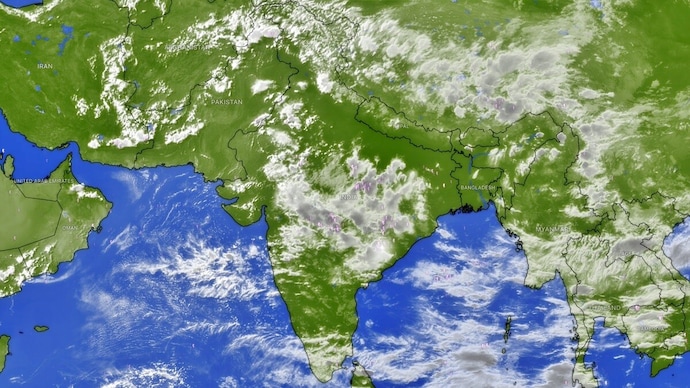
In 1997, one of the strongest El Ninos on record threatened to wreck India's monsoon. It did not. A quiet defender in the Indian Ocean stepped in, and India ended that season with rainfall two per cent above normal.
Nearly three decades on, the same Pacific villain is building again, but this time, its old rival is sitting this one out entirely.
The reason lies in something called the Indian Ocean Dipole, or IOD, a temperature see-saw in India's own backyard that can either rescue the monsoon from El Nino or make things far worse.
WHAT IS THE INDIAN OCEAN DIPOLE?
The Indian Ocean Dipole is simply the temperature difference between the western and eastern halves of the Indian Ocean. The word dipole means two opposite poles, much like the two ends of a battery, one warmer, one cooler.
The western pole sits near the coast of East Africa. The eastern pole sits near Indonesia. When one side warms up and the other cools down, the IOD swings into an active phase. When neither side moves much, the ocean stays neutral, and that phase carries no particular signal for India's rains.
WHAT HAPPENS DURING A POSITIVE IOD?
A positive IOD occurs when the western Indian Ocean, closer to Africa, turns warmer than usual, while the eastern side, near Indonesia, turns cooler. That warmth acts like a magnet, drawing moisture-laden winds toward India with extra force.
This is exactly what happened in 1997. Even as El Nino tried to starve India's monsoon of moisture by pulling rain-bearing clouds toward the Pacific, a strong positive IOD pushed back hard enough to keep the rains flowing. The result was above-normal rainfall in a year that should, on paper, have delivered drought.
A positive IOD is what could save this year's monsoon from the monster El Nino, but this seems impossible.
WHAT HAPPENS DURING A NEGATIVE IOD?
A negative IOD flips the pattern. The western Indian Ocean cools, the eastern side warms, and the moisture that would have headed toward India drifts away instead. On its own, a negative IOD can suppress the monsoon.
Paired with El Nino, it becomes the worst combination India can face, as seen in 2002 and 2015, when rains fell well short of the seasonal average.
WHY DOES A NEUTRAL IOD MATTER FOR 2026?
A neutral IOD means neither pole is doing anything unusual, so the Indian Ocean offers no extra push and no extra pull. As of late May, the index stood at minus 0.34 degrees Celsius, well within neutral territory, and most models expect it to stay that way through the monsoon.
That leaves El Nino, which the India Meteorological Department expects to strengthen from September, free to act without resistance. September is when standing kharif crops such as rice, pulses, cotton and oilseeds are filling grain, the most water-sensitive stage of their growth. Without the IOD's usual shield, this year's monsoon carries a risk that 1997 never had to face.
In 1997, one of the strongest El Ninos on record threatened to wreck India's monsoon. It did not. A quiet defender in the Indian Ocean stepped in, and India ended that season with rainfall two per cent above normal.
Nearly three decades on, the same Pacific villain is building again, but this time, its old rival is sitting this one out entirely.
The reason lies in something called the Indian Ocean Dipole, or IOD, a temperature see-saw in India's own backyard that can either rescue the monsoon from El Nino or make things far worse.
WHAT IS THE INDIAN OCEAN DIPOLE?
The Indian Ocean Dipole is simply the temperature difference between the western and eastern halves of the Indian Ocean. The word dipole means two opposite poles, much like the two ends of a battery, one warmer, one cooler.
The western pole sits near the coast of East Africa. The eastern pole sits near Indonesia. When one side warms up and the other cools down, the IOD swings into an active phase. When neither side moves much, the ocean stays neutral, and that phase carries no particular signal for India's rains.
WHAT HAPPENS DURING A POSITIVE IOD?
A positive IOD occurs when the western Indian Ocean, closer to Africa, turns warmer than usual, while the eastern side, near Indonesia, turns cooler. That warmth acts like a magnet, drawing moisture-laden winds toward India with extra force.
This is exactly what happened in 1997. Even as El Nino tried to starve India's monsoon of moisture by pulling rain-bearing clouds toward the Pacific, a strong positive IOD pushed back hard enough to keep the rains flowing. The result was above-normal rainfall in a year that should, on paper, have delivered drought.
A positive IOD is what could save this year's monsoon from the monster El Nino, but this seems impossible.
WHAT HAPPENS DURING A NEGATIVE IOD?
A negative IOD flips the pattern. The western Indian Ocean cools, the eastern side warms, and the moisture that would have headed toward India drifts away instead. On its own, a negative IOD can suppress the monsoon.
Paired with El Nino, it becomes the worst combination India can face, as seen in 2002 and 2015, when rains fell well short of the seasonal average.
WHY DOES A NEUTRAL IOD MATTER FOR 2026?
A neutral IOD means neither pole is doing anything unusual, so the Indian Ocean offers no extra push and no extra pull. As of late May, the index stood at minus 0.34 degrees Celsius, well within neutral territory, and most models expect it to stay that way through the monsoon.
That leaves El Nino, which the India Meteorological Department expects to strengthen from September, free to act without resistance. September is when standing kharif crops such as rice, pulses, cotton and oilseeds are filling grain, the most water-sensitive stage of their growth. Without the IOD's usual shield, this year's monsoon carries a risk that 1997 never had to face.

