Isro fires up new rocket engine, brings Gaganyaan astronaut dream closer
Isro has successfully tested the power head of its new semi-cryogenic rocket engine, calling it a major milestone for India's heavy-lift ambitions. Chairman V Narayanan also confirmed that Gaganyaan will fly three uncrewed missions before astronauts go to orbit, with dates due soon.
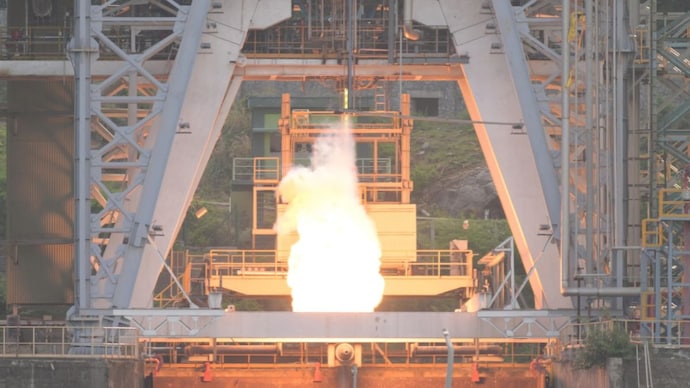
On June 27, Isro Chairman V Narayanan stood before reporters in Bengaluru and described a quiet triumph that had unfolded three days earlier on the Tamil Nadu coast.
A new rocket engine had roared to life, held steady, and switched off exactly as planned. With it, India edged a little closer to flying its own astronauts.
Narayanan described the moment as a major achievement and milestone.
He was speaking about the June 24 hot test of Isro’s semi-cryogenic engine at the Isro Propulsion Complex in Mahendragiri, and in the same breath, he offered a fresh update on India's Gaganyaan human spaceflight mission.
WHAT EXACTLY DID ISRO TEST?
Engineers fired only the engine's power head, the muscular front section that drives fuel and oxygen into the engine at ferocious pressure.
They left out the thrust chamber, the part where the propellant actually ignites and produces flame.
Running the power head alone, Isro pushed it to 175 tonnes of force, around 88 per cent of the engine's full strength, for the first time.
It was the eighth test in the series, after earlier runs at 47 per cent and 60 per cent.
WHY LEAVE OUT THE PART THAT BURNS?
The power head is the trickiest section of any engine.
At its heart sit the turbopumps, spinning machines that hurl fuel and oxygen inwards, here at crushing pressures of 400 and 500 bar.
By testing this unit on its own, scientists can confirm that everything flows and holds without risking the entire assembly.
Narayanan said Isro is now preparing to fire the complete engine.
WHAT IS A SEMI-CRYOGENIC ENGINE?
A fully cryogenic engine burns gases chilled to hundreds of degrees below zero.
A semi-cryogenic one keeps the deeply chilled oxygen but swaps the frozen fuel for ordinary refined kerosene, which is cheaper, denser and far easier to store.
The pay-off is more push for less money, exactly what India needs to lift heavier satellites, build a space station and travel deeper into space.
WHAT DID NARAYANAN SAY ABOUT GAGANYAAN?
The Isro chief was careful. Gaganyaan, India's first crewed mission to space, is technology-intensive and cannot be hurried, Narayanan said. Before any astronaut leaves the ground, Isro will fly three uncrewed missions to prove every system works.
Work on the first of these is already under way, with launch dates expected very shortly. The satellites, he added, are ready.
WHAT IS THE NEXT STEP FOR THE ENGINE?
The June 24 run has cleared the way for the real prize.
Isro now wants to fire the power head at its full 200 tonnes of force, the 100 per cent mark, before testing the complete engine. The agency says this test has given it sufficient confidence to attempt that final step.
WHICH ROCKET WILL USE THIS ENGINE?
This is not an engine without a home.
It will power a new booster section called the SC120 stage, driven by the 2,000-kilonewton SE2000 engine.
The stage is built to replace the L110 core that currently sits in the middle of Isro's LVM3 rocket, the same heavy-lift vehicle chosen to carry Gaganyaan's astronauts.
The swap is expected to lift far heavier payloads while running more efficiently.
WHAT FUEL DOES THE ENGINE BURN?
Cleaner stuff than India's older rockets.
The engine runs on liquid oxygen and a purified, home-grown kerosene that Isro has named isrosene.
Both are non-toxic and far gentler to handle than the older hydrazine-based propellants, which are highly poisonous.
That makes the engine safer to work with and kinder to the environment.
IS THIS ENGINE MADE IN INDIA?
Yes, and that is the point.
Isro calls this a major milestone in the indigenous, or fully home-built, development of its semi-cryogenic engine, a capability only a handful of space powers possess.
The new stage will also fly alongside an uprated, more powerful cryogenic upper stage, together giving the Launch Vehicle Mark III (LVM3) a significant jump in muscle.
The stated aim of the semi-cryogenic engine test was to study the build-up just after pre-burner ignition, the pre-burner being a small chamber that lights first and spins up the turbopumps before the main burn.
WHAT IS HUMAN-RATING?
This sits at the core of Narayanan's caution.
Human-rating means certifying a rocket originally built to carry cargo as safe enough to carry living people.
It demands extra layers of backup, an escape system that can pull the crew clear in an instant if something fails, and firm proof that the astronauts can return home alive.
If India pulls it off, it will become only the fourth country, after Russia, the United States and China, to launch humans into space on its own.
On June 27, Isro Chairman V Narayanan stood before reporters in Bengaluru and described a quiet triumph that had unfolded three days earlier on the Tamil Nadu coast.
A new rocket engine had roared to life, held steady, and switched off exactly as planned. With it, India edged a little closer to flying its own astronauts.
Narayanan described the moment as a major achievement and milestone.
He was speaking about the June 24 hot test of Isro’s semi-cryogenic engine at the Isro Propulsion Complex in Mahendragiri, and in the same breath, he offered a fresh update on India's Gaganyaan human spaceflight mission.
WHAT EXACTLY DID ISRO TEST?
Engineers fired only the engine's power head, the muscular front section that drives fuel and oxygen into the engine at ferocious pressure.
They left out the thrust chamber, the part where the propellant actually ignites and produces flame.
Running the power head alone, Isro pushed it to 175 tonnes of force, around 88 per cent of the engine's full strength, for the first time.
It was the eighth test in the series, after earlier runs at 47 per cent and 60 per cent.
WHY LEAVE OUT THE PART THAT BURNS?
The power head is the trickiest section of any engine.
At its heart sit the turbopumps, spinning machines that hurl fuel and oxygen inwards, here at crushing pressures of 400 and 500 bar.
By testing this unit on its own, scientists can confirm that everything flows and holds without risking the entire assembly.
Narayanan said Isro is now preparing to fire the complete engine.
WHAT IS A SEMI-CRYOGENIC ENGINE?
A fully cryogenic engine burns gases chilled to hundreds of degrees below zero.
A semi-cryogenic one keeps the deeply chilled oxygen but swaps the frozen fuel for ordinary refined kerosene, which is cheaper, denser and far easier to store.
The pay-off is more push for less money, exactly what India needs to lift heavier satellites, build a space station and travel deeper into space.
WHAT DID NARAYANAN SAY ABOUT GAGANYAAN?
The Isro chief was careful. Gaganyaan, India's first crewed mission to space, is technology-intensive and cannot be hurried, Narayanan said. Before any astronaut leaves the ground, Isro will fly three uncrewed missions to prove every system works.
Work on the first of these is already under way, with launch dates expected very shortly. The satellites, he added, are ready.
WHAT IS THE NEXT STEP FOR THE ENGINE?
The June 24 run has cleared the way for the real prize.
Isro now wants to fire the power head at its full 200 tonnes of force, the 100 per cent mark, before testing the complete engine. The agency says this test has given it sufficient confidence to attempt that final step.
WHICH ROCKET WILL USE THIS ENGINE?
This is not an engine without a home.
It will power a new booster section called the SC120 stage, driven by the 2,000-kilonewton SE2000 engine.
The stage is built to replace the L110 core that currently sits in the middle of Isro's LVM3 rocket, the same heavy-lift vehicle chosen to carry Gaganyaan's astronauts.
The swap is expected to lift far heavier payloads while running more efficiently.
WHAT FUEL DOES THE ENGINE BURN?
Cleaner stuff than India's older rockets.
The engine runs on liquid oxygen and a purified, home-grown kerosene that Isro has named isrosene.
Both are non-toxic and far gentler to handle than the older hydrazine-based propellants, which are highly poisonous.
That makes the engine safer to work with and kinder to the environment.
IS THIS ENGINE MADE IN INDIA?
Yes, and that is the point.
Isro calls this a major milestone in the indigenous, or fully home-built, development of its semi-cryogenic engine, a capability only a handful of space powers possess.
The new stage will also fly alongside an uprated, more powerful cryogenic upper stage, together giving the Launch Vehicle Mark III (LVM3) a significant jump in muscle.
The stated aim of the semi-cryogenic engine test was to study the build-up just after pre-burner ignition, the pre-burner being a small chamber that lights first and spins up the turbopumps before the main burn.
WHAT IS HUMAN-RATING?
This sits at the core of Narayanan's caution.
Human-rating means certifying a rocket originally built to carry cargo as safe enough to carry living people.
It demands extra layers of backup, an escape system that can pull the crew clear in an instant if something fails, and firm proof that the astronauts can return home alive.
If India pulls it off, it will become only the fourth country, after Russia, the United States and China, to launch humans into space on its own.

