Powerful earthquake shook Japan minutes after Venezuela earthquake: What happened?
Two powerful earthquakes struck Venezuela on June 24, and minutes later, a magnitude 6.9 quake hit northern Japan. Here is what happened in each country, and why scientists say the two were not connected.
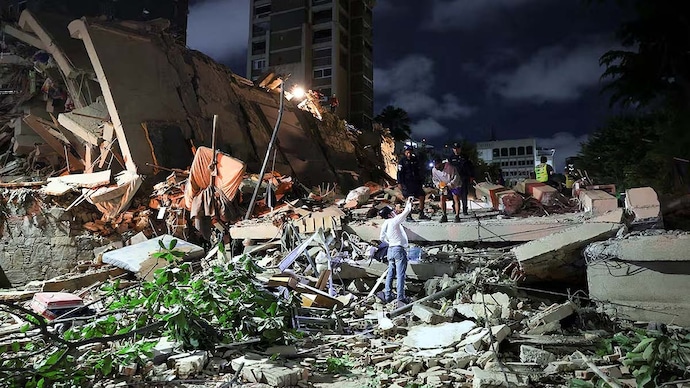
Within about half an hour, the ground convulsed on two opposite sides of the planet. First Venezuela, a country in South America where two violent earthquakes struck seconds apart and toppled buildings in the capital, Caracas.
Then northern Japan, a country in Asia, where a magnitude 6.9 quake shook the Pacific coast. The timing felt eerie. Science says it was a coincidence.
Here is what happened, and why the two are not connected.
WHAT SHOOK JAPAN
At 7.30 on Thursday morning, Japan time, a magnitude 6.9 earthquake struck beneath the Pacific Ocean, about 50 kilometres down, off the coast of Iwate Prefecture. In the town of Hashikami, the shaking reached an upper 6 on Japan's intensity scale, which runs to 7. At that level people cannot stand, only crawl, and furniture topples over.
The Japan Meteorological Agency issued no tsunami warning. There were no immediate reports of deaths, and bullet trains were halted between Sendai and Aomori.
The cause was subduction. Off northern Japan, the Pacific Plate, one of the giant slabs of rock that make up Earth's shell, is sliding beneath the plate that carries Japan.
The plates lock, strain builds for decades, then the rock lurches free. Because the slip was deep, the seabed barely lifted, so no tsunami formed.
WHAT HAPPENED IN VENEZUELA
Venezuela's quakes were far deadlier. On Wednesday evening, local time, a magnitude 7.2 tremor struck the country's north, followed about 40 seconds later by a magnitude 7.5, the strongest to hit Venezuela in more than 125 years. The first, smaller shock is called a foreshock, the larger one is the main shock.
Buildings collapsed across Caracas, dozens of people were killed and hundreds injured, and the acting president declared a state of emergency. A brief tsunami threat was issued for Puerto Rico and the Virgin Islands.
Crucially, Venezuela's quake had a different cause. There, the Caribbean Plate is grinding sideways past the South American Plate along a long crack called the Bocono fault system. This is a strike-slip boundary, where two plates slide horizontally past each other rather than one diving under the other.
That sideways motion is why such quakes are shallow and violent.
THE VENEZUELA CONNECTION
So were the two linked? No. Japan and Venezuela sit on entirely separate plate boundaries, thousands of kilometres apart. An earthquake releases its energy locally, into the rock around the fault. That energy fades long before it can cross an ocean and set off another quake on the far side of the world.
Powerful seismic waves can, very rarely, give a tiny nudge to a fault already on the brink nearby. But a quake in the Caribbean cannot trigger one in the Pacific.
Earth simply has so many active faults that two large quakes landing on the same day is ordinary chance, not cause and effect.
Japan sits on the Ring of Fire, the belt of restless boundaries circling the Pacific. Venezuela sits on a different seam entirely. Two reminders, hours apart, that the planet beneath us is always moving.
Within about half an hour, the ground convulsed on two opposite sides of the planet. First Venezuela, a country in South America where two violent earthquakes struck seconds apart and toppled buildings in the capital, Caracas.
Then northern Japan, a country in Asia, where a magnitude 6.9 quake shook the Pacific coast. The timing felt eerie. Science says it was a coincidence.
Here is what happened, and why the two are not connected.
WHAT SHOOK JAPAN
At 7.30 on Thursday morning, Japan time, a magnitude 6.9 earthquake struck beneath the Pacific Ocean, about 50 kilometres down, off the coast of Iwate Prefecture. In the town of Hashikami, the shaking reached an upper 6 on Japan's intensity scale, which runs to 7. At that level people cannot stand, only crawl, and furniture topples over.
The Japan Meteorological Agency issued no tsunami warning. There were no immediate reports of deaths, and bullet trains were halted between Sendai and Aomori.
The cause was subduction. Off northern Japan, the Pacific Plate, one of the giant slabs of rock that make up Earth's shell, is sliding beneath the plate that carries Japan.
The plates lock, strain builds for decades, then the rock lurches free. Because the slip was deep, the seabed barely lifted, so no tsunami formed.
WHAT HAPPENED IN VENEZUELA
Venezuela's quakes were far deadlier. On Wednesday evening, local time, a magnitude 7.2 tremor struck the country's north, followed about 40 seconds later by a magnitude 7.5, the strongest to hit Venezuela in more than 125 years. The first, smaller shock is called a foreshock, the larger one is the main shock.
Buildings collapsed across Caracas, dozens of people were killed and hundreds injured, and the acting president declared a state of emergency. A brief tsunami threat was issued for Puerto Rico and the Virgin Islands.
Crucially, Venezuela's quake had a different cause. There, the Caribbean Plate is grinding sideways past the South American Plate along a long crack called the Bocono fault system. This is a strike-slip boundary, where two plates slide horizontally past each other rather than one diving under the other.
That sideways motion is why such quakes are shallow and violent.
THE VENEZUELA CONNECTION
So were the two linked? No. Japan and Venezuela sit on entirely separate plate boundaries, thousands of kilometres apart. An earthquake releases its energy locally, into the rock around the fault. That energy fades long before it can cross an ocean and set off another quake on the far side of the world.
Powerful seismic waves can, very rarely, give a tiny nudge to a fault already on the brink nearby. But a quake in the Caribbean cannot trigger one in the Pacific.
Earth simply has so many active faults that two large quakes landing on the same day is ordinary chance, not cause and effect.
Japan sits on the Ring of Fire, the belt of restless boundaries circling the Pacific. Venezuela sits on a different seam entirely. Two reminders, hours apart, that the planet beneath us is always moving.

