Built to beat traffic, lost to monsoon: Why Mumbai-Pune 'missing link' broke down
Heavy monsoon rain triggered a landslide near Tunnel 2 and exposed surface defects on the newly opened Mumbai-Pune Expressway missing link. The disruption has turned the project's first monsoon into a key test of its slope stability, drainage and construction quality.
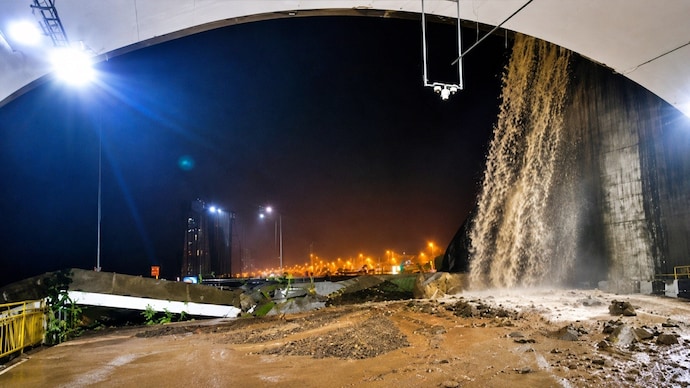
Barely weeks after it was opened to traffic, the much-awaited Mumbai-Pune Expressway 'missing link' section has run into its first major challenge as heavy monsoon rains triggered a landslide near one of its tunnels and exposed pavement damage, raising questions about the engineering resilience of India's newest mountain expressway.
The Maharashtra State Road Development Corporation (MSRDC) was forced to temporarily divert traffic after rocks, mud and debris slid onto the Mumbai-bound carriageway near the exit of Tunnel 2, following intense rainfall across the Western Ghats.
Reports also emerged of pothole-like surface defects on parts of the newly inaugurated road, prompting the agency to order immediate repairs and inspect the affected sections.
While officials maintain the expressway remains structurally safe, the first monsoon has highlighted the immense engineering challenges involved in building a high-speed highway through one of India's most difficult mountain terrains.
WHAT IS THE MUMBAI-PUNE EXPRESSWAY MISSING LINK?
The Rs 6,695-crore Missing Link was conceived to bypass the accident-prone Khandala Ghat section of the Mumbai-Pune Expressway.
The project features an 8.9-kilometre twin tunnel, one of the longest road tunnels in India, another 1.68-km tunnel, a cable-stayed bridge and multiple viaducts designed to cut travel time by nearly 30 minutes.
However, the alignment passes through the Sahyadri (Western Ghats), a region that receives between 3,000 and 6,000 millimetres of rainfall annually and is well known for landslides during the southwest monsoon.
WHY IS THE MISSING LINK SECTION SO VULNERABLE?
Unlike the older expressway, which winds around the hills, the Missing Link cuts directly through steep mountain slopes.
The Missing Link passes through the layered Deccan Trap basalt formations of the Western Ghats, where fractured rock, weathered zones, volcanic breccia, which is rock made up of broken, angular fragments of volcanic rock, and weak red bole clay layers create natural zones of instability.
During heavy monsoon rains, water seeps into these fractures, increasing pore water pressure and weakening the slopes. The result is a higher risk of landslides and rockfalls, especially near steep cuttings and tunnel entrances where the terrain has been extensively excavated.
Engineers say this makes tunnel portals, where tunnels emerge onto open roads, among the most vulnerable sections during heavy rain.
Excavating tunnels removes natural rock support, while continuous rainfall allows water to seep into fractures in the basalt rock, increasing pressure within the slopes and making them susceptible to failure.
The landslide reported this week occurred outside the tunnel itself, suggesting that the challenge lies with slope stability rather than the tunnel structure.
"The tunnel portals and open-cut slopes are particularly vulnerable because they are exposed to weathering, surface runoff, and stress relief after excavation. There is currently no evidence of tunnel roof caving; the recent disruption was due to a localised slope failure near the tunnel portal," Dr Sandeep Potnis, Director, Centre of Excellence for Tunnelling and Underground Construction, told IndiaToday.in.
The heavy rainfall is also testing the expressway's drainage network, which includes hillside catch drains, cross-drainage structures and tunnel drainage systems.
If rainfall overwhelms these systems or debris blocks water channels, runoff can rapidly erode slopes and destabilise surrounding ground.
Separate concerns have emerged over the appearance of pothole-like defects on the freshly laid pavement. MSRDC has directed contractors to carry out immediate repairs while examining whether the damage is limited to the road surface or points to deeper construction issues involving materials, drainage or workmanship.
"The steep topography, fractured basalt, newly excavated slopes, and the first monsoon exposure of the project likely contributed to the instability, while drainage performance and slope protection systems may require further optimisation," Dr Sandeep Potnis, who is also Head, Tunnel Engineering Program at MIT World Peace University, added.
Experts caution against drawing conclusions from a single weather event, noting that mountain infrastructure undergoes its toughest assessment during its first full monsoon.
The key questions now are whether rainfall exceeded the project's design assumptions, how effectively the slope stabilisation systems performed, and whether drainage infrastructure functioned as intended.
Designed specifically to reduce the risks associated with the old Khandala Ghat route, the Missing Link was never expected to eliminate landslides entirely.
Instead, the first monsoon has become its first real-world stress test, one that will determine whether India's most ambitious mountain expressway can withstand the extreme weather conditions it was built to conquer.
Barely weeks after it was opened to traffic, the much-awaited Mumbai-Pune Expressway 'missing link' section has run into its first major challenge as heavy monsoon rains triggered a landslide near one of its tunnels and exposed pavement damage, raising questions about the engineering resilience of India's newest mountain expressway.
The Maharashtra State Road Development Corporation (MSRDC) was forced to temporarily divert traffic after rocks, mud and debris slid onto the Mumbai-bound carriageway near the exit of Tunnel 2, following intense rainfall across the Western Ghats.
Reports also emerged of pothole-like surface defects on parts of the newly inaugurated road, prompting the agency to order immediate repairs and inspect the affected sections.
While officials maintain the expressway remains structurally safe, the first monsoon has highlighted the immense engineering challenges involved in building a high-speed highway through one of India's most difficult mountain terrains.
WHAT IS THE MUMBAI-PUNE EXPRESSWAY MISSING LINK?
The Rs 6,695-crore Missing Link was conceived to bypass the accident-prone Khandala Ghat section of the Mumbai-Pune Expressway.
The project features an 8.9-kilometre twin tunnel, one of the longest road tunnels in India, another 1.68-km tunnel, a cable-stayed bridge and multiple viaducts designed to cut travel time by nearly 30 minutes.
However, the alignment passes through the Sahyadri (Western Ghats), a region that receives between 3,000 and 6,000 millimetres of rainfall annually and is well known for landslides during the southwest monsoon.
WHY IS THE MISSING LINK SECTION SO VULNERABLE?
Unlike the older expressway, which winds around the hills, the Missing Link cuts directly through steep mountain slopes.
The Missing Link passes through the layered Deccan Trap basalt formations of the Western Ghats, where fractured rock, weathered zones, volcanic breccia, which is rock made up of broken, angular fragments of volcanic rock, and weak red bole clay layers create natural zones of instability.
During heavy monsoon rains, water seeps into these fractures, increasing pore water pressure and weakening the slopes. The result is a higher risk of landslides and rockfalls, especially near steep cuttings and tunnel entrances where the terrain has been extensively excavated.
Engineers say this makes tunnel portals, where tunnels emerge onto open roads, among the most vulnerable sections during heavy rain.
Excavating tunnels removes natural rock support, while continuous rainfall allows water to seep into fractures in the basalt rock, increasing pressure within the slopes and making them susceptible to failure.
The landslide reported this week occurred outside the tunnel itself, suggesting that the challenge lies with slope stability rather than the tunnel structure.
"The tunnel portals and open-cut slopes are particularly vulnerable because they are exposed to weathering, surface runoff, and stress relief after excavation. There is currently no evidence of tunnel roof caving; the recent disruption was due to a localised slope failure near the tunnel portal," Dr Sandeep Potnis, Director, Centre of Excellence for Tunnelling and Underground Construction, told IndiaToday.in.
The heavy rainfall is also testing the expressway's drainage network, which includes hillside catch drains, cross-drainage structures and tunnel drainage systems.
If rainfall overwhelms these systems or debris blocks water channels, runoff can rapidly erode slopes and destabilise surrounding ground.
Separate concerns have emerged over the appearance of pothole-like defects on the freshly laid pavement. MSRDC has directed contractors to carry out immediate repairs while examining whether the damage is limited to the road surface or points to deeper construction issues involving materials, drainage or workmanship.
"The steep topography, fractured basalt, newly excavated slopes, and the first monsoon exposure of the project likely contributed to the instability, while drainage performance and slope protection systems may require further optimisation," Dr Sandeep Potnis, who is also Head, Tunnel Engineering Program at MIT World Peace University, added.
Experts caution against drawing conclusions from a single weather event, noting that mountain infrastructure undergoes its toughest assessment during its first full monsoon.
The key questions now are whether rainfall exceeded the project's design assumptions, how effectively the slope stabilisation systems performed, and whether drainage infrastructure functioned as intended.
Designed specifically to reduce the risks associated with the old Khandala Ghat route, the Missing Link was never expected to eliminate landslides entirely.
Instead, the first monsoon has become its first real-world stress test, one that will determine whether India's most ambitious mountain expressway can withstand the extreme weather conditions it was built to conquer.

