Astronaut Anil Menon's eight-month space mission will pave the road to Mars
Nasa astronaut Anil Menon lifts off for the International Space Station on July 14 for a mission of over 200 days alongside Russian cosmonauts Pyotr Dubrov and Anna Kikina.
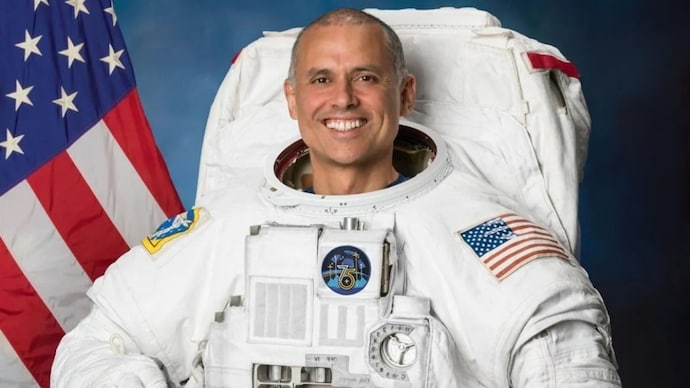
Anil Menon is not a typical Nasa astronaut.
Before he ever trained for spaceflight, he treated the wounded after the 2010 earthquake in Haiti and the 2015 earthquake in Nepal. He cared for climbers in distress on Mount Everest. He became the first physician SpaceX ever hired, responsible for keeping its astronauts alive.
On July 14, Menon, born in Minneapolis to an Indian father and a Ukrainian mother, will lift off from the Baikonur Cosmodrome in Kazakhstan aboard a Russian Soyuz MS-29 spacecraft, alongside Roscosmos cosmonauts Pyotr Dubrov and Anna Kikina.
The trio will spend roughly 200 days aboard the International Space Station (ISS) as part of Expeditions 74 and 75, returning home in the spring of 2027. It is his first spaceflight.
And the moment he reaches orbit, his own body will start undergoing changes.
WHAT GRAVITY DOES FOR YOU, WITHOUT YOUR KNOWLEDGE
Most people never think about what gravity is doing to their blood.
Menon will spend 200 days finding out, in precise scientific detail, exactly what happens when gravity no longer exists.
On Earth, it does something simple and essential: it holds the fluid in your body down. Your blood, the fluid that occupies the spaces between your cells, and the lymph that runs through your tissues, all of it stays largely pooled in the lower half of your body, pulled by the planet beneath your feet.
You never notice this, because it has been true every single moment of your life.
Take gravity away, and the fluid drifts. Upward, toward the chest, the face, the head. The medical name for this is cephalad fluid shift.
Cephalad simply means towards the head. It sounds clinical, but the effect is immediate and visible: the face puffs, the neck veins swell, and every astronaut who has ever reached orbit describes the feeling as a permanent head cold, except there is no virus, no infection, and no recovery.
Gravity caused it, and only gravity's return will fix it. That is the mild version.
THE SYNDROME NOBODY SAW COMING
Over weeks and months in orbit, something more serious unfolds at the back of the eye.
Menon, using ultrasound, will track this in himself, becoming the first astronaut-physician to study a particular syndrome from the inside.
The rising fluid pressure is thought to cause a condition called Spaceflight-Associated Neuro-ocular Syndrome, or SANS.
It is a clumsy name for a frightening thing: the back of the eye gradually flattens, and the optic nerve, the cable that connects the eye to the brain, begins to swell. The result, for some astronauts, is blurred or distorted vision. Studies suggest roughly seven in ten astronauts on long missions show some signs of it.
Nobody fully understands why, and nobody has yet found a way to stop it.
This is what Nasa has sent Menon to study, from the inside.
Using ultrasound, a scanning tool that uses sound waves to produce images of organs and blood vessels without cutting into the body, he will track exactly how his veins change, how his blood flow shifts, and what his own circulatory system looks like under conditions that no clinic on Earth can reproduce.
He will be, in the most direct sense, both the scientist and the subject.
Understanding this is not merely interesting. It is a precondition for Mars. The journey to the red planet would take months each way, in the same gravity-free environment that quietly rearranges the vision of every crew member. Without knowing what it does and why, no one can hope to protect a crew making that journey.
THE DRIP THAT HAS TO BE BREWED FROM SCRATCH
The second task Menon carries to orbit is one of the quieter revolutions in space medicine.
He will attempt to manufacture intravenous fluids, specifically the sterile saline drips that every hospital on Earth depends on, using the station's own recycled drinking water.
Intravenous means delivering straight into a vein, bypassing the digestive system entirely: it is how hospitals rehydrate patients in emergencies, deliver medicines that the stomach would destroy, and keep bodies functioning when they cannot eat or drink normally.
Saline is almost entirely water. And water, in spaceflight, is one of the most expensive things in the universe. Every litre launched from Earth costs thousands of dollars in fuel alone. A Mars mission will carry no resupply ship, no pharmacy, and no emergency option. A crew that runs out of medical fluids during a deep-space journey has no one to call.
If Menon can demonstrate that a crew can brew its own sterile saline from water already on board, the implications go well beyond this mission.
It would mean that a crew heading to Mars could carry water, recycle it, and reconstitute medical fluids on demand, saving enormous weight at launch and, in a genuine emergency, saving lives.
It is, if it works, one of the least glamorous and most important experiments in the history of human spaceflight.
THE DOCTOR WHO ALWAYS CHOSE DIFFICULT GROUND
Menon was selected by Nasa as an astronaut candidate in 2021. His career before that reads like a deliberate search for the edges: earthquake zones, high altitude, the operational world of commercial spaceflight. July 14 will be the first time he leaves Earth.
The irony of his two experiments is precise.
A doctor who has spent his career in places the human body was never meant to go will now spend 200 days in the most extreme of them, carefully recording how a healthy body falls apart in weightlessness, so that the next generation of travellers going farther than any human has gone before can be kept alive when it does.
Anil Menon is not a typical Nasa astronaut.
Before he ever trained for spaceflight, he treated the wounded after the 2010 earthquake in Haiti and the 2015 earthquake in Nepal. He cared for climbers in distress on Mount Everest. He became the first physician SpaceX ever hired, responsible for keeping its astronauts alive.
On July 14, Menon, born in Minneapolis to an Indian father and a Ukrainian mother, will lift off from the Baikonur Cosmodrome in Kazakhstan aboard a Russian Soyuz MS-29 spacecraft, alongside Roscosmos cosmonauts Pyotr Dubrov and Anna Kikina.
The trio will spend roughly 200 days aboard the International Space Station (ISS) as part of Expeditions 74 and 75, returning home in the spring of 2027. It is his first spaceflight.
And the moment he reaches orbit, his own body will start undergoing changes.
WHAT GRAVITY DOES FOR YOU, WITHOUT YOUR KNOWLEDGE
Most people never think about what gravity is doing to their blood.
Menon will spend 200 days finding out, in precise scientific detail, exactly what happens when gravity no longer exists.
On Earth, it does something simple and essential: it holds the fluid in your body down. Your blood, the fluid that occupies the spaces between your cells, and the lymph that runs through your tissues, all of it stays largely pooled in the lower half of your body, pulled by the planet beneath your feet.
You never notice this, because it has been true every single moment of your life.
Take gravity away, and the fluid drifts. Upward, toward the chest, the face, the head. The medical name for this is cephalad fluid shift.
Cephalad simply means towards the head. It sounds clinical, but the effect is immediate and visible: the face puffs, the neck veins swell, and every astronaut who has ever reached orbit describes the feeling as a permanent head cold, except there is no virus, no infection, and no recovery.
Gravity caused it, and only gravity's return will fix it. That is the mild version.
THE SYNDROME NOBODY SAW COMING
Over weeks and months in orbit, something more serious unfolds at the back of the eye.
Menon, using ultrasound, will track this in himself, becoming the first astronaut-physician to study a particular syndrome from the inside.
The rising fluid pressure is thought to cause a condition called Spaceflight-Associated Neuro-ocular Syndrome, or SANS.
It is a clumsy name for a frightening thing: the back of the eye gradually flattens, and the optic nerve, the cable that connects the eye to the brain, begins to swell. The result, for some astronauts, is blurred or distorted vision. Studies suggest roughly seven in ten astronauts on long missions show some signs of it.
Nobody fully understands why, and nobody has yet found a way to stop it.
This is what Nasa has sent Menon to study, from the inside.
Using ultrasound, a scanning tool that uses sound waves to produce images of organs and blood vessels without cutting into the body, he will track exactly how his veins change, how his blood flow shifts, and what his own circulatory system looks like under conditions that no clinic on Earth can reproduce.
He will be, in the most direct sense, both the scientist and the subject.
Understanding this is not merely interesting. It is a precondition for Mars. The journey to the red planet would take months each way, in the same gravity-free environment that quietly rearranges the vision of every crew member. Without knowing what it does and why, no one can hope to protect a crew making that journey.
THE DRIP THAT HAS TO BE BREWED FROM SCRATCH
The second task Menon carries to orbit is one of the quieter revolutions in space medicine.
He will attempt to manufacture intravenous fluids, specifically the sterile saline drips that every hospital on Earth depends on, using the station's own recycled drinking water.
Intravenous means delivering straight into a vein, bypassing the digestive system entirely: it is how hospitals rehydrate patients in emergencies, deliver medicines that the stomach would destroy, and keep bodies functioning when they cannot eat or drink normally.
Saline is almost entirely water. And water, in spaceflight, is one of the most expensive things in the universe. Every litre launched from Earth costs thousands of dollars in fuel alone. A Mars mission will carry no resupply ship, no pharmacy, and no emergency option. A crew that runs out of medical fluids during a deep-space journey has no one to call.
If Menon can demonstrate that a crew can brew its own sterile saline from water already on board, the implications go well beyond this mission.
It would mean that a crew heading to Mars could carry water, recycle it, and reconstitute medical fluids on demand, saving enormous weight at launch and, in a genuine emergency, saving lives.
It is, if it works, one of the least glamorous and most important experiments in the history of human spaceflight.
THE DOCTOR WHO ALWAYS CHOSE DIFFICULT GROUND
Menon was selected by Nasa as an astronaut candidate in 2021. His career before that reads like a deliberate search for the edges: earthquake zones, high altitude, the operational world of commercial spaceflight. July 14 will be the first time he leaves Earth.
The irony of his two experiments is precise.
A doctor who has spent his career in places the human body was never meant to go will now spend 200 days in the most extreme of them, carefully recording how a healthy body falls apart in weightlessness, so that the next generation of travellers going farther than any human has gone before can be kept alive when it does.

