Nasa awards $590 million to three private firms for new Moon lander missions
Nasa has awarded $590 million to Astrobotic, Firefly Aerospace and Intuitive Machines for new uncrewed Moon lander missions due by 2028.
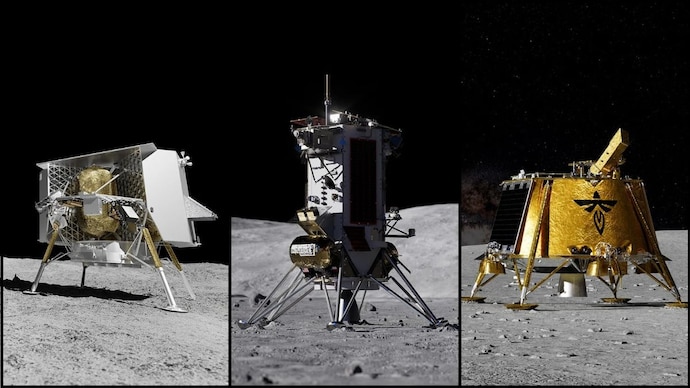
Nasa has awarded $590 million in fresh contracts to three American companies, Astrobotic, Firefly Aerospace and Intuitive Machines, to build and fly more robotic landers to the Moon by late 2028.
The announcement, made on June 30, 2026, falls under Nasa's Commercial Lunar Payload Services scheme, known as CLPS, through which private firms are paid to carry Nasa's scientific instruments to the lunar surface rather than Nasa building its own landers from scratch.
Rather than developing entirely new designs, the companies will use updated versions of their existing lander architectures to ensure faster production and greater mission reliability.
These missions specifically task the three companies with delivering critical scientific instruments, autonomous rovers, and infrastructure hardware to the lunar surface in 2028, directly supporting the agency's revised and accelerated Artemis Moon base campaign.
WHAT DID EACH COMPANY WIN?
Astrobotic, a Pittsburgh-based firm currently being bought by Voyager Technologies, received the largest award, worth $297.9 million, to deliver two landers.
Firefly Aerospace was given $144.2 million for a single mission, while Intuitive Machines was awarded $148.3 million, also for one lander.
All three missions are uncrewed, which means no astronauts will travel aboard; instead, the landers will carry cargo, sensors and research equipment.
WHY DOES NASA NEED MORE LANDERS ON THE MOON?
These missions form what Nasa calls phase one of its ambition to establish a permanent Moon Base near the lunar south pole.
Officials say landing on the Moon repeatedly and safely must be proven reliable before Nasa risks sending costlier, more delicate equipment, and eventually astronauts, on the same route.
The push is tied to the wider Artemis Program, Nasa's effort to return humans to the Moon and keep them there long term, partly driven by competition with China's own goal of a crewed lunar landing by 2030.
WHAT WILL THE NEW LANDERS ACTUALLY CARRY?
Instruments aboard the coming missions will study surface conditions, including volatile compounds, the gases and chemicals that escape easily given the Moon's thin atmosphere, and search for water ice hidden beneath the ground, a resource considered vital for any future base.
Sensors will also track how a lander’s engine exhaust disturbs the surface beneath it, data engineers need to design safer systems for heavier landers still to come.
HOW HAVE THESE COMPANIES FARED IN PAST MOON LANDINGS?
All three firms have already attempted lunar touchdowns.
Firefly's Blue Ghost became the first private spacecraft to land upright and intact, in March 2025.
Astrobotic’s Peregrine lander suffered a fuel leak soon after launch in January 2024 and never reached the Moon.
Intuitive Machines reached the surface twice, in February 2024 and March 2025, but tipped over both times, limiting the science its instruments could complete.
WHAT ELSE IS NASA PLANNING FOR THE MOON?
Nasa is also weighing whether to repurpose an old engineering test unit, called Promise, built using design elements from its Mars rovers Curiosity and Perseverance, for a future lunar mission.
It would rely on a radioisotope thermoelectric generator, which is a small nuclear battery, to keep functioning through the Moon's freezing fortnight-long night.
Taken together, these steady, incremental missions are seen as the groundwork for Nasa's goal of routine, dependable access to the lunar surface before the decade is out.
Nasa has awarded $590 million in fresh contracts to three American companies, Astrobotic, Firefly Aerospace and Intuitive Machines, to build and fly more robotic landers to the Moon by late 2028.
The announcement, made on June 30, 2026, falls under Nasa's Commercial Lunar Payload Services scheme, known as CLPS, through which private firms are paid to carry Nasa's scientific instruments to the lunar surface rather than Nasa building its own landers from scratch.
Rather than developing entirely new designs, the companies will use updated versions of their existing lander architectures to ensure faster production and greater mission reliability.
These missions specifically task the three companies with delivering critical scientific instruments, autonomous rovers, and infrastructure hardware to the lunar surface in 2028, directly supporting the agency's revised and accelerated Artemis Moon base campaign.
WHAT DID EACH COMPANY WIN?
Astrobotic, a Pittsburgh-based firm currently being bought by Voyager Technologies, received the largest award, worth $297.9 million, to deliver two landers.
Firefly Aerospace was given $144.2 million for a single mission, while Intuitive Machines was awarded $148.3 million, also for one lander.
All three missions are uncrewed, which means no astronauts will travel aboard; instead, the landers will carry cargo, sensors and research equipment.
WHY DOES NASA NEED MORE LANDERS ON THE MOON?
These missions form what Nasa calls phase one of its ambition to establish a permanent Moon Base near the lunar south pole.
Officials say landing on the Moon repeatedly and safely must be proven reliable before Nasa risks sending costlier, more delicate equipment, and eventually astronauts, on the same route.
The push is tied to the wider Artemis Program, Nasa's effort to return humans to the Moon and keep them there long term, partly driven by competition with China's own goal of a crewed lunar landing by 2030.
WHAT WILL THE NEW LANDERS ACTUALLY CARRY?
Instruments aboard the coming missions will study surface conditions, including volatile compounds, the gases and chemicals that escape easily given the Moon's thin atmosphere, and search for water ice hidden beneath the ground, a resource considered vital for any future base.
Sensors will also track how a lander’s engine exhaust disturbs the surface beneath it, data engineers need to design safer systems for heavier landers still to come.
HOW HAVE THESE COMPANIES FARED IN PAST MOON LANDINGS?
All three firms have already attempted lunar touchdowns.
Firefly's Blue Ghost became the first private spacecraft to land upright and intact, in March 2025.
Astrobotic’s Peregrine lander suffered a fuel leak soon after launch in January 2024 and never reached the Moon.
Intuitive Machines reached the surface twice, in February 2024 and March 2025, but tipped over both times, limiting the science its instruments could complete.
WHAT ELSE IS NASA PLANNING FOR THE MOON?
Nasa is also weighing whether to repurpose an old engineering test unit, called Promise, built using design elements from its Mars rovers Curiosity and Perseverance, for a future lunar mission.
It would rely on a radioisotope thermoelectric generator, which is a small nuclear battery, to keep functioning through the Moon's freezing fortnight-long night.
Taken together, these steady, incremental missions are seen as the groundwork for Nasa's goal of routine, dependable access to the lunar surface before the decade is out.

