Swift telescope crashing: Nasa launches Link spacecraft to catch, dock, and push it
The launch was originally slated to launch on June 30, but was scrubbed twice due to bad weather.
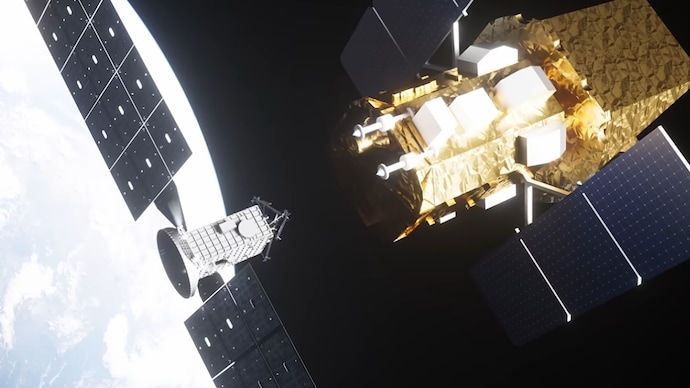
After two delays in two days, Nasa has finally launched the Link spacecraft tasked with preventing one of its most successful space telescopes from gradually falling back to Earth.
The agency's Swift Boost mission sent the LINK robotic spacecraft into orbit at around 2 pm on Friday, July 3.
The spacecraft will now attempt to catch, dock and push the ageing Neil Gehrels Swift Observatory into a higher orbit, extending its scientific life by several years.
The mission lifted off aboard a Northrop Grumman Pegasus XL rocket, which was air-launched from the company's modified Stargazer L-1011 aircraft at an altitude of 40,000 feet over the Pacific Ocean.
The launch was originally slated to launch on June 30, but was scrubbed twice due to bad weather.
Over the coming weeks, LINK will begin a carefully planned rendezvous with the telescope before attempting one of the most challenging robotic servicing missions ever undertaken in space.
WHY IS SWIFT FALLING BACK TO EARTH?
Launched in 2004, the Neil Gehrels Swift Observatory was originally designed for a two-year mission but has remained one of Nasa's premier space telescopes for more than two decades.
It studies gamma-ray bursts, the universe's most powerful explosions, as well as black holes, neutron stars and other high-energy cosmic events.
Despite remaining scientifically healthy, Swift has been steadily losing altitude because of atmospheric drag.
The problem has become more pronounced as increased solar activity has heated and expanded Earth's upper atmosphere, creating more drag on satellites in low-Earth orbit.
Since Swift was never built with engines or fuel, it cannot raise its own orbit, putting it on a slow path towards eventual re-entry.
Instead of retiring the observatory, NASA decided to attempt something never done before: send a robotic spacecraft to rescue an active science mission.
HOW WILL NASA RESCUE SWIFT TELESCOPE?
Built by Arizona-based startup Katalyst Space Technologies, LINK will autonomously approach Swift before using three robotic arms to securely dock with the observatory.
Once attached, it will fire its electric ion propulsion system over several months to gradually lift the telescope into a safer, higher orbit.
Nasa expects the orbit boost to significantly extend Swift's operational life while demonstrating that ageing satellites can be serviced instead of abandoned.
The mission could pave the way for future spacecraft capable of repairing, refuelling or repositioning valuable satellites already in orbit, reducing costs and helping make space operations more sustainable.
If successful, Swift Boost will mark a major milestone in on-orbit servicing, showing that robotic spacecraft can preserve critical scientific missions long after their original design lifetimes have ended.
After two delays in two days, Nasa has finally launched the Link spacecraft tasked with preventing one of its most successful space telescopes from gradually falling back to Earth.
The agency's Swift Boost mission sent the LINK robotic spacecraft into orbit at around 2 pm on Friday, July 3.
The spacecraft will now attempt to catch, dock and push the ageing Neil Gehrels Swift Observatory into a higher orbit, extending its scientific life by several years.
The mission lifted off aboard a Northrop Grumman Pegasus XL rocket, which was air-launched from the company's modified Stargazer L-1011 aircraft at an altitude of 40,000 feet over the Pacific Ocean.
The launch was originally slated to launch on June 30, but was scrubbed twice due to bad weather.
Over the coming weeks, LINK will begin a carefully planned rendezvous with the telescope before attempting one of the most challenging robotic servicing missions ever undertaken in space.
WHY IS SWIFT FALLING BACK TO EARTH?
Launched in 2004, the Neil Gehrels Swift Observatory was originally designed for a two-year mission but has remained one of Nasa's premier space telescopes for more than two decades.
It studies gamma-ray bursts, the universe's most powerful explosions, as well as black holes, neutron stars and other high-energy cosmic events.
Despite remaining scientifically healthy, Swift has been steadily losing altitude because of atmospheric drag.
The problem has become more pronounced as increased solar activity has heated and expanded Earth's upper atmosphere, creating more drag on satellites in low-Earth orbit.
Since Swift was never built with engines or fuel, it cannot raise its own orbit, putting it on a slow path towards eventual re-entry.
Instead of retiring the observatory, NASA decided to attempt something never done before: send a robotic spacecraft to rescue an active science mission.
HOW WILL NASA RESCUE SWIFT TELESCOPE?
Built by Arizona-based startup Katalyst Space Technologies, LINK will autonomously approach Swift before using three robotic arms to securely dock with the observatory.
Once attached, it will fire its electric ion propulsion system over several months to gradually lift the telescope into a safer, higher orbit.
Nasa expects the orbit boost to significantly extend Swift's operational life while demonstrating that ageing satellites can be serviced instead of abandoned.
The mission could pave the way for future spacecraft capable of repairing, refuelling or repositioning valuable satellites already in orbit, reducing costs and helping make space operations more sustainable.
If successful, Swift Boost will mark a major milestone in on-orbit servicing, showing that robotic spacecraft can preserve critical scientific missions long after their original design lifetimes have ended.

