Nasa's Swift telescope is falling from the sky. Its robot rescuer just phoned home
Katalyst Space has established contact with LINK after its launch to orbit for Nasa's Swift rescue mission. The milestone clears the way for a first-of-its-kind attempt to raise the ageing telescope's orbit.
On the night of Friday, July 3, somewhere above Earth, a small spacecraft called home for the first time. On the ground, engineers finally exhaled.
Teams have successfully established communications with LINK, a robotic servicing spacecraft built by Katalyst Space, an American startup based in Flagstaff, Arizona.
That signal confirmed the little robot survived its journey to orbit, its solar panels opened, and its power systems are alive.
Now begins one of the most audacious rescue missions in the history of spaceflight: saving Nasa’s Neil Gehrels Swift Observatory, a 21-year-old space telescope, from a fiery, uncontrolled fall back to Earth.
WHY IS NASA'S SWIFT TELESCOPE FALLING FROM SPACE?
Swift launched in November 2004 to chase gamma-ray bursts, the most violent explosions in the universe, released when massive stars collapse or dead stars collide.
The observatory's founding mission paper laid out a simple superpower: it can swivel towards a burst within minutes, catching light that fades before other telescopes can react.
The telescope is perfectly healthy. Its orbit is not.
Swift circles Earth in low Earth orbit, the region a few hundred kilometres up where wisps of atmosphere still exist.
Those thin air molecules create drag, a gentle friction that slowly steals a satellite's altitude.
Recent solar activity magnified this effect on Swift, and its orbit decayed faster than anticipated.
When the Sun grows stormy, as it has during the current solar maximum, the peak of its 11-year activity cycle, Earth's upper atmosphere puffs up like heated dough, thickening the air in Swift's path.
Swift has no engine of its own. Without help, it would plunge back and burn up by the end of 2026.
WHAT IS THE LINK SPACECRAFT?
Nasa awarded Katalyst a contract in September 2025, giving the company less than a year to design, build, test and launch a spacecraft to meet, grab and lift Swift.
The contract is worth about 30 million dollars, a fraction of what a replacement telescope would cost.
LINK rode to space on a Northrop Grumman Pegasus XL rocket, dropped from the Stargazer aircraft at about 40,000 feet above Kwajalein Atoll in the Pacific, at 2.06 pm IST on July 3.
It was the final flight of the veteran air-launched rocket, a fitting farewell.
HOW WILL LINK RESCUE THE SWIFT TELESCOPE?
Over the next several weeks, Katalyst will check out LINK's propulsion, sensor and navigation systems.
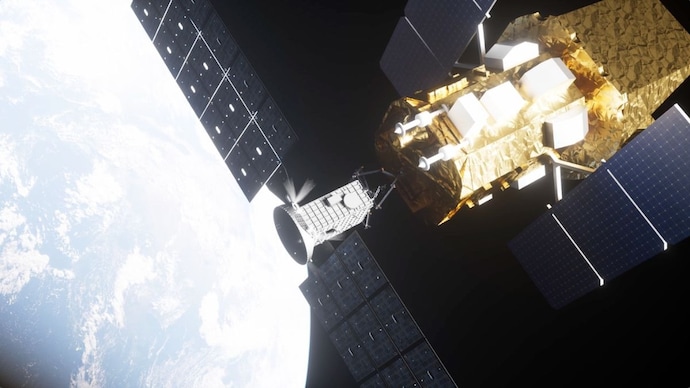
LINK will then approach Swift and complete a survey of the observatory, before capturing and lifting it over the course of several months.
The capture is the hardest part. Swift was never designed to be grabbed. LINK will wrap three robotic arms around the telescope, then fire its ion thrusters, engines that push out charged particles for a gentle, fuel-sipping nudge, raising Swift slowly towards its original altitude. Then it will let go.
If it works, it will be the first time a commercial spacecraft docks with a government satellite never built for servicing. Satellites, from that day on, need not die simply because their orbits do.
On the night of Friday, July 3, somewhere above Earth, a small spacecraft called home for the first time. On the ground, engineers finally exhaled.
Teams have successfully established communications with LINK, a robotic servicing spacecraft built by Katalyst Space, an American startup based in Flagstaff, Arizona.
That signal confirmed the little robot survived its journey to orbit, its solar panels opened, and its power systems are alive.
Now begins one of the most audacious rescue missions in the history of spaceflight: saving Nasa’s Neil Gehrels Swift Observatory, a 21-year-old space telescope, from a fiery, uncontrolled fall back to Earth.
WHY IS NASA'S SWIFT TELESCOPE FALLING FROM SPACE?
Swift launched in November 2004 to chase gamma-ray bursts, the most violent explosions in the universe, released when massive stars collapse or dead stars collide.
The observatory's founding mission paper laid out a simple superpower: it can swivel towards a burst within minutes, catching light that fades before other telescopes can react.
The telescope is perfectly healthy. Its orbit is not.
Swift circles Earth in low Earth orbit, the region a few hundred kilometres up where wisps of atmosphere still exist.
Those thin air molecules create drag, a gentle friction that slowly steals a satellite's altitude.
Recent solar activity magnified this effect on Swift, and its orbit decayed faster than anticipated.
When the Sun grows stormy, as it has during the current solar maximum, the peak of its 11-year activity cycle, Earth's upper atmosphere puffs up like heated dough, thickening the air in Swift's path.
Swift has no engine of its own. Without help, it would plunge back and burn up by the end of 2026.
WHAT IS THE LINK SPACECRAFT?
Nasa awarded Katalyst a contract in September 2025, giving the company less than a year to design, build, test and launch a spacecraft to meet, grab and lift Swift.
The contract is worth about 30 million dollars, a fraction of what a replacement telescope would cost.
LINK rode to space on a Northrop Grumman Pegasus XL rocket, dropped from the Stargazer aircraft at about 40,000 feet above Kwajalein Atoll in the Pacific, at 2.06 pm IST on July 3.
It was the final flight of the veteran air-launched rocket, a fitting farewell.
HOW WILL LINK RESCUE THE SWIFT TELESCOPE?
Over the next several weeks, Katalyst will check out LINK's propulsion, sensor and navigation systems.
LINK will then approach Swift and complete a survey of the observatory, before capturing and lifting it over the course of several months.
The capture is the hardest part. Swift was never designed to be grabbed. LINK will wrap three robotic arms around the telescope, then fire its ion thrusters, engines that push out charged particles for a gentle, fuel-sipping nudge, raising Swift slowly towards its original altitude. Then it will let go.
If it works, it will be the first time a commercial spacecraft docks with a government satellite never built for servicing. Satellites, from that day on, need not die simply because their orbits do.

