Philippines jolted by M6.5 earthquake: How Ring of Fire keeps Asia on edge
A 6.5-magnitude earthquake shook Mindanao on Friday, with no immediate reports of casualties or major damage. The tremor has renewed attention on the Philippines' exposure to the Pacific Ring of Fire.
A 6.5-magnitude earthquake struck the southern Philippine island of Mindanao on Friday, shaking communities across the region but causing no immediate reports of casualties or major damage.
According to the German Research Centre for Geosciences (GFZ), the earthquake occurred at a depth of 29 kilometres, making it a relatively shallow event capable of producing strong ground shaking.
Authorities said no tsunami warning was issued, and damage assessments are underway.
The latest tremor comes just weeks after another powerful earthquake struck southern Philippines, killing more than 80 people and causing widespread destruction across Mindanao.
The back-to-back seismic activity has renewed questions about whether the Pacific Ring of Fire, the world's most active earthquake belt, is entering another active phase.
Seismologists caution that while the recent sequence of major earthquakes around the Pacific, including those in Japan, Venezuela and now the Philippines, may appear connected, there is no evidence that distant earthquakes trigger one another across continents.
Each event is generally driven by stress accumulation and release on its own fault system.
WHY IS THE PHILIPPINES SO VULNERABLE TO EARTHQUAKES?
The Philippines is among the most earthquake-prone nations on Earth because it lies at the intersection of several major tectonic plates.
To its east lies the Philippine Trench, where the Philippine Sea Plate is diving beneath the Philippine Mobile Belt in a process known as subduction.
Along the western side of the archipelago, the Manila Trench, Negros Trench and Sulu Trench mark zones where parts of the Eurasian (Sunda) Plate are also being forced beneath the islands.
Running through the country's interior is the Philippine Fault Zone, a vast left-lateral strike-slip fault stretching for nearly 1,200 kilometres from northern Luzon to Mindanao.
Similar in nature to California's San Andreas Fault, this fault accommodates the sideways movement created by the collision of surrounding tectonic plates and has generated numerous destructive earthquakes throughout history.
Mindanao itself is particularly complex, sitting near the junction of the Philippine Fault, the Cotabato Trench and the Philippine Trench. The interaction of these active faults means the island regularly experiences moderate to strong earthquakes.
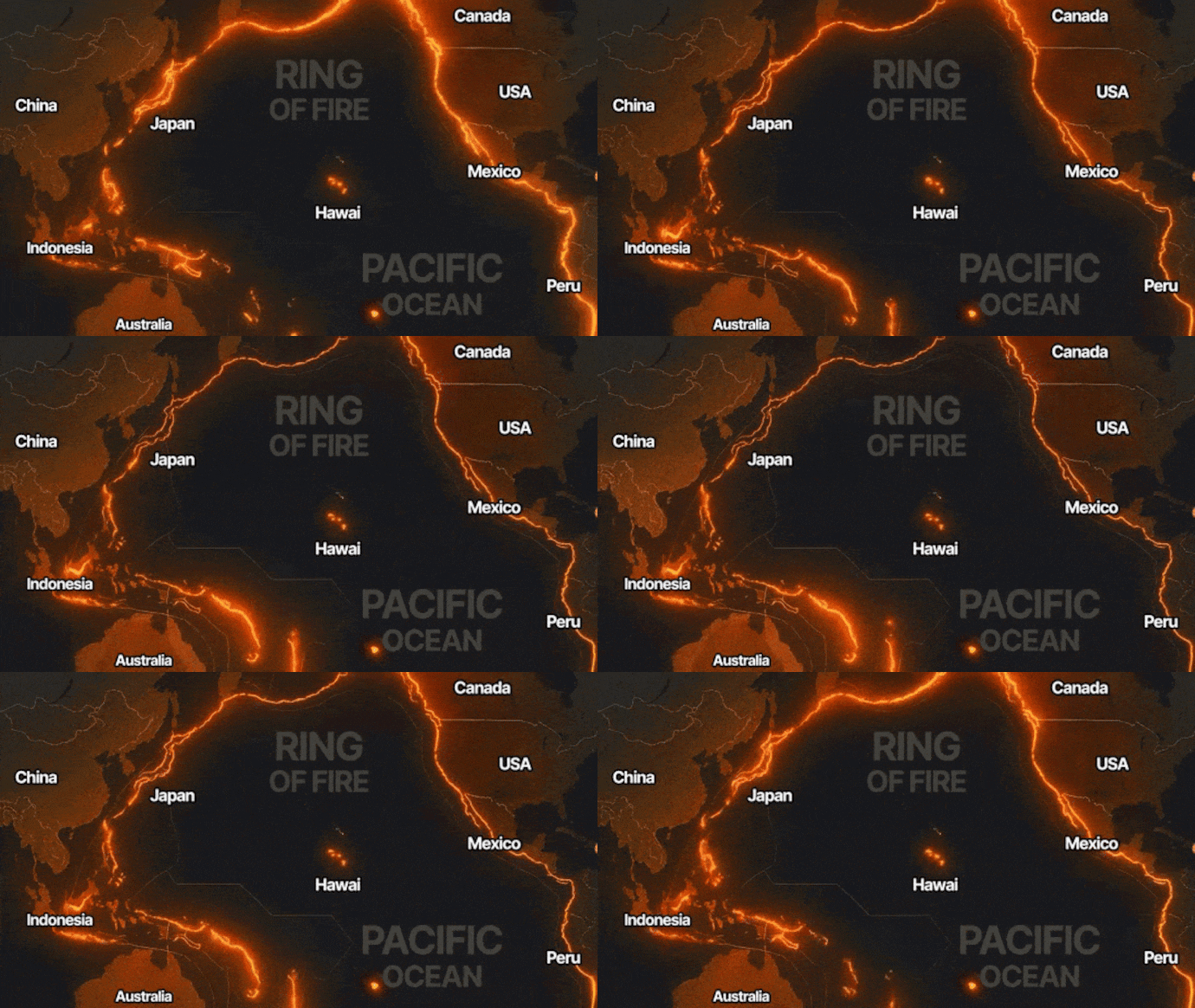
The Philippines records thousands of earthquakes every year, although most are too small to be felt. The country's location on the Pacific Ring of Fire, a horseshoe-shaped belt encircling the Pacific Ocean where nearly 90 per cent of the world's earthquakes occur, makes seismic activity a constant reality.
Experts say the latest earthquake serves as another reminder that the Ring of Fire remains one of Earth's most dynamic geological regions.
While the recent cluster of large earthquakes has drawn global attention, scientists stress that these events are part of the natural process of tectonic plate movement rather than evidence of a single, connected global seismic event.
Residents in Mindanao have been advised to remain alert for aftershocks, which can continue for days or even weeks following a major earthquake, and to follow guidance issued by local disaster management authorities.
A 6.5-magnitude earthquake struck the southern Philippine island of Mindanao on Friday, shaking communities across the region but causing no immediate reports of casualties or major damage.
According to the German Research Centre for Geosciences (GFZ), the earthquake occurred at a depth of 29 kilometres, making it a relatively shallow event capable of producing strong ground shaking.
Authorities said no tsunami warning was issued, and damage assessments are underway.
The latest tremor comes just weeks after another powerful earthquake struck southern Philippines, killing more than 80 people and causing widespread destruction across Mindanao.
The back-to-back seismic activity has renewed questions about whether the Pacific Ring of Fire, the world's most active earthquake belt, is entering another active phase.
Seismologists caution that while the recent sequence of major earthquakes around the Pacific, including those in Japan, Venezuela and now the Philippines, may appear connected, there is no evidence that distant earthquakes trigger one another across continents.
Each event is generally driven by stress accumulation and release on its own fault system.
WHY IS THE PHILIPPINES SO VULNERABLE TO EARTHQUAKES?
The Philippines is among the most earthquake-prone nations on Earth because it lies at the intersection of several major tectonic plates.
To its east lies the Philippine Trench, where the Philippine Sea Plate is diving beneath the Philippine Mobile Belt in a process known as subduction.
Along the western side of the archipelago, the Manila Trench, Negros Trench and Sulu Trench mark zones where parts of the Eurasian (Sunda) Plate are also being forced beneath the islands.
Running through the country's interior is the Philippine Fault Zone, a vast left-lateral strike-slip fault stretching for nearly 1,200 kilometres from northern Luzon to Mindanao.
Similar in nature to California's San Andreas Fault, this fault accommodates the sideways movement created by the collision of surrounding tectonic plates and has generated numerous destructive earthquakes throughout history.
Mindanao itself is particularly complex, sitting near the junction of the Philippine Fault, the Cotabato Trench and the Philippine Trench. The interaction of these active faults means the island regularly experiences moderate to strong earthquakes.
The Philippines records thousands of earthquakes every year, although most are too small to be felt. The country's location on the Pacific Ring of Fire, a horseshoe-shaped belt encircling the Pacific Ocean where nearly 90 per cent of the world's earthquakes occur, makes seismic activity a constant reality.
Experts say the latest earthquake serves as another reminder that the Ring of Fire remains one of Earth's most dynamic geological regions.
While the recent cluster of large earthquakes has drawn global attention, scientists stress that these events are part of the natural process of tectonic plate movement rather than evidence of a single, connected global seismic event.
Residents in Mindanao have been advised to remain alert for aftershocks, which can continue for days or even weeks following a major earthquake, and to follow guidance issued by local disaster management authorities.

