Skyroot in final phase of Vikram-1, India's first private rocket, launch prep
India's space story is about to enter a new chapter as a first-of-its-kind mission prepares for liftoff from Sriharikota. Here's why this launch could be one of the most closely watched events of the year.
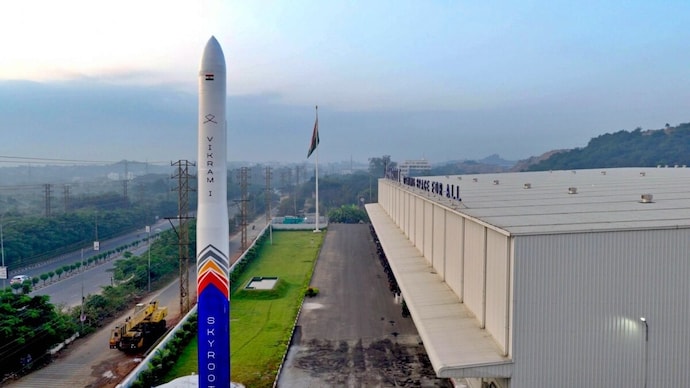
India is set to take a major step in its private space journey as Hyderabad-based Skyroot Aerospace prepares to launch Vikram-1, the country's first privately developed orbital rocket, from the Satish Dhawan Space Centre (SDSC-SHAR) in Sriharikota. The launch window opens on Saturday, July 18, and extends until August 4.
The launch is expected to be watched closely across the country, as it represents one of the biggest milestones for India's rapidly growing private space industry.
Following space sector reforms introduced in 2020, private companies have been allowed to build rockets, satellites and launch services with regulatory support from the Indian National Space Promotion and Authorization Centre (IN-SPACe), opening the door for greater commercial participation alongside Isro.
INDIA'S FIRST PRIVATE ROCKET
Vikram-1 marks a historic milestone for India's commercial space sector.
If successful, it will become the first privately built Indian rocket to place satellites into orbit, moving beyond the suborbital flight achieved by Skyroot's Vikram-S mission in 2022.
An orbital rocket is designed to carry satellites at speeds high enough for them to continuously circle Earth.
Unlike a suborbital rocket, which briefly reaches space before returning, an orbital launch vehicle gives satellites the velocity needed to remain in space.
The mission, named 'Aagaman', is the first of three planned developmental flights that will help qualify Vikram-1 for future commercial launches.
The rocket is expected to carry multiple customer payloads into low-Earth orbit, around 450 km above the planet.
A GLIMPSE OF FUTURE OF SPACE TRAVEL
Skyroot Aerospace, founded in 2018 by former ISRO engineers Pawan Kumar Chandana and Naga Bharath Daka, is among the first private Indian companies to develop an orbital-class launch vehicle after the country's space sector was opened to private participation.
Vikram-1 is a four-stage rocket.
Its first three stages use solid propellant, while the upper stage is powered by a restartable liquid-fuel engine that helps place satellites precisely into their intended orbit.
The vehicle is designed primarily for launching small satellites, a rapidly expanding segment of the global space industry.
If the mission succeeds, it will mark another significant chapter in India's evolving private space ecosystem and strengthen the country's ambitions of becoming a global commercial launch provider.
India is set to take a major step in its private space journey as Hyderabad-based Skyroot Aerospace prepares to launch Vikram-1, the country's first privately developed orbital rocket, from the Satish Dhawan Space Centre (SDSC-SHAR) in Sriharikota. The launch window opens on Saturday, July 18, and extends until August 4.
The launch is expected to be watched closely across the country, as it represents one of the biggest milestones for India's rapidly growing private space industry.
Following space sector reforms introduced in 2020, private companies have been allowed to build rockets, satellites and launch services with regulatory support from the Indian National Space Promotion and Authorization Centre (IN-SPACe), opening the door for greater commercial participation alongside Isro.
INDIA'S FIRST PRIVATE ROCKET
Vikram-1 marks a historic milestone for India's commercial space sector.
If successful, it will become the first privately built Indian rocket to place satellites into orbit, moving beyond the suborbital flight achieved by Skyroot's Vikram-S mission in 2022.
An orbital rocket is designed to carry satellites at speeds high enough for them to continuously circle Earth.
Unlike a suborbital rocket, which briefly reaches space before returning, an orbital launch vehicle gives satellites the velocity needed to remain in space.
The mission, named 'Aagaman', is the first of three planned developmental flights that will help qualify Vikram-1 for future commercial launches.
The rocket is expected to carry multiple customer payloads into low-Earth orbit, around 450 km above the planet.
A GLIMPSE OF FUTURE OF SPACE TRAVEL
Skyroot Aerospace, founded in 2018 by former ISRO engineers Pawan Kumar Chandana and Naga Bharath Daka, is among the first private Indian companies to develop an orbital-class launch vehicle after the country's space sector was opened to private participation.
Vikram-1 is a four-stage rocket.
Its first three stages use solid propellant, while the upper stage is powered by a restartable liquid-fuel engine that helps place satellites precisely into their intended orbit.
The vehicle is designed primarily for launching small satellites, a rapidly expanding segment of the global space industry.
If the mission succeeds, it will mark another significant chapter in India's evolving private space ecosystem and strengthen the country's ambitions of becoming a global commercial launch provider.

