Skyroot preps for Vikram-I launch: Why India's private rocket doesn't need a wet test
Skyroot Aerospace is preparing to launch Vikram-I from Sriharikota without a wet dress rehearsal. The rocket's solid-fuel design and prior ground testing make that step unnecessary.
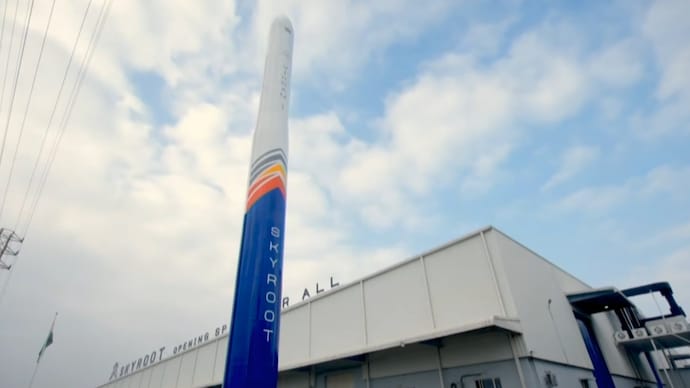
As Skyroot Aerospace prepares for the maiden launch of its Vikram-I rocket from Isro's Satish Dhawan Space Centre in Sriharikota, one major pre-launch milestone common to rockets like SpaceX's Falcon 9 will be missing, a wet dress rehearsal.
Unlike liquid-fuel launch vehicles, Vikram-I's architecture means it does not require a full-scale fuelling and countdown simulation before liftoff.
Speaking ahead of the launch, Skyroot Aerospace Co-founder and CEO Pawan Chandana explained that the key difference lies in the rocket's first stage.
"The best part about our launch vehicle is that its first stage, or booster stage, uses solid fuel. Unlike liquid-fuel rockets, solid rocket motors cannot be test-fired on the launch pad before liftoff. Once the solid propellant is ignited, it burns to completion, so the first time it fires is during the actual launch," Pawan said.
A wet dress rehearsal (WDR) is a standard procedure for rockets powered by liquid propellants.
During the exercise, engineers fill the rocket with fuel and oxidiser and conduct a complete countdown, stopping just before engine ignition. The rehearsal helps verify fueling systems, software, ground equipment and launch procedures before launch day.
SpaceX routinely performs wet dress rehearsals and static fire tests for its Falcon 9 rockets before major missions.
Vikram-I, however, follows a different philosophy.
"Because of this architecture, we do not require a wet dress rehearsal at this stage," Chandana said. "A wet dress rehearsal is typically conducted for liquid-fuel rockets to test fueling operations and countdown procedures, but our vehicle's design makes that unnecessary at the moment."
Instead of relying on a launch pad rehearsal, Skyroot has focused on an extensive ground qualification programme.
The company said every component, subsystem and complete system of Vikram-I has been individually tested and validated before undergoing integrated testing. Only after completing these qualification campaigns were the rocket stages transported to Sriharikota for final vehicle stacking and launch integration.
This testing strategy allows engineers to identify and resolve issues long before the rocket reaches the launch pad, reducing the need for additional integrated launch rehearsals.
The Vikram-I mission represents a major milestone for India's private space industry.
It is the first privately designed, developed and manufactured orbital rocket to be stacked on Isro's First Launch Pad, pointing to the growing collaboration between the national space agency and private launch companies.
If successful, Vikram-I will demonstrate India's ability to develop indigenous commercial orbital launch vehicles, opening new opportunities in the rapidly expanding small satellite launch market.
As Skyroot Aerospace prepares for the maiden launch of its Vikram-I rocket from Isro's Satish Dhawan Space Centre in Sriharikota, one major pre-launch milestone common to rockets like SpaceX's Falcon 9 will be missing, a wet dress rehearsal.
Unlike liquid-fuel launch vehicles, Vikram-I's architecture means it does not require a full-scale fuelling and countdown simulation before liftoff.
Speaking ahead of the launch, Skyroot Aerospace Co-founder and CEO Pawan Chandana explained that the key difference lies in the rocket's first stage.
"The best part about our launch vehicle is that its first stage, or booster stage, uses solid fuel. Unlike liquid-fuel rockets, solid rocket motors cannot be test-fired on the launch pad before liftoff. Once the solid propellant is ignited, it burns to completion, so the first time it fires is during the actual launch," Pawan said.
A wet dress rehearsal (WDR) is a standard procedure for rockets powered by liquid propellants.
During the exercise, engineers fill the rocket with fuel and oxidiser and conduct a complete countdown, stopping just before engine ignition. The rehearsal helps verify fueling systems, software, ground equipment and launch procedures before launch day.
SpaceX routinely performs wet dress rehearsals and static fire tests for its Falcon 9 rockets before major missions.
Vikram-I, however, follows a different philosophy.
"Because of this architecture, we do not require a wet dress rehearsal at this stage," Chandana said. "A wet dress rehearsal is typically conducted for liquid-fuel rockets to test fueling operations and countdown procedures, but our vehicle's design makes that unnecessary at the moment."
Instead of relying on a launch pad rehearsal, Skyroot has focused on an extensive ground qualification programme.
The company said every component, subsystem and complete system of Vikram-I has been individually tested and validated before undergoing integrated testing. Only after completing these qualification campaigns were the rocket stages transported to Sriharikota for final vehicle stacking and launch integration.
This testing strategy allows engineers to identify and resolve issues long before the rocket reaches the launch pad, reducing the need for additional integrated launch rehearsals.
The Vikram-I mission represents a major milestone for India's private space industry.
It is the first privately designed, developed and manufactured orbital rocket to be stacked on Isro's First Launch Pad, pointing to the growing collaboration between the national space agency and private launch companies.
If successful, Vikram-I will demonstrate India's ability to develop indigenous commercial orbital launch vehicles, opening new opportunities in the rapidly expanding small satellite launch market.

