Bitten by a snake? Here's how the same snake could also save you
Instead of relying on traditional animal-derived antibodies, researchers have uncovered how nature can counteract its own poison 10 times better than other antivenoms.
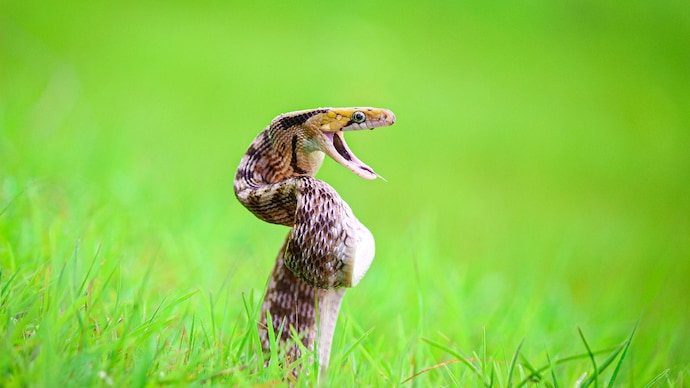
Scientists have uncovered a promising new way to treat venomous snakebites by turning to an unlikely source; the snakes themselves.
Researchers at the University of Maryland have found that naturally occurring proteins in a snake's blood can neutralise venom far more effectively than some existing treatments, potentially paving the way for a new generation of safer, broader and more affordable antivenoms.
The findings build on years of research into how venomous snakes avoid being harmed by their own toxins.
The study focused on the western diamondback rattlesnake and identified combinations of protective blood proteins capable of blocking venom from multiple dangerous snake species.
“This is one of those great stories when nature has already solved a problem we’ve been grappling with for decades,” said study lead Sean B Carroll, Distinguished University Professor of Biology at the University of Maryland.
THE NATURE'S DEFENCE SYSTEM
Snakebites remain one of the world's most neglected tropical diseases. According to the World Health Organisation (WHO), venomous snakebites kill between 80,000 and 1,40,000 people every year and leave hundreds of thousands more with permanent disabilities, particularly in rural regions where access to treatment is limited.
Current antivenoms are produced by injecting snake venom into animals such as horses or sheep and harvesting the antibodies they produce. While lifesaving, these treatments are expensive to manufacture, vary in effectiveness against different snake species and can trigger severe immune reactions.
“We’ve known from anecdotes for 100 years that vipers tend to be resistant to their own venom,” Carroll said. “But for a long time, nobody knew what exactly was circulating in their blood that protected them.”
In 2022, Carroll's team identified a protective protein called FETUA-3, which blocks a major family of venom toxins.
“Here was evolution’s way for snakes to protect themselves from accidental self-envenomation,” he said. “Why rely on horse antibodies when nature has packaged an effective antidote right there in the snake?”
A STRONGER SOLUTION
For the new study, researchers tested the full family of FETUA proteins. While individual proteins offered only partial protection, combining several significantly boosted their ability to neutralise venom.
“The ingredients are there,” Carroll said. “We just have to keep testing various mixtures.”
Laboratory tests showed the optimised protein combinations were about 10 times more potent than current sheep-derived rattlesnake antivenom. They completely neutralised rattlesnake venom and also protected against venom from several other viper species, including those separated by millions of years of evolution.
The team is now applying the same strategy to other venom toxin families.
"We're getting remarkably close to having effective solutions for the three major toxin families in vipers," Carroll said. "What we've learned here, together with research we're doing now, gives us real confidence that nature-based recombinant [lab-produced] antivenoms are within reach."
Carroll believes the first commercial applications could be in veterinary medicine before human treatments.
“We could make train cars-worth of this stuff and help solve a massive global health problem,” he said. “Many of our most important medicines have come from nature. I’m delighted that the components for a better-than-commercial antivenom were in these snakes all along.”
Scientists have uncovered a promising new way to treat venomous snakebites by turning to an unlikely source; the snakes themselves.
Researchers at the University of Maryland have found that naturally occurring proteins in a snake's blood can neutralise venom far more effectively than some existing treatments, potentially paving the way for a new generation of safer, broader and more affordable antivenoms.
The findings build on years of research into how venomous snakes avoid being harmed by their own toxins.
The study focused on the western diamondback rattlesnake and identified combinations of protective blood proteins capable of blocking venom from multiple dangerous snake species.
“This is one of those great stories when nature has already solved a problem we’ve been grappling with for decades,” said study lead Sean B Carroll, Distinguished University Professor of Biology at the University of Maryland.
THE NATURE'S DEFENCE SYSTEM
Snakebites remain one of the world's most neglected tropical diseases. According to the World Health Organisation (WHO), venomous snakebites kill between 80,000 and 1,40,000 people every year and leave hundreds of thousands more with permanent disabilities, particularly in rural regions where access to treatment is limited.
Current antivenoms are produced by injecting snake venom into animals such as horses or sheep and harvesting the antibodies they produce. While lifesaving, these treatments are expensive to manufacture, vary in effectiveness against different snake species and can trigger severe immune reactions.
“We’ve known from anecdotes for 100 years that vipers tend to be resistant to their own venom,” Carroll said. “But for a long time, nobody knew what exactly was circulating in their blood that protected them.”
In 2022, Carroll's team identified a protective protein called FETUA-3, which blocks a major family of venom toxins.
“Here was evolution’s way for snakes to protect themselves from accidental self-envenomation,” he said. “Why rely on horse antibodies when nature has packaged an effective antidote right there in the snake?”
A STRONGER SOLUTION
For the new study, researchers tested the full family of FETUA proteins. While individual proteins offered only partial protection, combining several significantly boosted their ability to neutralise venom.
“The ingredients are there,” Carroll said. “We just have to keep testing various mixtures.”
Laboratory tests showed the optimised protein combinations were about 10 times more potent than current sheep-derived rattlesnake antivenom. They completely neutralised rattlesnake venom and also protected against venom from several other viper species, including those separated by millions of years of evolution.
The team is now applying the same strategy to other venom toxin families.
"We're getting remarkably close to having effective solutions for the three major toxin families in vipers," Carroll said. "What we've learned here, together with research we're doing now, gives us real confidence that nature-based recombinant [lab-produced] antivenoms are within reach."
Carroll believes the first commercial applications could be in veterinary medicine before human treatments.
“We could make train cars-worth of this stuff and help solve a massive global health problem,” he said. “Many of our most important medicines have come from nature. I’m delighted that the components for a better-than-commercial antivenom were in these snakes all along.”
Scientists have uncovered a promising new way to treat venomous snakebites by turning to an unlikely source; the snakes themselves.
Researchers at the University of Maryland have found that naturally occurring proteins in a snake's blood can neutralise venom far more effectively than some existing treatments, potentially paving the way for a new generation of safer, broader and more affordable antivenoms.
The findings build on years of research into how venomous snakes avoid being harmed by their own toxins.
The study focused on the western diamondback rattlesnake and identified combinations of protective blood proteins capable of blocking venom from multiple dangerous snake species.
“This is one of those great stories when nature has already solved a problem we’ve been grappling with for decades,” said study lead Sean B Carroll, Distinguished University Professor of Biology at the University of Maryland.
THE NATURE'S DEFENCE SYSTEM
Snakebites remain one of the world's most neglected tropical diseases. According to the World Health Organisation (WHO), venomous snakebites kill between 80,000 and 1,40,000 people every year and leave hundreds of thousands more with permanent disabilities, particularly in rural regions where access to treatment is limited.
Current antivenoms are produced by injecting snake venom into animals such as horses or sheep and harvesting the antibodies they produce. While lifesaving, these treatments are expensive to manufacture, vary in effectiveness against different snake species and can trigger severe immune reactions.
“We’ve known from anecdotes for 100 years that vipers tend to be resistant to their own venom,” Carroll said. “But for a long time, nobody knew what exactly was circulating in their blood that protected them.”
In 2022, Carroll's team identified a protective protein called FETUA-3, which blocks a major family of venom toxins.
“Here was evolution’s way for snakes to protect themselves from accidental self-envenomation,” he said. “Why rely on horse antibodies when nature has packaged an effective antidote right there in the snake?”
A STRONGER SOLUTION
For the new study, researchers tested the full family of FETUA proteins. While individual proteins offered only partial protection, combining several significantly boosted their ability to neutralise venom.
“The ingredients are there,” Carroll said. “We just have to keep testing various mixtures.”
Laboratory tests showed the optimised protein combinations were about 10 times more potent than current sheep-derived rattlesnake antivenom. They completely neutralised rattlesnake venom and also protected against venom from several other viper species, including those separated by millions of years of evolution.
The team is now applying the same strategy to other venom toxin families.
"We're getting remarkably close to having effective solutions for the three major toxin families in vipers," Carroll said. "What we've learned here, together with research we're doing now, gives us real confidence that nature-based recombinant [lab-produced] antivenoms are within reach."
Carroll believes the first commercial applications could be in veterinary medicine before human treatments.
“We could make train cars-worth of this stuff and help solve a massive global health problem,” he said. “Many of our most important medicines have come from nature. I’m delighted that the components for a better-than-commercial antivenom were in these snakes all along.”

