Watch: SpaceX fires 33 rocket engines together during latest Starship test
The world's tallest rocket system is edging closer to another flight after a successful ground test at Starbase involving multiple roaring engines. Here's what happened and what it means.
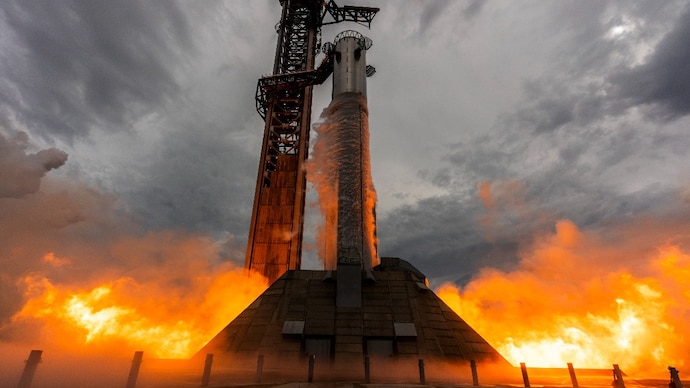
SpaceX has successfully completed a full-duration static fire test of its next-generation Super Heavy booster at its Starbase facility, bringing the company another step closer to the next Starship launch.
Conducted on Saturday, July 11, at around 4:37 am IST, the test saw all 33 Raptor engines roar to life simultaneously while the massive rocket remained firmly anchored to the launch pad.
Videos shared by SpaceX captured towering flames and thick clouds of smoke as Booster 20, the first Version 3 (V3) Super Heavy booster, completed the planned engine firing without any reported issues.
WHAT IS SUPER HEAVY?
Super Heavy is the first stage of SpaceX's Starship system.
Standing around 70 metres tall and weighing over 3,000 tonnes when fully fuelled, it is powered by 33 Raptor engines that generate more thrust than any operational rocket today.
Together with the Starship upper stage, the system stands nearly 120 metres tall, making it the world's tallest and most powerful reusable rocket.
The booster completed one of the final ground tests before a rocket launch, the static fire test.
The test verifies that the engines, fuel systems, onboard computers and the rocket's structure can work together under launch-like conditions before the vehicle is cleared for flight.
WHY WAS SPACEX's TEST A BIG DEAL?
The successful firing is a key milestone ahead of Starship Flight 13.
The new V3 booster incorporates upgraded Raptor 3 engines, redesigned control fins and structural improvements aimed at making the rocket more durable and quicker to reuse.
SpaceX has flown Starship 12 times so far, using each mission to improve the system.
In recent flights, the company has also demonstrated its ability to catch returning Super Heavy boosters using the launch tower's giant arms, a major step towards rapid rocket reusability.
By completing a full-duration static fire with all 33 engines, SpaceX has shown that the upgraded booster is capable of handling the extreme conditions it will face during launch.
WHAT HAPPENS NOW?
SpaceX is expected to stack Booster 20 with Ship 40 ahead of Starship Flight 13, which could lift off as early as July 16, subject to regulatory approval, final technical checks and weather conditions.
The mission is expected to test additional upgrades, including improved heat protection for atmospheric re-entry.
The company ultimately aims to make Starship a fully reusable launch system capable of lowering the cost of missions to Earth orbit, the Moon and eventually Mars.
Each successful ground test brings that goal a step closer.
SpaceX has successfully completed a full-duration static fire test of its next-generation Super Heavy booster at its Starbase facility, bringing the company another step closer to the next Starship launch.
Conducted on Saturday, July 11, at around 4:37 am IST, the test saw all 33 Raptor engines roar to life simultaneously while the massive rocket remained firmly anchored to the launch pad.
Videos shared by SpaceX captured towering flames and thick clouds of smoke as Booster 20, the first Version 3 (V3) Super Heavy booster, completed the planned engine firing without any reported issues.
WHAT IS SUPER HEAVY?
Super Heavy is the first stage of SpaceX's Starship system.
Standing around 70 metres tall and weighing over 3,000 tonnes when fully fuelled, it is powered by 33 Raptor engines that generate more thrust than any operational rocket today.
Together with the Starship upper stage, the system stands nearly 120 metres tall, making it the world's tallest and most powerful reusable rocket.
The booster completed one of the final ground tests before a rocket launch, the static fire test.
The test verifies that the engines, fuel systems, onboard computers and the rocket's structure can work together under launch-like conditions before the vehicle is cleared for flight.
WHY WAS SPACEX's TEST A BIG DEAL?
The successful firing is a key milestone ahead of Starship Flight 13.
The new V3 booster incorporates upgraded Raptor 3 engines, redesigned control fins and structural improvements aimed at making the rocket more durable and quicker to reuse.
SpaceX has flown Starship 12 times so far, using each mission to improve the system.
In recent flights, the company has also demonstrated its ability to catch returning Super Heavy boosters using the launch tower's giant arms, a major step towards rapid rocket reusability.
By completing a full-duration static fire with all 33 engines, SpaceX has shown that the upgraded booster is capable of handling the extreme conditions it will face during launch.
WHAT HAPPENS NOW?
SpaceX is expected to stack Booster 20 with Ship 40 ahead of Starship Flight 13, which could lift off as early as July 16, subject to regulatory approval, final technical checks and weather conditions.
The mission is expected to test additional upgrades, including improved heat protection for atmospheric re-entry.
The company ultimately aims to make Starship a fully reusable launch system capable of lowering the cost of missions to Earth orbit, the Moon and eventually Mars.
Each successful ground test brings that goal a step closer.

