Why Tamil Nadu forests are now a last refuge for India's vanishing rare birds
Tamil Nadu's first state-wide raptor survey has revealed its forests are now one of southern India's last refuges for Critically Endangered vultures. The new bird surveys recorded 51 raptor species and dozens of threatened birds across the state.
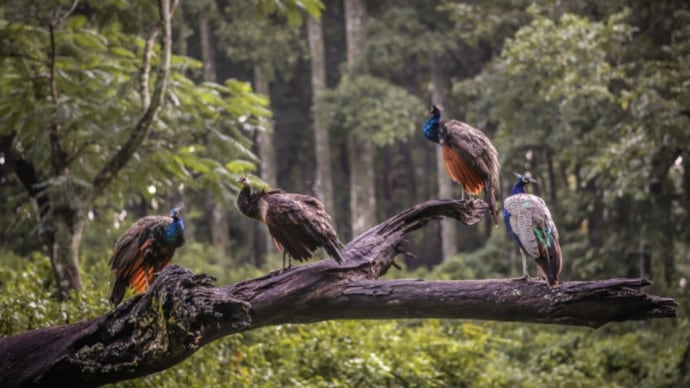
For decades, Tamil Nadu’s birding reputation has rested on its glittering wetlands, where flamingoes and pintails gather in their thousands each winter.
But a fresh batch of state surveys reveals a quieter story unfolding inland: the state’s forests, scrublands and dry plains are sheltering some of India’s most threatened birds, including vultures that have all but vanished from the rest of the country.
WHAT THE NEW SURVEYS FOUND
On World Environment Day, the Tamil Nadu Forest Department released its Synchronised Bird Survey for 2025 to 2026. The exercise came in two parts.
The wetland leg, carried out on December 27 and 28, covered 1,005 water bodies across all 38 districts and counted just over six lakh birds belonging to 393 species.
The land-based, or terrestrial, leg followed on February 14 and 15, covering 1,108 survey spots and logging 391 species, of which 228 are residents that live here year-round and 72 are migrants that visit seasonally.
Both legs turned up worrying numbers of fragile species. The wetlands held 35 birds listed as threatened on the IUCN Red List, the global inventory that ranks how close a species is to extinction.
The forests held 36, among them the Nilgiri Laughingthrush and the elusive Sri Lankan Frogmouth, a nocturnal bird with a wide, frog-like gape.
THE RAPTOR STORY NOBODY EXPECTED
The real surprise came from a separate, first-of-its-kind exercise. The newly formed Tamil Nadu Raptor Research Foundation, set up in September 2025, carried out the state’s first dedicated raptor assessment.
A raptor is simply a bird of prey, such as an eagle, hawk, kite, falcon, vulture or owl, all sharing hooked beaks and sharp talons for hunting.
The scale was striking.
Over two nights and days, on January 31 for the night-flying owls and February 1 for the daytime hunters, 3,643 people fanned out across 49 forest divisions.
They surveyed 389 blocks covering roughly 9.57 per cent of the state's land area.
The result was 51 raptor species and more than 5,600 individual birds, recorded from nearly 3,900 separate sightings. Forty of those species hunt by day and 11 by night.
THE LAST VULTURE STRONGHOLD
The standout finding sits in western Tamil Nadu. Surveyors have repeatedly recorded three Critically Endangered vultures, the White-rumped, Indian and Red-headed Vulture, across forests such as Sathyamangalam, Masinagudi, Coimbatore, Hasanur and Udhagai.
Critically Endangered is the Red List's highest alarm before extinction in the wild.
This matters enormously.
India's vultures collapsed by more than 90 per cent in the 1990s after the painkiller diclofenac, given to cattle, poisoned the birds that fed on carcasses.
Across much of the country they simply disappeared. The new report concludes that the belt running from the Nilgiris into the Eastern Ghats is now one of the last viable vulture habitats in all of southern India.
The White-rumped Vulture alone was sighted 39 times, a heartening figure for a bird that vanished almost everywhere else.
OPEN COUNTRY, NOT DEEP FOREST
One finding upends a common assumption.
The richest variety of eagles turned up not deep inside dense forest but in dry, open country.
Steppe Eagles, Tawny Eagles, Greater Spotted Eagles and harriers favoured scrub, grassland and farmland mosaics, the patchwork of fields and wild edges that many people overlook as unremarkable.
These open habitats, the report stresses, are critical foraging grounds for both resident and migratory hunters, and are exactly the kind of land most vulnerable to being built over.
BIRDS THAT BELONG NOWHERE ELSE
The assessment also recorded five raptor species endemic to the Indian subcontinent, which means they are found naturally nowhere else on Earth.
Because birds of prey can fly vast distances, such restricted ranges are rare among them, which makes their presence a strong sign of healthy habitat.
Alongside these, 15 migratory raptor species were logged using the Central Asian Flyway, the great aerial highway that birds travel each year between their breeding grounds in the north and their wintering areas further south.
The same flyway makes Tamil Nadu's wetlands vital winter quarters for waders and waterfowl, with Northern Pintail, Little Stint and Greater Flamingo the most abundant visitors.
WHY ALL THIS MATTERS
Taken together, the surveys give Tamil Nadu its first solid scientific baseline, a reliable starting point against which future changes can be measured year after year.
Divisions such as Masinagudi, Kanniyakumari and Sathyamangalam emerged as reliable strongholds for raptors regardless of how the counting was done.
The underlying message is simple. Tamil Nadu's fame may rest on its lakes and lagoons, but its forests, scrub and grasslands are doing the heavy lifting for its rarest birds.
Protect those landscapes, and you protect the predators that keep them healthy. Lose them, and species like the vulture may slip away for good.
For decades, Tamil Nadu’s birding reputation has rested on its glittering wetlands, where flamingoes and pintails gather in their thousands each winter.
But a fresh batch of state surveys reveals a quieter story unfolding inland: the state’s forests, scrublands and dry plains are sheltering some of India’s most threatened birds, including vultures that have all but vanished from the rest of the country.
WHAT THE NEW SURVEYS FOUND
On World Environment Day, the Tamil Nadu Forest Department released its Synchronised Bird Survey for 2025 to 2026. The exercise came in two parts.
The wetland leg, carried out on December 27 and 28, covered 1,005 water bodies across all 38 districts and counted just over six lakh birds belonging to 393 species.
The land-based, or terrestrial, leg followed on February 14 and 15, covering 1,108 survey spots and logging 391 species, of which 228 are residents that live here year-round and 72 are migrants that visit seasonally.
Both legs turned up worrying numbers of fragile species. The wetlands held 35 birds listed as threatened on the IUCN Red List, the global inventory that ranks how close a species is to extinction.
The forests held 36, among them the Nilgiri Laughingthrush and the elusive Sri Lankan Frogmouth, a nocturnal bird with a wide, frog-like gape.
THE RAPTOR STORY NOBODY EXPECTED
The real surprise came from a separate, first-of-its-kind exercise. The newly formed Tamil Nadu Raptor Research Foundation, set up in September 2025, carried out the state’s first dedicated raptor assessment.
A raptor is simply a bird of prey, such as an eagle, hawk, kite, falcon, vulture or owl, all sharing hooked beaks and sharp talons for hunting.
The scale was striking.
Over two nights and days, on January 31 for the night-flying owls and February 1 for the daytime hunters, 3,643 people fanned out across 49 forest divisions.
They surveyed 389 blocks covering roughly 9.57 per cent of the state's land area.
The result was 51 raptor species and more than 5,600 individual birds, recorded from nearly 3,900 separate sightings. Forty of those species hunt by day and 11 by night.
THE LAST VULTURE STRONGHOLD
The standout finding sits in western Tamil Nadu. Surveyors have repeatedly recorded three Critically Endangered vultures, the White-rumped, Indian and Red-headed Vulture, across forests such as Sathyamangalam, Masinagudi, Coimbatore, Hasanur and Udhagai.
Critically Endangered is the Red List's highest alarm before extinction in the wild.
This matters enormously.
India's vultures collapsed by more than 90 per cent in the 1990s after the painkiller diclofenac, given to cattle, poisoned the birds that fed on carcasses.
Across much of the country they simply disappeared. The new report concludes that the belt running from the Nilgiris into the Eastern Ghats is now one of the last viable vulture habitats in all of southern India.
The White-rumped Vulture alone was sighted 39 times, a heartening figure for a bird that vanished almost everywhere else.
OPEN COUNTRY, NOT DEEP FOREST
One finding upends a common assumption.
The richest variety of eagles turned up not deep inside dense forest but in dry, open country.
Steppe Eagles, Tawny Eagles, Greater Spotted Eagles and harriers favoured scrub, grassland and farmland mosaics, the patchwork of fields and wild edges that many people overlook as unremarkable.
These open habitats, the report stresses, are critical foraging grounds for both resident and migratory hunters, and are exactly the kind of land most vulnerable to being built over.
BIRDS THAT BELONG NOWHERE ELSE
The assessment also recorded five raptor species endemic to the Indian subcontinent, which means they are found naturally nowhere else on Earth.
Because birds of prey can fly vast distances, such restricted ranges are rare among them, which makes their presence a strong sign of healthy habitat.
Alongside these, 15 migratory raptor species were logged using the Central Asian Flyway, the great aerial highway that birds travel each year between their breeding grounds in the north and their wintering areas further south.
The same flyway makes Tamil Nadu's wetlands vital winter quarters for waders and waterfowl, with Northern Pintail, Little Stint and Greater Flamingo the most abundant visitors.
WHY ALL THIS MATTERS
Taken together, the surveys give Tamil Nadu its first solid scientific baseline, a reliable starting point against which future changes can be measured year after year.
Divisions such as Masinagudi, Kanniyakumari and Sathyamangalam emerged as reliable strongholds for raptors regardless of how the counting was done.
The underlying message is simple. Tamil Nadu's fame may rest on its lakes and lagoons, but its forests, scrub and grasslands are doing the heavy lifting for its rarest birds.
Protect those landscapes, and you protect the predators that keep them healthy. Lose them, and species like the vulture may slip away for good.

