Venezuela's once-in-a-century quake: Why two earthquakes hit together
Venezuela witnessed a massive disaster, but there's more to it. Here's what an earthquake doublet is, why Venezuela is vulnerable to major quakes, and what could happen next.
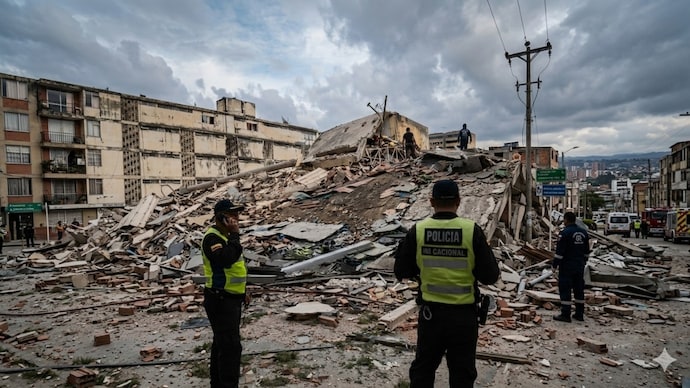
Two powerful earthquakes measuring magnitude 7.1 and 7.5 struck Venezuela within seconds of each other late Thursday right after 3:30 am IST, triggering tsunami warnings across parts of the Caribbean and damaging buildings in the capital, Caracas.
According to the US Geological Survey (USGS), the first earthquake struck at a shallow depth of 13 kilometres, about 168 kilometres west of Caracas near the coastal town of Moron.
The second, stronger tremor followed less than a minute later, making the sequence one of the rarest types of earthquakes ever recorded — an earthquake doublet.
WHAT IS AN EARTHQUAKE DOUBLET?
An earthquake doublet occurs when two large earthquakes of nearly the same magnitude rupture either the same fault or two closely connected faults within a very short period, typically seconds to minutes apart.
Unlike a normal earthquake sequence, where a powerful mainshock is followed by much smaller aftershocks, neither event in a doublet is clearly dominant.
In Venezuela’s case, the 7.1 and 7.5 magnitude earthquakes occurred just 39 seconds apart.
Seismologists classify such events as a doublet because both quakes released enormous amounts of energy independently rather than one simply being an aftershock of the other.
Doublets are exceptionally uncommon because once a fault ruptures, it usually relieves enough stress to prevent another equally powerful rupture immediately afterward.
However, if neighbouring fault segments are already under immense tectonic stress, the first rupture can transfer stress onto the adjacent segment, triggering a second major earthquake almost instantly.
WHY IS VENEZUELA PRONE TO POWERFUL EARTHQUAKES?
Venezuela sits along one of South America’s most active tectonic boundaries where the Caribbean Plate slides eastward relative to the South American Plate.
Instead of one single fault, northern Venezuela is crisscrossed by several major strike-slip fault systems that collectively accommodate this plate movement.
Among the most important are:
- Bocono Fault – a major inland strike-slip fault extending through the Venezuelan Andes.
- San Sebastin Fault – running offshore along the central Caribbean coast near Caracas.
- El Pilar Fault – stretching across northeastern Venezuela.
- Moron Fault Zone – located in central northern Venezuela and considered part of the complex plate boundary near where the latest earthquakes struck.
These faults are not isolated cracks but interconnected fractures that continuously accumulate stress as the Caribbean Plate moves roughly two centimetres per year relative to South America. When this stored energy is suddenly released, powerful earthquakes occur.
WHAT DOES THIS MEAN NOW?
Following a doublet, the affected region often faces a heightened risk of strong aftershocks because multiple fault segments have been disturbed.
The United States Geological Survey (USGS) forecasts indicate a high likelihood of continued seismic activity following the magnitude 7.5 Venezuela earthquake.
In the first 24 hours, experts expect around 26 aftershocks of magnitude 4 or greater, with an 89% probability of at least one reaching magnitude 5 or higher. Activity is projected to gradually decline over the coming weeks and months.
Engineers will also closely inspect buildings since structures weakened by the first quake may suffer additional damage during subsequent tremors.
The twin earthquakes serve as a reminder that northern Venezuela remains one of the most seismically active regions in the Caribbean.
Research has shown that portions of the Caribbean–South American plate boundary remain locked and are capable of generating earthquakes approaching magnitude 8, pointing to the importance of earthquake-resistant infrastructure and tsunami preparedness across the region.
Two powerful earthquakes measuring magnitude 7.1 and 7.5 struck Venezuela within seconds of each other late Thursday right after 3:30 am IST, triggering tsunami warnings across parts of the Caribbean and damaging buildings in the capital, Caracas.
According to the US Geological Survey (USGS), the first earthquake struck at a shallow depth of 13 kilometres, about 168 kilometres west of Caracas near the coastal town of Moron.
The second, stronger tremor followed less than a minute later, making the sequence one of the rarest types of earthquakes ever recorded — an earthquake doublet.
WHAT IS AN EARTHQUAKE DOUBLET?
An earthquake doublet occurs when two large earthquakes of nearly the same magnitude rupture either the same fault or two closely connected faults within a very short period, typically seconds to minutes apart.
Unlike a normal earthquake sequence, where a powerful mainshock is followed by much smaller aftershocks, neither event in a doublet is clearly dominant.
In Venezuela’s case, the 7.1 and 7.5 magnitude earthquakes occurred just 39 seconds apart.
Seismologists classify such events as a doublet because both quakes released enormous amounts of energy independently rather than one simply being an aftershock of the other.
Doublets are exceptionally uncommon because once a fault ruptures, it usually relieves enough stress to prevent another equally powerful rupture immediately afterward.
However, if neighbouring fault segments are already under immense tectonic stress, the first rupture can transfer stress onto the adjacent segment, triggering a second major earthquake almost instantly.
WHY IS VENEZUELA PRONE TO POWERFUL EARTHQUAKES?
Venezuela sits along one of South America’s most active tectonic boundaries where the Caribbean Plate slides eastward relative to the South American Plate.
Instead of one single fault, northern Venezuela is crisscrossed by several major strike-slip fault systems that collectively accommodate this plate movement.
Among the most important are:
- Bocono Fault – a major inland strike-slip fault extending through the Venezuelan Andes.
- San Sebastin Fault – running offshore along the central Caribbean coast near Caracas.
- El Pilar Fault – stretching across northeastern Venezuela.
- Moron Fault Zone – located in central northern Venezuela and considered part of the complex plate boundary near where the latest earthquakes struck.
These faults are not isolated cracks but interconnected fractures that continuously accumulate stress as the Caribbean Plate moves roughly two centimetres per year relative to South America. When this stored energy is suddenly released, powerful earthquakes occur.
WHAT DOES THIS MEAN NOW?
Following a doublet, the affected region often faces a heightened risk of strong aftershocks because multiple fault segments have been disturbed.
The United States Geological Survey (USGS) forecasts indicate a high likelihood of continued seismic activity following the magnitude 7.5 Venezuela earthquake.
In the first 24 hours, experts expect around 26 aftershocks of magnitude 4 or greater, with an 89% probability of at least one reaching magnitude 5 or higher. Activity is projected to gradually decline over the coming weeks and months.
Engineers will also closely inspect buildings since structures weakened by the first quake may suffer additional damage during subsequent tremors.
The twin earthquakes serve as a reminder that northern Venezuela remains one of the most seismically active regions in the Caribbean.
Research has shown that portions of the Caribbean–South American plate boundary remain locked and are capable of generating earthquakes approaching magnitude 8, pointing to the importance of earthquake-resistant infrastructure and tsunami preparedness across the region.

