Warning signals everywhere: UN chief's climate alarm on Environment Day
Here's why the warning is especially important for India as heatwaves, along with other climate change impacts, intensify.
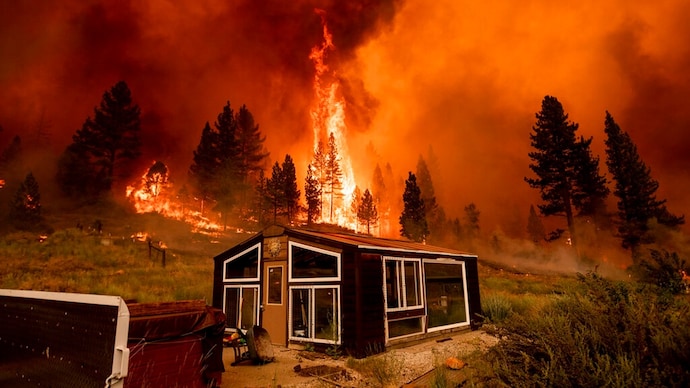
"This World Environment Day, warning signals are everywhere," said United Nations (UN) Secretary-General Antonio Guterres. "The past 11 years have been the eleven hottest years on record. And the damage goes far beyond the rising temperatures."
The address given by the UN chief on June 5, came with urgency and alarm, as he highlighted the warming trend provided by the World Meteorological Organisation (WMO).
Every small rise in temperature brings more damage, especially to the world’s most vulnerable people. And therefore, Guterres took the stage on the occasion and called for urgent cuts in harmful emissions, a faster shift to cleaner energy, and keeping promises on climate support for developing nations.
For India, this warning hits close to home.
The world's most populous country, being on the frontlines of climate change impacts, has felt the heat of a warming planet in recent years through longer and stronger heatwaves, shifting rainfall patterns, and rising risks to daily life.
INDIA'S HEAT CRISIS
India’s own records can illustrate what the nation faces with worrying regularity.
The year 2024 was the hottest since nationwide measurements began in 1901, with average temperatures 0.65°C above the long-term norm.
The past decade has seen many of the warmest years. In 2025, heat brought similar conditions, making millions sweat for longer hours.
2026 has been no different. This year, after a rather mild and short-lived winter, summer arrived as early as March.
As days passed, large parts of the country faced intense and unseasonal heat. By the time the country stepped into June, pre-monsoon heat had become intense and widely prevalent.
Temperatures are increasingly crossing 45°C in several places, leading to record electricity demand for cooling, stress on farming, changes in schedules for workplaces and schools, and millions waiting for monsoon to provide relief.
In cases of prolonged exposure to extreme heat, consequences arrive across the board.
Farmers see crops suffer from extreme heat and unpredictable rains. City dwellers face power cuts and water shortages during peak summer. Construction workers, street vendors, and outdoor labourers, often the poorest and most vulnerable, continue to work in dangerous conditions.
Heat even worsens air quality and strains health systems, as heat-related illnesses grow across regions, and thousands arrive at the doors to seek medical help.
INDIA STEPS UP
Naturally, India has decided to do something about the climate problem.
The nation, having experienced the consequences first hand, is continuously working on short-term and long-term solutions.
The country has rapidly expanded solar and wind power, with the non-fossil fuel capacity growing significantly in recent years. And yet, India continues to walk the same road, with an ambitious target for 500 GW of renewable energy by 2030.
Globally, Guterres stressed that renewables are now often the cheaper and cleaner choice.
For India, this route offers energy security, cleaner air for cities like Delhi, and opportunities for millions of young people in green industries.
However, experts note that more support, including finance from richer nations, is needed to scale up faster while meeting development goals.
The coming years will test how well the world, and India, balances growth with protecting the environment. For a country of 1.4 billion people, turning these challenges into opportunities for a cooler, greener future is not just possible, but necessary.
"This World Environment Day, warning signals are everywhere," said United Nations (UN) Secretary-General Antonio Guterres. "The past 11 years have been the eleven hottest years on record. And the damage goes far beyond the rising temperatures."
The address given by the UN chief on June 5, came with urgency and alarm, as he highlighted the warming trend provided by the World Meteorological Organisation (WMO).
Every small rise in temperature brings more damage, especially to the world’s most vulnerable people. And therefore, Guterres took the stage on the occasion and called for urgent cuts in harmful emissions, a faster shift to cleaner energy, and keeping promises on climate support for developing nations.
For India, this warning hits close to home.
The world's most populous country, being on the frontlines of climate change impacts, has felt the heat of a warming planet in recent years through longer and stronger heatwaves, shifting rainfall patterns, and rising risks to daily life.
INDIA'S HEAT CRISIS
India’s own records can illustrate what the nation faces with worrying regularity.
The year 2024 was the hottest since nationwide measurements began in 1901, with average temperatures 0.65°C above the long-term norm.
The past decade has seen many of the warmest years. In 2025, heat brought similar conditions, making millions sweat for longer hours.
2026 has been no different. This year, after a rather mild and short-lived winter, summer arrived as early as March.
As days passed, large parts of the country faced intense and unseasonal heat. By the time the country stepped into June, pre-monsoon heat had become intense and widely prevalent.
Temperatures are increasingly crossing 45°C in several places, leading to record electricity demand for cooling, stress on farming, changes in schedules for workplaces and schools, and millions waiting for monsoon to provide relief.
In cases of prolonged exposure to extreme heat, consequences arrive across the board.
Farmers see crops suffer from extreme heat and unpredictable rains. City dwellers face power cuts and water shortages during peak summer. Construction workers, street vendors, and outdoor labourers, often the poorest and most vulnerable, continue to work in dangerous conditions.
Heat even worsens air quality and strains health systems, as heat-related illnesses grow across regions, and thousands arrive at the doors to seek medical help.
INDIA STEPS UP
Naturally, India has decided to do something about the climate problem.
The nation, having experienced the consequences first hand, is continuously working on short-term and long-term solutions.
The country has rapidly expanded solar and wind power, with the non-fossil fuel capacity growing significantly in recent years. And yet, India continues to walk the same road, with an ambitious target for 500 GW of renewable energy by 2030.
Globally, Guterres stressed that renewables are now often the cheaper and cleaner choice.
For India, this route offers energy security, cleaner air for cities like Delhi, and opportunities for millions of young people in green industries.
However, experts note that more support, including finance from richer nations, is needed to scale up faster while meeting development goals.
The coming years will test how well the world, and India, balances growth with protecting the environment. For a country of 1.4 billion people, turning these challenges into opportunities for a cooler, greener future is not just possible, but necessary.

