Test team in transition? Sunil Gavaskar disagrees with coach Gautam Gambhir's take
As India enter a crucial World Test Championship phase, batting legend Sunil Gavaskar has urged the young, evolving batting unit to step up and focus on long-form discipline rather than relying on the transition narrative.
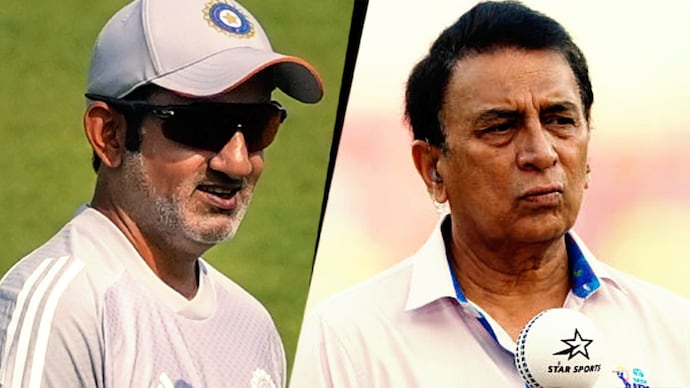
India's historic home dominance may have crumbled under the weight of successive series whitewashes, but batting legend Sunil Gavaskar insists it is time for the national side to stop hiding behind the convenient shield of a transition period and focus squarely on improving the batting performances.
Speaking to broadcaster JioHotstar following India's victory in the one-off Test against Afghanistan at the Maharaja Yadavindra Singh International Cricket Stadium in New Chandigarh, Gavaskar openly questioned the narrative surrounding the team's current evolution. The comments directly counter the perspective of head coach Gautam Gambhir and young captain Shubman Gill, setting up a fascinating ideological debate as India enter a defining phase of their ICC World Test Championship campaign, featuring away tours to Sri Lanka and New Zealand before a blockbuster five-match Border-Gavaskar Trophy against Australia at home early next year.
India are currently languishing at the sixth spot in the World Test Championship standings, having managed just four victories from nine Tests. The root of Gavaskar's concern lies in India's unprecedented vulnerability at home, highlighted by a humbling 0-2 defeat to South Africa last year. That capitulation followed an identical 0-2 whitewash at the hands of New Zealand in 2024, which shattered India's legendary multi-year unbeaten streak at home and marked their first-ever series whitewash of two or more matches on home soil.
While much of the public discourse has centred on the voids left by the Test retirements of Virat Kohli, Rohit Sharma, and Ravichandran Ashwin, Gavaskar believes the obsession with this generational shift is misplaced. Under the stewardship of Gill, India showed immense promise by securing a hard-fought 2-2 draw in England last year, only to regress against South Africa.
"I think it's time to move away from constantly describing this team as being in transition and instead focus on the standards expected in Test cricket," Gavaskar said.
"Every team goes through retirements, changes in personnel, and periods of evolution, but ultimately the emphasis has to remain on performance. Looking back at some of India's recent Test results, the bigger concern has been the batting rather than the bowling."
The little master was unsparing in his technical assessment of a batting order that repeatedly collapsed during the home disasters against New Zealand and South Africa.
"The bowling attack has generally done its job, but the batters need to show greater discipline and stronger technique, especially in challenging situations," Gavaskar said.
"At times, there is a tendency to slip into a T20 mindset where patience becomes difficult after a few dot balls, and that can lead to poor decisions. Test cricket demands a different approach. India's focus going forward should be on tightening their batting processes, building longer innings, and concentrating on the present rather than viewing every result through the lens of transition."
WHAT DID GAMBHIR SAY?
This rigid stance stands in stark contrast to Gambhir's more protective managerial approach. Speaking to reporters on Thursday, the Indian head coach mounted a staunch defence of his young squad, arguing that the transition phase is already well advanced and should not be used as a stick to beat the players with.
"We played nine Test matches, did brilliantly in England and then beat the West Indies," Gambhir said.
"So when people talk about transition, that's where it really began. If, after nine Test matches, you still feel it's a long rope, I don't necessarily agree."
Gambhir urged critics to look at the broader picture of development, emphasising that the erratic form of the team is a natural byproduct of blooding international novices.
"We all saw how well this young team performed in England and then against the West Indies," Gambhir added.
"Yes, the two-Test series loss in South Africa hurt, but that's part of any transition. Consistency can be an issue because these are young players. Most of them have played fewer than 30 Test matches, which is still not a lot of experience at this level."
WHAT DOES CAPTAIN GILL THINK?
Captain Shubman Gill, however, offered a pragmatic blueprint that bridges Gavaskar's concerns with Gambhir's developmental timeline, acknowledging the heavy burden currently resting on the young batting unit.
"I'd say pretty simple," Gill said when asked about taking the transitional side forward. "When you're batting first innings, try to post 350 on the board every time you get into bat, no matter where we are playing, what kind of conditions it is. I think there's enough trust in our bowling group that we can take 20 wickets anywhere."
Rather than shying away from the transition label, Gill explained the inner workings of a batting group searching for its identity on the world stage.
"Whenever there's a transition, we feel the batting group is under more pressure and we are trying to get experience," the skipper admitted. "We're trying to build here to see what kind of game can work for us as a batting group and in different conditions and different situations. How we can keep posting 350–400 totals on the board."
India rode on Gill and KL Rahul's centuries and a terrific spin-bowling show from debutant Manav Suthar to clinch an innings and 300-run win over Afghanistan in New Chandigarh.
India's historic home dominance may have crumbled under the weight of successive series whitewashes, but batting legend Sunil Gavaskar insists it is time for the national side to stop hiding behind the convenient shield of a transition period and focus squarely on improving the batting performances.
Speaking to broadcaster JioHotstar following India's victory in the one-off Test against Afghanistan at the Maharaja Yadavindra Singh International Cricket Stadium in New Chandigarh, Gavaskar openly questioned the narrative surrounding the team's current evolution. The comments directly counter the perspective of head coach Gautam Gambhir and young captain Shubman Gill, setting up a fascinating ideological debate as India enter a defining phase of their ICC World Test Championship campaign, featuring away tours to Sri Lanka and New Zealand before a blockbuster five-match Border-Gavaskar Trophy against Australia at home early next year.
India are currently languishing at the sixth spot in the World Test Championship standings, having managed just four victories from nine Tests. The root of Gavaskar's concern lies in India's unprecedented vulnerability at home, highlighted by a humbling 0-2 defeat to South Africa last year. That capitulation followed an identical 0-2 whitewash at the hands of New Zealand in 2024, which shattered India's legendary multi-year unbeaten streak at home and marked their first-ever series whitewash of two or more matches on home soil.
While much of the public discourse has centred on the voids left by the Test retirements of Virat Kohli, Rohit Sharma, and Ravichandran Ashwin, Gavaskar believes the obsession with this generational shift is misplaced. Under the stewardship of Gill, India showed immense promise by securing a hard-fought 2-2 draw in England last year, only to regress against South Africa.
"I think it's time to move away from constantly describing this team as being in transition and instead focus on the standards expected in Test cricket," Gavaskar said.
"Every team goes through retirements, changes in personnel, and periods of evolution, but ultimately the emphasis has to remain on performance. Looking back at some of India's recent Test results, the bigger concern has been the batting rather than the bowling."
The little master was unsparing in his technical assessment of a batting order that repeatedly collapsed during the home disasters against New Zealand and South Africa.
"The bowling attack has generally done its job, but the batters need to show greater discipline and stronger technique, especially in challenging situations," Gavaskar said.
"At times, there is a tendency to slip into a T20 mindset where patience becomes difficult after a few dot balls, and that can lead to poor decisions. Test cricket demands a different approach. India's focus going forward should be on tightening their batting processes, building longer innings, and concentrating on the present rather than viewing every result through the lens of transition."
WHAT DID GAMBHIR SAY?
This rigid stance stands in stark contrast to Gambhir's more protective managerial approach. Speaking to reporters on Thursday, the Indian head coach mounted a staunch defence of his young squad, arguing that the transition phase is already well advanced and should not be used as a stick to beat the players with.
"We played nine Test matches, did brilliantly in England and then beat the West Indies," Gambhir said.
"So when people talk about transition, that's where it really began. If, after nine Test matches, you still feel it's a long rope, I don't necessarily agree."
Gambhir urged critics to look at the broader picture of development, emphasising that the erratic form of the team is a natural byproduct of blooding international novices.
"We all saw how well this young team performed in England and then against the West Indies," Gambhir added.
"Yes, the two-Test series loss in South Africa hurt, but that's part of any transition. Consistency can be an issue because these are young players. Most of them have played fewer than 30 Test matches, which is still not a lot of experience at this level."
WHAT DOES CAPTAIN GILL THINK?
Captain Shubman Gill, however, offered a pragmatic blueprint that bridges Gavaskar's concerns with Gambhir's developmental timeline, acknowledging the heavy burden currently resting on the young batting unit.
"I'd say pretty simple," Gill said when asked about taking the transitional side forward. "When you're batting first innings, try to post 350 on the board every time you get into bat, no matter where we are playing, what kind of conditions it is. I think there's enough trust in our bowling group that we can take 20 wickets anywhere."
Rather than shying away from the transition label, Gill explained the inner workings of a batting group searching for its identity on the world stage.
"Whenever there's a transition, we feel the batting group is under more pressure and we are trying to get experience," the skipper admitted. "We're trying to build here to see what kind of game can work for us as a batting group and in different conditions and different situations. How we can keep posting 350–400 totals on the board."
India rode on Gill and KL Rahul's centuries and a terrific spin-bowling show from debutant Manav Suthar to clinch an innings and 300-run win over Afghanistan in New Chandigarh.

