Ruthless Australia blow away England, clinch 7th Women's T20 World Cup title
Australia produced a ruthless, dominant performance to crush England and win a record-extending seventh Women's T20 World Cup title with a seven-wicket victory at Lord's Cricket Ground.
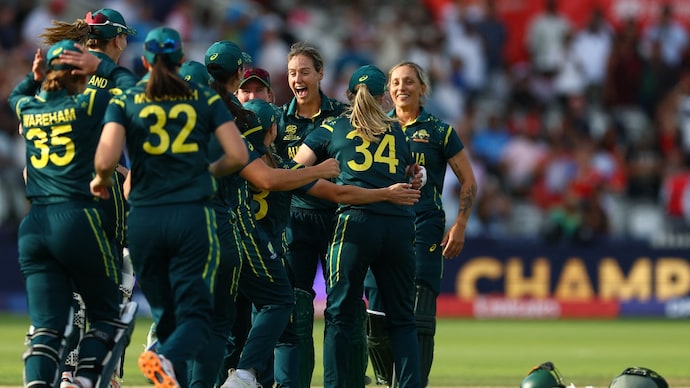
Australia once again proved why they remain the gold standard in women's cricket, brushing aside hosts England by seven wickets to lift a record-extending seventh Women's T20 World Cup title at Lord's. In a final that promised a fierce contest between two unbeaten teams, Australia produced a performance that was clinical in every department—disciplined with the ball, sharp in the field and composed with the bat.
Led by captain Sophie Molineux, the Australians never allowed the occasion to overwhelm them. They restricted England after an explosive finish looked possible, before chasing down 151 with 17 balls to spare. It was another emphatic statement from a side that has dominated world cricket for over a decade.
Women's T20 World Cup final, Australia vs England: Updates | Scorecard
The triumph also highlighted Australia's remarkable ability to rebuild. After suffering heartbreak in the ODI World Cup semi-final last year and bidding farewell to long-time captain Alyssa Healy following her retirement, questions had been asked about whether the next generation could continue the team's legacy. Those doubts have now been emphatically answered, with Australia once again standing on top of the world.
For England, the defeat was a bitter end to an otherwise flawless campaign. Playing before a packed home crowd at the Home of Cricket, they were hoping to win their first Women's T20 World Cup title since 2009. Instead, they were comprehensively outplayed by a side that once again showed why it thrives on the biggest occasions.
Australia strike early to derail England's plans
After being asked to bat first, England never managed to establish the kind of platform expected in a World Cup final. Australia's new-ball attack immediately found the ideal lengths, exploiting any hint of movement and refusing to offer scoring opportunities.
The pressure paid dividends almost instantly. Amy Jones departed for just six, while Danni Wyatt-Hodge followed soon after for eight as England slipped into early trouble. With two experienced batters back in the pavilion inside the Powerplay, Australia's bowlers had complete control of the contest.
Alice Capsey briefly attempted to counterattack, striking a few crisp boundaries during her 23-run knock, but Australia's disciplined bowling never allowed her to break free. Heather Knight also failed to make an impact, trapped lbw for two as England slipped further into trouble.
Lucy Hamilton, Annabel Sutherland, Kim Garth and captain Sophie Molineux shared the wickets, each playing their role with disciplined accuracy. Rather than chasing magic deliveries, Australia's bowlers built pressure through consistency, forcing England into mistakes.
Their fielding complemented the bowling effort perfectly. Every run was fiercely contested, boundaries were cut off with athletic stops, and England found it increasingly difficult to rotate strike during the middle overs.
Sciver-Brunt and Kemp rescue England
Just when England appeared destined for a below-par total, captain Nat Sciver-Brunt once again demonstrated why she remains one of the world's premier all-round cricketers.
Walking in with her side under pressure, Sciver-Brunt resisted the temptation to attack recklessly. Instead, she rebuilt patiently, rotating the strike while waiting for loose deliveries. As the innings progressed, she shifted gears, piercing the gaps with trademark drives and powerful pulls to keep England alive.
At the other end, Freya Kemp provided exactly the support England needed. The left-hander played fearlessly, refusing to allow Australia's bowlers to completely dictate proceedings. Her willingness to target the shorter boundary ensured the momentum slowly shifted during the closing overs.
Together, the pair stitched an unbeaten 73-run partnership that transformed England's innings. From a precarious 77 for 4, they lifted the hosts to a competitive 150 for 4, giving the bowlers something to defend despite Australia's dominance for much of the innings.
Although Australia had controlled nearly every phase with the ball, Sciver-Brunt's unbeaten half-century and Kemp's valuable contribution ensured England entered the interval believing they still had a chance.
Mooney and Litchfield dismantle England's attack
If England hoped for early breakthroughs to defend their total, they got one almost immediately when Georgia Voll fell for nine in only the second over. For a brief moment, Lord's sensed a shift in momentum. That optimism disappeared quickly. Beth Mooney and Phoebe Litchfield produced one of the defining partnerships of the tournament, combining intelligence, aggression and composure to completely wrest control of the chase.
Rather than allowing England's bowlers to build pressure, both left-handers immediately went on the offensive. They rotated strike effortlessly, punished width, and found boundaries with remarkable consistency. Australia raced to 62 for 1 in the Powerplay, ensuring the early dismissal of Voll became little more than a footnote. Mooney played the perfect anchor's role. Calm as ever, she relied on timing rather than brute force, repeatedly finding gaps through the off side while expertly managing the chase.
Litchfield, meanwhile, injected urgency. Her positive intent against both pace and spin prevented England from settling into consistent lengths, forcing constant field changes. By the halfway mark of the innings, Australia had surged to 99 for 1, with the required run rate firmly under control. The pair's 100-run second-wicket partnership effectively decided the contest.
Mooney finished with a superb 64 from 49 deliveries, once again underlining her reputation as one of the finest big-match batters in women's cricket. Litchfield's fluent 48 off 35 balls perfectly complemented her senior partner, ensuring Australia never allowed England back into the contest.
England eventually dismissed both batters during the closing stages, but by then the outcome had long been settled. The remaining batters calmly completed the formalities, taking Australia home with 17 deliveries remaining.
Australia once again proved why they remain the gold standard in women's cricket, brushing aside hosts England by seven wickets to lift a record-extending seventh Women's T20 World Cup title at Lord's. In a final that promised a fierce contest between two unbeaten teams, Australia produced a performance that was clinical in every department—disciplined with the ball, sharp in the field and composed with the bat.
Led by captain Sophie Molineux, the Australians never allowed the occasion to overwhelm them. They restricted England after an explosive finish looked possible, before chasing down 151 with 17 balls to spare. It was another emphatic statement from a side that has dominated world cricket for over a decade.
Women's T20 World Cup final, Australia vs England: Updates | Scorecard
The triumph also highlighted Australia's remarkable ability to rebuild. After suffering heartbreak in the ODI World Cup semi-final last year and bidding farewell to long-time captain Alyssa Healy following her retirement, questions had been asked about whether the next generation could continue the team's legacy. Those doubts have now been emphatically answered, with Australia once again standing on top of the world.
For England, the defeat was a bitter end to an otherwise flawless campaign. Playing before a packed home crowd at the Home of Cricket, they were hoping to win their first Women's T20 World Cup title since 2009. Instead, they were comprehensively outplayed by a side that once again showed why it thrives on the biggest occasions.
Australia strike early to derail England's plans
After being asked to bat first, England never managed to establish the kind of platform expected in a World Cup final. Australia's new-ball attack immediately found the ideal lengths, exploiting any hint of movement and refusing to offer scoring opportunities.
The pressure paid dividends almost instantly. Amy Jones departed for just six, while Danni Wyatt-Hodge followed soon after for eight as England slipped into early trouble. With two experienced batters back in the pavilion inside the Powerplay, Australia's bowlers had complete control of the contest.
Alice Capsey briefly attempted to counterattack, striking a few crisp boundaries during her 23-run knock, but Australia's disciplined bowling never allowed her to break free. Heather Knight also failed to make an impact, trapped lbw for two as England slipped further into trouble.
Lucy Hamilton, Annabel Sutherland, Kim Garth and captain Sophie Molineux shared the wickets, each playing their role with disciplined accuracy. Rather than chasing magic deliveries, Australia's bowlers built pressure through consistency, forcing England into mistakes.
Their fielding complemented the bowling effort perfectly. Every run was fiercely contested, boundaries were cut off with athletic stops, and England found it increasingly difficult to rotate strike during the middle overs.
Sciver-Brunt and Kemp rescue England
Just when England appeared destined for a below-par total, captain Nat Sciver-Brunt once again demonstrated why she remains one of the world's premier all-round cricketers.
Walking in with her side under pressure, Sciver-Brunt resisted the temptation to attack recklessly. Instead, she rebuilt patiently, rotating the strike while waiting for loose deliveries. As the innings progressed, she shifted gears, piercing the gaps with trademark drives and powerful pulls to keep England alive.
At the other end, Freya Kemp provided exactly the support England needed. The left-hander played fearlessly, refusing to allow Australia's bowlers to completely dictate proceedings. Her willingness to target the shorter boundary ensured the momentum slowly shifted during the closing overs.
Together, the pair stitched an unbeaten 73-run partnership that transformed England's innings. From a precarious 77 for 4, they lifted the hosts to a competitive 150 for 4, giving the bowlers something to defend despite Australia's dominance for much of the innings.
Although Australia had controlled nearly every phase with the ball, Sciver-Brunt's unbeaten half-century and Kemp's valuable contribution ensured England entered the interval believing they still had a chance.
Mooney and Litchfield dismantle England's attack
If England hoped for early breakthroughs to defend their total, they got one almost immediately when Georgia Voll fell for nine in only the second over. For a brief moment, Lord's sensed a shift in momentum. That optimism disappeared quickly. Beth Mooney and Phoebe Litchfield produced one of the defining partnerships of the tournament, combining intelligence, aggression and composure to completely wrest control of the chase.
Rather than allowing England's bowlers to build pressure, both left-handers immediately went on the offensive. They rotated strike effortlessly, punished width, and found boundaries with remarkable consistency. Australia raced to 62 for 1 in the Powerplay, ensuring the early dismissal of Voll became little more than a footnote. Mooney played the perfect anchor's role. Calm as ever, she relied on timing rather than brute force, repeatedly finding gaps through the off side while expertly managing the chase.
Litchfield, meanwhile, injected urgency. Her positive intent against both pace and spin prevented England from settling into consistent lengths, forcing constant field changes. By the halfway mark of the innings, Australia had surged to 99 for 1, with the required run rate firmly under control. The pair's 100-run second-wicket partnership effectively decided the contest.
Mooney finished with a superb 64 from 49 deliveries, once again underlining her reputation as one of the finest big-match batters in women's cricket. Litchfield's fluent 48 off 35 balls perfectly complemented her senior partner, ensuring Australia never allowed England back into the contest.
England eventually dismissed both batters during the closing stages, but by then the outcome had long been settled. The remaining batters calmly completed the formalities, taking Australia home with 17 deliveries remaining.

