They had a 1 percent chance. Cape Verde just showed the world how massive that is
FIFA World Cup 2026: The tiny island nation of 525,000 residents pushed Lionel Messi's world champions to the absolute limit in a five-goal Round of 32 thriller in Miami, proving that football's ultimate romance lies in defying the impossible.
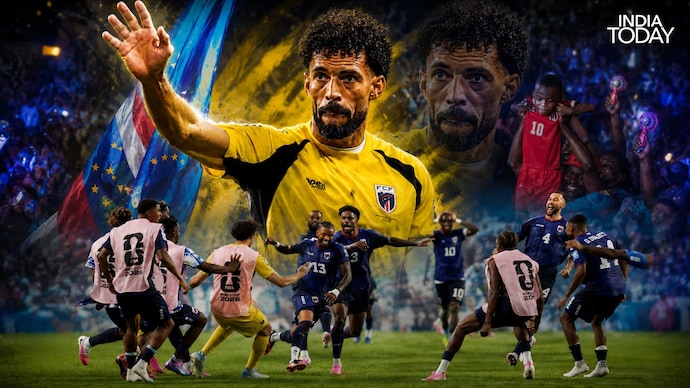
Nobody inside Miami Stadium expected the silence.
It belonged to Argentina. The stands were awash with blue and white, Lionel Messi had already put the world champions ahead, and Cape Verde had already done what few believed possible.
A nation of little more than half a million people had dragged the defending champions into extra time of a FIFA World Cup knockout match. They were still there, still refusing to go away, even after falling 2-1 behind with only 15 minutes left in the Round of 32 fixture on Friday.
Argentina vs Cabo Verde, FIFA World Cup 2026: Highlights
Then Sidny Lopes Cabral took the ball.
The 23-year-old drifted in from the left, shifted it on to his stronger foot and curled an exquisite strike beyond Emiliano Martinez, one of the finest goalkeepers in world football. For a few fleeting seconds, 65,000 Argentine supporters fell quiet. The smallest nation ever to reach the World Cup knockouts had somehow forced the reigning champions to search for another answer.
Cape Verde would eventually lose 3-2. By then, however, the result had almost become secondary. A few days before the Round of 32, Cabral had spoken about the odds stacked against his team.
"They gave us a 1% chance of reaching the next round, but we showed how big 1% is," he told The Guardian.
That one sentence would come to define Cape Verde's remarkable World Cup.
SMALL COUNTRY, BIG HEART
Cape Verde had been living on that one percent long before Miami.
When Pedro Leitao Brito, better known as Bubista, took charge of the national side in 2020, a World Cup seemed more like an ambition than a realistic target. The former Cape Verde captain first guided the island nation to back-to-back Africa Cup of Nations knockout appearances before turning his attention to football's biggest prize.
His side pieced together a five-match winning streak during qualification, including a famous 1-0 victory over Cameroon. The campaign nearly unravelled away to Libya, where Cape Verde clawed their way back from 3-1 down to rescue a point. They responded by beating Eswatini 3-0 to seal a historic qualification, becoming one of the smallest nations ever to reach a FIFA World Cup.
"We're a small country," Bubista said after qualification. "But it's only small on the map. A small country with a big heart."
That heart carried them much further than anyone expected.
Like many Cape Verde teams in the past, this one was built as much beyond the islands as on them. The country's vast diaspora has long been its greatest footballing resource. Captain and record goalscorer Ryan Mendes plays abroad, as do most members of the squad, whose careers have taken them across Portugal, the Netherlands and beyond.
Cabral was born in Rotterdam.
So was Deroy Duarte, who cancelled out Messi's opener with Cape Verde's first equaliser in Miami before celebrating in front of thousands of stunned Argentine supporters. Duarte now plays his club football for Ludogorets Razgrad in Bulgaria.
Cabral's own journey was even less conventional. He worked his way through the German fifth tier with Rot-Weiss Erfurt before earning a move to Portugal's top flight. It is hardly the route one imagines leading to a World Cup knockout tie against the defending champions.
Then again, very little about Cape Verde's story has followed convention.
1 PERCENT IS ENOUGH
Few gave Cape Verde any chance of surviving Group H.
Spain, Uruguay and Saudi Arabia stood in their way. On paper, it looked among the toughest groups in the tournament. Cape Verde ignored the paper.
They frustrated Spain in a goalless draw, recovered to earn another point against Uruguay and held Saudi Arabia to qualify for the Round of 32 without winning a single match. They became the first nation since Chile in 1998 to progress beyond the group stage without recording a victory.
Their success was built on organisation rather than spectacle. A disciplined defensive unit, marshalled by 40-year-old goalkeeper Vozinha, absorbed wave after wave of pressure. Outside Cape Verde, few football supporters knew his name before this tournament.
By the end of the group stage, plenty did.
Argentina awaited in Miami, and most assumed the fairytale would finally come to an end.
Instead, Cape Verde produced another chapter.
The defending champions struck first through Messi, but Deroy Duarte hauled Cape Verde level in the 59th minute, finishing off a flowing move that briefly shifted the momentum of the contest. Argentina regained the lead early in extra time through Lisandro Martinez, who bundled home from a corner. Surely, this time, that was that.
Cape Verde, once again, ignored the odds.
Cabral picked up possession on the left, drove inside and bent a magnificent effort beyond Martinez to make it 2-2 with 15 minutes of extra time remaining.
One percent?
Not this time.
Cape Verde eventually lost 3-2. Cristian Romero rose highest to meet a Messi corner, the header taking a cruel deflection off Diney Borges before finding the net.
Officially, it went down as an own goal. It was the decisive moment in a contest that had already stretched far beyond expectation.
Even then, Cape Verde refused to leave quietly.
With less than eight minutes remaining, they forced Martinez into a superb save. Moments later, the Argentina goalkeeper was called into action again at his near post. The final whistle brought relief more than celebration for the defending champions.
For Cape Verde, it brought the end of a World Cup journey that had captured the imagination of football supporters far beyond the Atlantic archipelago.
It was a defeat on paper, yes, but a conquest of the neutral imagination. This is precisely why we keep turning up to the turnstiles, for the beautiful, heartbreaking romance of it all.
Their watch parties back home draw smaller crowds than a Sunday afternoon at Sarojini Nagar. Walk up to interview a Cape Verde supporter outside Hard Rock Stadium, and there is every chance it is Vozinha's father. Yet the size of the crowd, or even the country, never really mattered.
They had taken the world champions to extra time. Their 23-year-old winger had scored one of the goals of the tournament in front of more than 65,000 mostly Argentine supporters before casually running into the stands to embrace his partner.
In his celebrated novel Chinaman: The Legend of Pradeep Mathew, Shehan Karunatilaka writes of a fictional journalist whose wife dismisses sport as a pointless endeavour. He concedes the point, more or less.
"Left-arm spinners," he writes, "cannot unclog drains or cure disease. But once in a while the very best of them will bowl a ball that brings an entire nation to its feet, and while there may be no practical use in that, there is certainly value."
What Vozinha did through this World Cup had that value. So did what Cabral did in Miami.
His goal did not take Cape Verde into the Round of 16. It did something rarer. It made the defending world champions look ordinary, if only for a few impossible minutes, and reminded everyone that the World Cup's greatest stories are not always written by the teams that lift the trophy.
The bookmakers called it one percent.
Cape Verde spent three unforgettable weeks showing the world just how much one percent can mean.
FIFA World Cup | FIFA World Cup Schedule | FIFA World Cup Points Table | Football News
Nobody inside Miami Stadium expected the silence.
It belonged to Argentina. The stands were awash with blue and white, Lionel Messi had already put the world champions ahead, and Cape Verde had already done what few believed possible.
A nation of little more than half a million people had dragged the defending champions into extra time of a FIFA World Cup knockout match. They were still there, still refusing to go away, even after falling 2-1 behind with only 15 minutes left in the Round of 32 fixture on Friday.
Argentina vs Cabo Verde, FIFA World Cup 2026: Highlights
Then Sidny Lopes Cabral took the ball.
The 23-year-old drifted in from the left, shifted it on to his stronger foot and curled an exquisite strike beyond Emiliano Martinez, one of the finest goalkeepers in world football. For a few fleeting seconds, 65,000 Argentine supporters fell quiet. The smallest nation ever to reach the World Cup knockouts had somehow forced the reigning champions to search for another answer.
Cape Verde would eventually lose 3-2. By then, however, the result had almost become secondary. A few days before the Round of 32, Cabral had spoken about the odds stacked against his team.
"They gave us a 1% chance of reaching the next round, but we showed how big 1% is," he told The Guardian.
That one sentence would come to define Cape Verde's remarkable World Cup.
SMALL COUNTRY, BIG HEART
Cape Verde had been living on that one percent long before Miami.
When Pedro Leitao Brito, better known as Bubista, took charge of the national side in 2020, a World Cup seemed more like an ambition than a realistic target. The former Cape Verde captain first guided the island nation to back-to-back Africa Cup of Nations knockout appearances before turning his attention to football's biggest prize.
His side pieced together a five-match winning streak during qualification, including a famous 1-0 victory over Cameroon. The campaign nearly unravelled away to Libya, where Cape Verde clawed their way back from 3-1 down to rescue a point. They responded by beating Eswatini 3-0 to seal a historic qualification, becoming one of the smallest nations ever to reach a FIFA World Cup.
"We're a small country," Bubista said after qualification. "But it's only small on the map. A small country with a big heart."
That heart carried them much further than anyone expected.
Like many Cape Verde teams in the past, this one was built as much beyond the islands as on them. The country's vast diaspora has long been its greatest footballing resource. Captain and record goalscorer Ryan Mendes plays abroad, as do most members of the squad, whose careers have taken them across Portugal, the Netherlands and beyond.
Cabral was born in Rotterdam.
So was Deroy Duarte, who cancelled out Messi's opener with Cape Verde's first equaliser in Miami before celebrating in front of thousands of stunned Argentine supporters. Duarte now plays his club football for Ludogorets Razgrad in Bulgaria.
Cabral's own journey was even less conventional. He worked his way through the German fifth tier with Rot-Weiss Erfurt before earning a move to Portugal's top flight. It is hardly the route one imagines leading to a World Cup knockout tie against the defending champions.
Then again, very little about Cape Verde's story has followed convention.
1 PERCENT IS ENOUGH
Few gave Cape Verde any chance of surviving Group H.
Spain, Uruguay and Saudi Arabia stood in their way. On paper, it looked among the toughest groups in the tournament. Cape Verde ignored the paper.
They frustrated Spain in a goalless draw, recovered to earn another point against Uruguay and held Saudi Arabia to qualify for the Round of 32 without winning a single match. They became the first nation since Chile in 1998 to progress beyond the group stage without recording a victory.
Their success was built on organisation rather than spectacle. A disciplined defensive unit, marshalled by 40-year-old goalkeeper Vozinha, absorbed wave after wave of pressure. Outside Cape Verde, few football supporters knew his name before this tournament.
By the end of the group stage, plenty did.
Argentina awaited in Miami, and most assumed the fairytale would finally come to an end.
Instead, Cape Verde produced another chapter.
The defending champions struck first through Messi, but Deroy Duarte hauled Cape Verde level in the 59th minute, finishing off a flowing move that briefly shifted the momentum of the contest. Argentina regained the lead early in extra time through Lisandro Martinez, who bundled home from a corner. Surely, this time, that was that.
Cape Verde, once again, ignored the odds.
Cabral picked up possession on the left, drove inside and bent a magnificent effort beyond Martinez to make it 2-2 with 15 minutes of extra time remaining.
One percent?
Not this time.
Cape Verde eventually lost 3-2. Cristian Romero rose highest to meet a Messi corner, the header taking a cruel deflection off Diney Borges before finding the net.
Officially, it went down as an own goal. It was the decisive moment in a contest that had already stretched far beyond expectation.
Even then, Cape Verde refused to leave quietly.
With less than eight minutes remaining, they forced Martinez into a superb save. Moments later, the Argentina goalkeeper was called into action again at his near post. The final whistle brought relief more than celebration for the defending champions.
For Cape Verde, it brought the end of a World Cup journey that had captured the imagination of football supporters far beyond the Atlantic archipelago.
It was a defeat on paper, yes, but a conquest of the neutral imagination. This is precisely why we keep turning up to the turnstiles, for the beautiful, heartbreaking romance of it all.
Their watch parties back home draw smaller crowds than a Sunday afternoon at Sarojini Nagar. Walk up to interview a Cape Verde supporter outside Hard Rock Stadium, and there is every chance it is Vozinha's father. Yet the size of the crowd, or even the country, never really mattered.
They had taken the world champions to extra time. Their 23-year-old winger had scored one of the goals of the tournament in front of more than 65,000 mostly Argentine supporters before casually running into the stands to embrace his partner.
In his celebrated novel Chinaman: The Legend of Pradeep Mathew, Shehan Karunatilaka writes of a fictional journalist whose wife dismisses sport as a pointless endeavour. He concedes the point, more or less.
"Left-arm spinners," he writes, "cannot unclog drains or cure disease. But once in a while the very best of them will bowl a ball that brings an entire nation to its feet, and while there may be no practical use in that, there is certainly value."
What Vozinha did through this World Cup had that value. So did what Cabral did in Miami.
His goal did not take Cape Verde into the Round of 16. It did something rarer. It made the defending world champions look ordinary, if only for a few impossible minutes, and reminded everyone that the World Cup's greatest stories are not always written by the teams that lift the trophy.
The bookmakers called it one percent.
Cape Verde spent three unforgettable weeks showing the world just how much one percent can mean.
FIFA World Cup | FIFA World Cup Schedule | FIFA World Cup Points Table | Football News

