Asia is thriving at the FIFA World Cup. How far away are India?
FIFA World Cup 2026: Asia's impressive World Cup start has reignited a familiar debate in India. But perhaps the bigger concern is not why India missed a 48-team World Cup, but why they could not qualify for a 24-team Asian Cup.
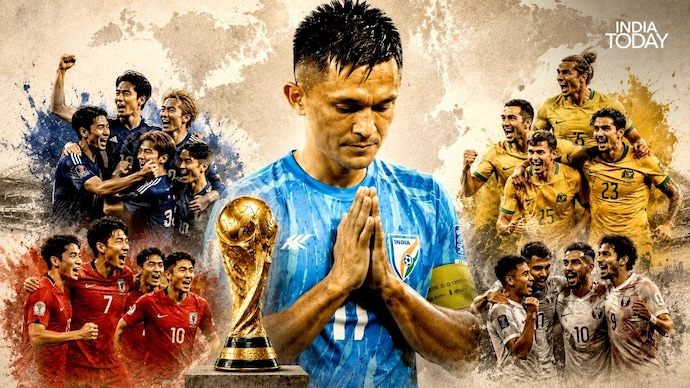
The opening week of World Cup 2026 has been kind to Asia.
South Korea have come from behind to beat Czechia. Australia have beaten Turkiye. Japan have held the Netherlands, while Saudi Arabia and Qatar have taken points off Uruguay and Switzerland. Even first-time participants Jordan and Uzbekistan have shown enough to suggest they belong on football's biggest stage.
As those results have rolled in, a familiar conversation has begun gathering pace among Indian football fans.
Why isn't India here?
FIFA World Cup | FIFA World Cup Schedule | FIFA World Cup Points Table | Football News
It is a question that returns every four years. The World Cup arrives, smaller nations begin making headlines and attention inevitably turns towards a country of more than 1.5 billion people that remains absent from football's biggest tournament.
This year, however, the conversation feels a little different.
The teams prompting those questions are not Croatia, Uruguay or some distant football fairytale. They are countries from India's own continent, many of whom were once viewed as realistic benchmarks for where Indian football hoped to be.
That is what makes Asia's impressive start to this World Cup both encouraging and uncomfortable from an Indian perspective.
For years, Indian football fans have looked at nations from Europe or South America and wondered what separated them from the rest of the world. But watching this World Cup, it is difficult not to notice that the gap that matters most is much closer to home.
Japan are no longer treated as outsiders at major tournaments. South Korea have built a reputation for punching above their weight on the biggest occasions. Australia have become regular World Cup participants. Saudi Arabia and Qatar have developed enough quality to compete with established football nations. Even Uzbekistan and Jordan, making their long-awaited debuts, have arrived looking like teams that belong rather than tourists grateful for an invitation.
That is perhaps the biggest takeaway from the opening week of the tournament. Asian football is not merely growing. It has already grown.
ASIA IS NO LONGER JUST MAKING UP THE NUMBERS
The expansion of the World Cup to 48 teams brought with it a familiar criticism. Would the tournament become diluted? Would too many teams arrive simply to participate?
Asia's representatives have spent the opening week providing a convincing answer.
South Korea showed resilience to come from behind against Czechia. Australia frustrated and then punished Turkiye. Japan matched a Dutch side ranked among the world's best. Saudi Arabia and Qatar picked up valuable points against opponents many expected them to lose to.
These are not isolated results either.
The last few World Cups have been littered with reminders that Asian teams are increasingly comfortable competing against football's traditional powers. Japan beat both Germany and Spain in Qatar. Saudi Arabia handed eventual champions Argentina their only defeat of the tournament. South Korea beat Portugal. Morocco, while representing Africa, showed how nations outside the established elite can build a structure capable of challenging the world's best.
The point is not that Asia is suddenly dominating world football. It is that the continent is no longer content with simply being represented.
The numbers tell their own story. Asia sent a record nine teams to the tournament and, for much of the opening week, looked more than capable of competing with Europe's and South America's established powers.
None of this happened overnight.
Japan and South Korea have spent decades investing in youth development and coaching structures. Australia have built a robust football pathway. Saudi Arabia and Qatar have poured resources into their domestic game. Even newer success stories such as Jordan and Uzbekistan are reaping the rewards of long-term planning rather than short-term fixes.
Take Uzbekistan. For years they were spoken about as one of Asian football's nearly teams, consistently producing talented youngsters but falling short of qualification. Their eventual breakthrough was not built on one golden generation or one lucky campaign. It came through persistence and a system that continued producing players capable of competing at a higher level.
Jordan's story is similar. Their appearance at this World Cup is not the result of a miracle. It is the product of years spent improving standards, investing in players and creating a pathway that allowed the national team to keep moving forward.
For Indian football fans, those performances should offer a degree of hope. They are proof that footballing progress is possible outside the traditional powerhouses.
They also offer perspective.
India are currently ranked 138th in the world and 26th in Asia. The nine AFC teams at this World Cup are not simply ahead of India. Most belong to a different tier altogether.
That may sound harsh, but acknowledging reality is usually the first step towards changing it.
INDIA'S PROBLEM IS BIGGER THAN THE WORLD CUP
It is tempting to look at the World Cup and wonder how far India are from joining the party. The more revealing question, however, concerns a tournament much closer to home.
India failed to qualify for the 2027 Asian Cup, a competition designed for Asia's top 24 teams. That fact says more about the current state of Indian football than any discussion about the World Cup.
It is worth pausing on that point because World Cup debates often distort the conversation.
The expansion to 48 teams has encouraged many supporters to believe qualification should now be a realistic target for India. In theory, more places should create more opportunities. In practice, however, India still have significant ground to make up before they can even begin thinking about that stage.
To his credit, AIFF president Kalyan Chaubey has generally avoided selling unrealistic dreams. Shortly after taking office in 2022, Chaubey said he would not "sell dreams" about India playing in the World Cup within a fixed timeframe and instead promised to focus on improving the game from its current position.
It was a realistic assessment then and remains one now.
The concerns surrounding Indian football run deeper than one failed qualification campaign. The future of the Indian Super League remains uncertain. State leagues that should act as the foundation of player development have struggled for relevance. Grassroots programmes continue to produce more promises than outcomes, while issues such as age fraud refuse to disappear from the conversation.
The temptation in football is always to search for a quick fix. Change the coach. Change the formation. Change the players.
Those solutions are easier to implement because they create the impression of action.
The reality is that changing coaches alone will not solve structural problems that have existed for years.
That does not mean there are no positives.
Former captain Sunil Chhetri has often argued that Indian football needs to take a more measured view of progress.
"We need to take one step at a time," Chhetri said during an informal interaction with journalists a few years ago. "Once we can establish ourselves among the top 15-20 Asian countries, then only can we think of raising the bar for the World Cup."
Judged against that benchmark, there is still plenty of work to do.
There are also opportunities that did not exist before. The ongoing push to allow Overseas Citizen of India (OCI) cardholders to represent the national team could strengthen India's player pool considerably. At this World Cup alone, several players of Indian origin are representing other countries, while Ryan Williams has already shown the value such talent can bring.
But even that conversation requires caution.
OCI players could help improve the national team. They cannot replace the need for stronger youth development, better coaching, healthier state leagues and a domestic structure capable of producing footballers consistently.
In other words, they can be part of the solution, but they cannot be the solution.
That is why this World Cup should not simply be viewed through the lens of India's absence.
There is a tendency during every tournament to become fixated on the final destination. The World Cup is the dream. The World Cup is the goal. The World Cup becomes the only measure of success.
The reality is more complicated.
Before India can think about joining Japan, South Korea or Australia at the World Cup, they first need to establish themselves among Asia's stronger football nations. Before they can compete with the continent's elite, they need to become regular Asian Cup participants. Before they can dream of reaching the World Cup, they need to stop missing out on tournaments much closer to home.
The next World Cup qualifying cycle is expected to begin in late 2027. That may sound far away, but in football terms it is just around the corner.
Because if Indian football isn't asking tougher questions today about grassroots development, state leagues, governance and the overall direction of the game, there is every chance fans will find themselves four years from now doing what they are doing today.
Watching the World Cup, admiring Asia's progress and asking the same old question:
Why isn't India here?
FIFA World Cup | FIFA World Cup Schedule | FIFA World Cup Points Table | Football News
The opening week of World Cup 2026 has been kind to Asia.
South Korea have come from behind to beat Czechia. Australia have beaten Turkiye. Japan have held the Netherlands, while Saudi Arabia and Qatar have taken points off Uruguay and Switzerland. Even first-time participants Jordan and Uzbekistan have shown enough to suggest they belong on football's biggest stage.
As those results have rolled in, a familiar conversation has begun gathering pace among Indian football fans.
Why isn't India here?
FIFA World Cup | FIFA World Cup Schedule | FIFA World Cup Points Table | Football News
It is a question that returns every four years. The World Cup arrives, smaller nations begin making headlines and attention inevitably turns towards a country of more than 1.5 billion people that remains absent from football's biggest tournament.
This year, however, the conversation feels a little different.
The teams prompting those questions are not Croatia, Uruguay or some distant football fairytale. They are countries from India's own continent, many of whom were once viewed as realistic benchmarks for where Indian football hoped to be.
That is what makes Asia's impressive start to this World Cup both encouraging and uncomfortable from an Indian perspective.
For years, Indian football fans have looked at nations from Europe or South America and wondered what separated them from the rest of the world. But watching this World Cup, it is difficult not to notice that the gap that matters most is much closer to home.
Japan are no longer treated as outsiders at major tournaments. South Korea have built a reputation for punching above their weight on the biggest occasions. Australia have become regular World Cup participants. Saudi Arabia and Qatar have developed enough quality to compete with established football nations. Even Uzbekistan and Jordan, making their long-awaited debuts, have arrived looking like teams that belong rather than tourists grateful for an invitation.
That is perhaps the biggest takeaway from the opening week of the tournament. Asian football is not merely growing. It has already grown.
ASIA IS NO LONGER JUST MAKING UP THE NUMBERS
The expansion of the World Cup to 48 teams brought with it a familiar criticism. Would the tournament become diluted? Would too many teams arrive simply to participate?
Asia's representatives have spent the opening week providing a convincing answer.
South Korea showed resilience to come from behind against Czechia. Australia frustrated and then punished Turkiye. Japan matched a Dutch side ranked among the world's best. Saudi Arabia and Qatar picked up valuable points against opponents many expected them to lose to.
These are not isolated results either.
The last few World Cups have been littered with reminders that Asian teams are increasingly comfortable competing against football's traditional powers. Japan beat both Germany and Spain in Qatar. Saudi Arabia handed eventual champions Argentina their only defeat of the tournament. South Korea beat Portugal. Morocco, while representing Africa, showed how nations outside the established elite can build a structure capable of challenging the world's best.
The point is not that Asia is suddenly dominating world football. It is that the continent is no longer content with simply being represented.
The numbers tell their own story. Asia sent a record nine teams to the tournament and, for much of the opening week, looked more than capable of competing with Europe's and South America's established powers.
None of this happened overnight.
Japan and South Korea have spent decades investing in youth development and coaching structures. Australia have built a robust football pathway. Saudi Arabia and Qatar have poured resources into their domestic game. Even newer success stories such as Jordan and Uzbekistan are reaping the rewards of long-term planning rather than short-term fixes.
Take Uzbekistan. For years they were spoken about as one of Asian football's nearly teams, consistently producing talented youngsters but falling short of qualification. Their eventual breakthrough was not built on one golden generation or one lucky campaign. It came through persistence and a system that continued producing players capable of competing at a higher level.
Jordan's story is similar. Their appearance at this World Cup is not the result of a miracle. It is the product of years spent improving standards, investing in players and creating a pathway that allowed the national team to keep moving forward.
For Indian football fans, those performances should offer a degree of hope. They are proof that footballing progress is possible outside the traditional powerhouses.
They also offer perspective.
India are currently ranked 138th in the world and 26th in Asia. The nine AFC teams at this World Cup are not simply ahead of India. Most belong to a different tier altogether.
That may sound harsh, but acknowledging reality is usually the first step towards changing it.
INDIA'S PROBLEM IS BIGGER THAN THE WORLD CUP
It is tempting to look at the World Cup and wonder how far India are from joining the party. The more revealing question, however, concerns a tournament much closer to home.
India failed to qualify for the 2027 Asian Cup, a competition designed for Asia's top 24 teams. That fact says more about the current state of Indian football than any discussion about the World Cup.
It is worth pausing on that point because World Cup debates often distort the conversation.
The expansion to 48 teams has encouraged many supporters to believe qualification should now be a realistic target for India. In theory, more places should create more opportunities. In practice, however, India still have significant ground to make up before they can even begin thinking about that stage.
To his credit, AIFF president Kalyan Chaubey has generally avoided selling unrealistic dreams. Shortly after taking office in 2022, Chaubey said he would not "sell dreams" about India playing in the World Cup within a fixed timeframe and instead promised to focus on improving the game from its current position.
It was a realistic assessment then and remains one now.
The concerns surrounding Indian football run deeper than one failed qualification campaign. The future of the Indian Super League remains uncertain. State leagues that should act as the foundation of player development have struggled for relevance. Grassroots programmes continue to produce more promises than outcomes, while issues such as age fraud refuse to disappear from the conversation.
The temptation in football is always to search for a quick fix. Change the coach. Change the formation. Change the players.
Those solutions are easier to implement because they create the impression of action.
The reality is that changing coaches alone will not solve structural problems that have existed for years.
That does not mean there are no positives.
Former captain Sunil Chhetri has often argued that Indian football needs to take a more measured view of progress.
"We need to take one step at a time," Chhetri said during an informal interaction with journalists a few years ago. "Once we can establish ourselves among the top 15-20 Asian countries, then only can we think of raising the bar for the World Cup."
Judged against that benchmark, there is still plenty of work to do.
There are also opportunities that did not exist before. The ongoing push to allow Overseas Citizen of India (OCI) cardholders to represent the national team could strengthen India's player pool considerably. At this World Cup alone, several players of Indian origin are representing other countries, while Ryan Williams has already shown the value such talent can bring.
But even that conversation requires caution.
OCI players could help improve the national team. They cannot replace the need for stronger youth development, better coaching, healthier state leagues and a domestic structure capable of producing footballers consistently.
In other words, they can be part of the solution, but they cannot be the solution.
That is why this World Cup should not simply be viewed through the lens of India's absence.
There is a tendency during every tournament to become fixated on the final destination. The World Cup is the dream. The World Cup is the goal. The World Cup becomes the only measure of success.
The reality is more complicated.
Before India can think about joining Japan, South Korea or Australia at the World Cup, they first need to establish themselves among Asia's stronger football nations. Before they can compete with the continent's elite, they need to become regular Asian Cup participants. Before they can dream of reaching the World Cup, they need to stop missing out on tournaments much closer to home.
The next World Cup qualifying cycle is expected to begin in late 2027. That may sound far away, but in football terms it is just around the corner.
Because if Indian football isn't asking tougher questions today about grassroots development, state leagues, governance and the overall direction of the game, there is every chance fans will find themselves four years from now doing what they are doing today.
Watching the World Cup, admiring Asia's progress and asking the same old question:
Why isn't India here?
FIFA World Cup | FIFA World Cup Schedule | FIFA World Cup Points Table | Football News

