FIFA World Cup arrives broken. Can football fix it again?
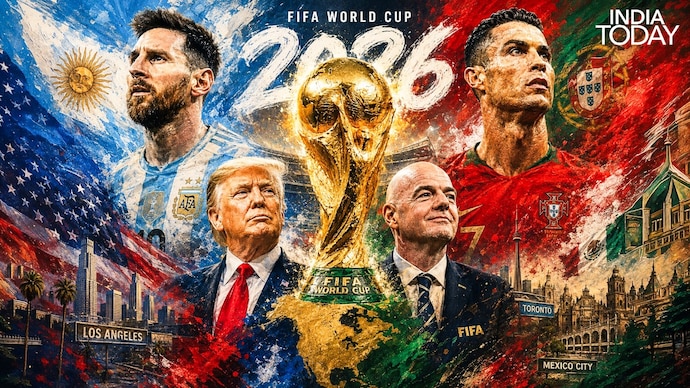
The wait is over. Football's grandest stage is set once again. Yet before the spotlight turns to Lionel Messi, Cristiano Ronaldo and a new generation eager to make its mark, the 2026 FIFA World Cup arrives under a cloud of scrutiny, carrying more off-field questions than any tournament would want on the eve of kick-off.
“The World Cup is a true celebration of football and humanity.”
Oh, Peter Drury. We have come a long way since 2010.
Usually, the final few days before a World Cup are reserved for the important debates. Who are the favourites? Is this finally Lionel Messi’s last dance? Can Cristiano Ronaldo somehow do it one more time? Which teenager is about to become football’s next superstar? Which dark horse is about to ruin somebody else’s summer?
Until 2026.
This time, many supporters seem almost as concerned about what could go wrong around the tournament as they are about what might happen on the pitch.
That feels like a strange sentence to write about a World Cup.
For generations, this tournament has been football’s grand event that arrives every four years and sends the fandom into a frenzy. It is usually the month when the game temporarily convinces us that nothing else matters quite as much as a perfectly weighted 90 minutes plus added time.
Yet as the FIFA World Cup 2026 finally arrives, football’s biggest celebration does so carrying a level of baggage that few editions before it have had to deal with.
At the centre of it all are geopolitical tensions that have steadily crept into the tournament’s orbit. The ongoing conflict involving the United States and Iran has transformed what should have been a routine World Cup build-up into something far more complicated. Iran and other teams have had to navigate visa concerns, logistical uncertainty and even made teams relocate sites of their preparations, and questions around who can enter the host nation and under what conditions have become the bigger part of the build-up.
And Iran are hardly alone.
From visa disputes and supporter travel restrictions to security concerns, ticket-pricing controversies and growing questions around accessibility, much of the build-up has felt like football sharing the newspaper space with other global politics news.
Yet football has a habit of fighting back.
When the lights come on at the Estadio Azteca and Mexico walk out against South Africa after an opening ceremony featuring Alejandro Fernndez, Tyla, J Balvin and Ryan Castro, none of those stories will be able to score a goal.
Football finally gets the stage back.
Whether it can reclaim the entire conversation over the next month, that’s just a game of waiting.
A WORLD CUP OF CHAOS
Former England and Arsenal legend Ian Wright recently described this tournament as a “World Cup of chaos” and it’s a war itself to argue with that.
With a massive dose of sympathy to the FIFA business heads while writing this, this was supposed to be the safe World Cup.
The tournament was awarded to three countries with established infrastructure, enormous stadiums and decades of experience hosting major sporting events. Compared to some of the controversies that surrounded Russia 2018 and Qatar 2022, North America was supposed to represent stability.
Instead, the build-up has left a sour taste of the hype of every football fan.
Iran’s training plans were disrupted. Somali referee Omar Artan, who had been set to become the first official from his country to work at a World Cup, was denied entry into the United States. Fans from several participating nations have publicly shared stories of visa complications despite already spending significant amounts on flights, accommodation and tickets.
Then there is the ticket issue.
For years, supporters dreamed of experiencing a World Cup in North America. Many quickly discovered that dream came with a frightening bill attached to it. Dynamic pricing, soaring accommodation costs, expensive transport and a resale market that often looked detached from reality have all contributed to frustration among traveling supporters.
There is even a strange contradiction hanging over the tournament. FIFA talks about record revenues and record attendance, yet thousands of tickets remain available for certain group-stage fixtures only days before kick-off.
Not many can argue that when its a World cup, it is an easy guess that the football will still be brilliant.
But there is no escaping the fact that the road to this World Cup has been considerably messier than anybody anticipated.
WHAT A FIFA WORLD CUP MEANT
Which is perhaps why it is worth remembering what the World Cup has often represented when football is at its most powerful.
In October 2005, Ivory Coast qualified for their first-ever FIFA World Cup.
At the time, the country was divided by civil war.
Didier Drogba and his teammates could have simply celebrated qualification. Instead, they gathered inside a dressing room, looked directly into television cameras and appealed for peace. The players dropped to their knees and pleaded with fellow Ivorians to lay down their weapons.
It remains one of the most extraordinary moments in sporting history.
For a brief moment, football achieved something politicians had spent years struggling to accomplish.
The World Cup has always carried that unique ability.
It is why people still remember where they were when Zinedine Zidane dazzled in 1998, when Andrs Iniesta broke Dutch hearts in Johannesburg, when Mario Gtze controlled a nation-sized dream in Rio or when Lionel Messi finally completed football in Qatar.
The tournament has always been about more than football.
Twenty-one years after Drogba used football as a tool for unity, the sport’s biggest event arrives while wrestling with conversations about borders, visas, access and geopolitics.
The irony to shed a tear for.
WILL THE NOISE TAKE OVER THE WORLD CUP?
Probably not.
Because football has spent decades proving it possesses a superpower very few things on earth can match.
It distracts.
Soon enough, the conversation will move away from visas and ticket prices and return to Messi, Ronaldo, Mbapp, Neymar, Jude Bellingham, Lamine Yamal and every other storyline that makes the World Cup impossible to resist.
Argentina arrive looking to defend their crown. Spain are many people’s favourites. France possess enough attacking talent to terrify anyone. Brazil believe Carlo Ancelotti can restore old glory. England are once again trying to convince themselves that this really might be the year.
For Indian fans especially, the commitment required to follow this World Cup borders on absurd. Nearly 90 per cent of the matches will begin between midnight and sunrise. That screams how sleep schedules will be demolished, followed by caffeine-fueled work hours.
Yet millions will do it anyway.
Tomorrow morning, offices across the country will be filled with people carrying dark circles under their eyes and giant smiles on their faces. Someone will be replaying a wonder goal.or a refereeing call.
And that is why, despite all the noise surrounding this tournament, it would be foolish to bet against football winning the argument once again.
FIFA WORLD CUP 2026: ALL 12 GROUPS
With the big chaos list, comes as long as a fixture list for this World Cup.
FIFA has expanded the 2026 tournament to 48 teams. The new format features 12 groups of four teams, replacing the familiar eight-group setup. From there, the top two sides in each group and the eight best third-placed teams will advance to a newly introduced Round of 32, opening the door for more nations, more knockout drama and, inevitably, a few surprise runs.
* Group A: Mexico, South Africa, South Korea, Czechia
* Group B: Canada, Bosnia & Herzegovina, Qatar, Switzerland
* Group C: Brazil, Morocco, Haiti, Scotland
* Group D: United States, Paraguay, Australia, Trkiye
* Group E: Germany, Curaao, Ivory Coast, Ecuador
* Group F: Netherlands, Japan, Sweden, Tunisia
* Group G: Belgium, Egypt, Iran, New Zealand
* Group H: Spain, Cape Verde, Saudi Arabia, Uruguay
* Group I: France, Senegal, Iraq, Norway
* Group J: Argentina, Algeria, Austria, Jordan
* Group K: Portugal, DR Congo, Uzbekistan, Colombia
* Group L: England, Croatia, Ghana, Panama
WHERE CAN FANS IN INDIA WATCH THE 2026 FIFA WORLD CUP?
Fans in India can watch all 104 matches of FIFA World Cup 2026 on Zee’s Unite8 Sports television channels, while live streaming will be available through the Zee5 app and website after the broadcaster secured the rights shortly before the tournament began
“The World Cup is a true celebration of football and humanity.”
Oh, Peter Drury. We have come a long way since 2010.
Usually, the final few days before a World Cup are reserved for the important debates. Who are the favourites? Is this finally Lionel Messi’s last dance? Can Cristiano Ronaldo somehow do it one more time? Which teenager is about to become football’s next superstar? Which dark horse is about to ruin somebody else’s summer?
Until 2026.
This time, many supporters seem almost as concerned about what could go wrong around the tournament as they are about what might happen on the pitch.
That feels like a strange sentence to write about a World Cup.
For generations, this tournament has been football’s grand event that arrives every four years and sends the fandom into a frenzy. It is usually the month when the game temporarily convinces us that nothing else matters quite as much as a perfectly weighted 90 minutes plus added time.
Yet as the FIFA World Cup 2026 finally arrives, football’s biggest celebration does so carrying a level of baggage that few editions before it have had to deal with.
At the centre of it all are geopolitical tensions that have steadily crept into the tournament’s orbit. The ongoing conflict involving the United States and Iran has transformed what should have been a routine World Cup build-up into something far more complicated. Iran and other teams have had to navigate visa concerns, logistical uncertainty and even made teams relocate sites of their preparations, and questions around who can enter the host nation and under what conditions have become the bigger part of the build-up.
And Iran are hardly alone.
From visa disputes and supporter travel restrictions to security concerns, ticket-pricing controversies and growing questions around accessibility, much of the build-up has felt like football sharing the newspaper space with other global politics news.
Yet football has a habit of fighting back.
When the lights come on at the Estadio Azteca and Mexico walk out against South Africa after an opening ceremony featuring Alejandro Fernndez, Tyla, J Balvin and Ryan Castro, none of those stories will be able to score a goal.
Football finally gets the stage back.
Whether it can reclaim the entire conversation over the next month, that’s just a game of waiting.
A WORLD CUP OF CHAOS
Former England and Arsenal legend Ian Wright recently described this tournament as a “World Cup of chaos” and it’s a war itself to argue with that.
With a massive dose of sympathy to the FIFA business heads while writing this, this was supposed to be the safe World Cup.
The tournament was awarded to three countries with established infrastructure, enormous stadiums and decades of experience hosting major sporting events. Compared to some of the controversies that surrounded Russia 2018 and Qatar 2022, North America was supposed to represent stability.
Instead, the build-up has left a sour taste of the hype of every football fan.
Iran’s training plans were disrupted. Somali referee Omar Artan, who had been set to become the first official from his country to work at a World Cup, was denied entry into the United States. Fans from several participating nations have publicly shared stories of visa complications despite already spending significant amounts on flights, accommodation and tickets.
Then there is the ticket issue.
For years, supporters dreamed of experiencing a World Cup in North America. Many quickly discovered that dream came with a frightening bill attached to it. Dynamic pricing, soaring accommodation costs, expensive transport and a resale market that often looked detached from reality have all contributed to frustration among traveling supporters.
There is even a strange contradiction hanging over the tournament. FIFA talks about record revenues and record attendance, yet thousands of tickets remain available for certain group-stage fixtures only days before kick-off.
Not many can argue that when its a World cup, it is an easy guess that the football will still be brilliant.
But there is no escaping the fact that the road to this World Cup has been considerably messier than anybody anticipated.
WHAT A FIFA WORLD CUP MEANT
Which is perhaps why it is worth remembering what the World Cup has often represented when football is at its most powerful.
In October 2005, Ivory Coast qualified for their first-ever FIFA World Cup.
At the time, the country was divided by civil war.
Didier Drogba and his teammates could have simply celebrated qualification. Instead, they gathered inside a dressing room, looked directly into television cameras and appealed for peace. The players dropped to their knees and pleaded with fellow Ivorians to lay down their weapons.
It remains one of the most extraordinary moments in sporting history.
For a brief moment, football achieved something politicians had spent years struggling to accomplish.
The World Cup has always carried that unique ability.
It is why people still remember where they were when Zinedine Zidane dazzled in 1998, when Andrs Iniesta broke Dutch hearts in Johannesburg, when Mario Gtze controlled a nation-sized dream in Rio or when Lionel Messi finally completed football in Qatar.
The tournament has always been about more than football.
Twenty-one years after Drogba used football as a tool for unity, the sport’s biggest event arrives while wrestling with conversations about borders, visas, access and geopolitics.
The irony to shed a tear for.
WILL THE NOISE TAKE OVER THE WORLD CUP?
Probably not.
Because football has spent decades proving it possesses a superpower very few things on earth can match.
It distracts.
Soon enough, the conversation will move away from visas and ticket prices and return to Messi, Ronaldo, Mbapp, Neymar, Jude Bellingham, Lamine Yamal and every other storyline that makes the World Cup impossible to resist.
Argentina arrive looking to defend their crown. Spain are many people’s favourites. France possess enough attacking talent to terrify anyone. Brazil believe Carlo Ancelotti can restore old glory. England are once again trying to convince themselves that this really might be the year.
For Indian fans especially, the commitment required to follow this World Cup borders on absurd. Nearly 90 per cent of the matches will begin between midnight and sunrise. That screams how sleep schedules will be demolished, followed by caffeine-fueled work hours.
Yet millions will do it anyway.
Tomorrow morning, offices across the country will be filled with people carrying dark circles under their eyes and giant smiles on their faces. Someone will be replaying a wonder goal.or a refereeing call.
And that is why, despite all the noise surrounding this tournament, it would be foolish to bet against football winning the argument once again.
FIFA WORLD CUP 2026: ALL 12 GROUPS
With the big chaos list, comes as long as a fixture list for this World Cup.
FIFA has expanded the 2026 tournament to 48 teams. The new format features 12 groups of four teams, replacing the familiar eight-group setup. From there, the top two sides in each group and the eight best third-placed teams will advance to a newly introduced Round of 32, opening the door for more nations, more knockout drama and, inevitably, a few surprise runs.
* Group A: Mexico, South Africa, South Korea, Czechia
* Group B: Canada, Bosnia & Herzegovina, Qatar, Switzerland
* Group C: Brazil, Morocco, Haiti, Scotland
* Group D: United States, Paraguay, Australia, Trkiye
* Group E: Germany, Curaao, Ivory Coast, Ecuador
* Group F: Netherlands, Japan, Sweden, Tunisia
* Group G: Belgium, Egypt, Iran, New Zealand
* Group H: Spain, Cape Verde, Saudi Arabia, Uruguay
* Group I: France, Senegal, Iraq, Norway
* Group J: Argentina, Algeria, Austria, Jordan
* Group K: Portugal, DR Congo, Uzbekistan, Colombia
* Group L: England, Croatia, Ghana, Panama
WHERE CAN FANS IN INDIA WATCH THE 2026 FIFA WORLD CUP?
Fans in India can watch all 104 matches of FIFA World Cup 2026 on Zee’s Unite8 Sports television channels, while live streaming will be available through the Zee5 app and website after the broadcaster secured the rights shortly before the tournament began

