Why Cabo Verde's 51st Independence day felt extra special this year
FIFA World Cup 2026: Cabo Verde returned home to packed streets and a thunderous airport welcome after their World Cup exit. The reception on the nation's 51st Independence Day showed how this run had become a marker of national pride.
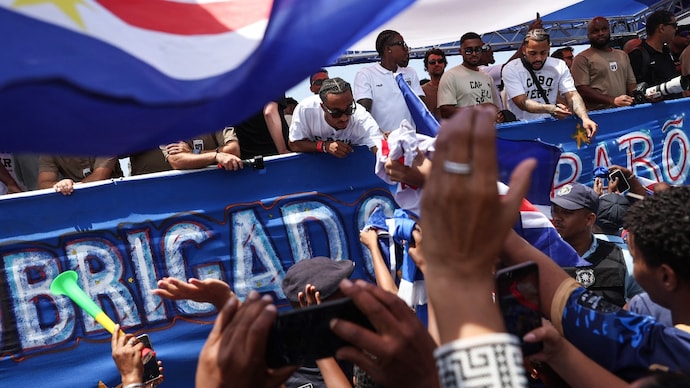
Fifty-one years after breaking free from Portuguese rule, Cabo Verde once again found itself celebrating its heroes. This time, however, the cheers were reserved not for the generation that won the nation's freedom, but for a football team that won something equally precious—the admiration of the world.
On a day meant to honour the country's sovereignty, the tiny Atlantic archipelago welcomed home the players who carried its flag further than anyone had imagined at the FIFA World Cup. For a nation of just over half a million people, it was more than a homecoming. It was a moment of collective pride, where football became a language of identity and hope.
The scenes that unfolded in Praia were nothing short of extraordinary.
A video shared by the Cabo Verde Football Federation captured roads leading to the airport choked with vehicles as supporters rushed to welcome their heroes home, barely a day after their heartbreaking World Cup exit. Along the runway, aircraft marshals stood in formation before bowing in unison—a silent gesture of gratitude for a team that had given everything for its nation.
WATCH HERE –
Outside the terminal, thousands of supporters waved Cabo Verdean flags, sang, danced and waited patiently for a glimpse of the players. When the squad finally emerged, applause echoed across the airport as if they had returned with the trophy itself. Inside, the players were immediately surrounded by media and well-wishers, every handshake and embrace carrying the emotion of a campaign that had captured the imagination of an entire country.
The federation had earlier announced that the team would return home on the nation's 51st Independence Day. Fate could hardly have scripted a more fitting celebration.
A FAIRYTALE THAT CHANGED A NATION
Few expected Cabo Verde to become one of the stories of the tournament. Ranked 67th in the world before the competition began, the Blue Sharks arrived as outsiders. They left as one of the most admired teams in football.
Remarkably, Cabo Verde did not lose a single match in regulation time throughout the tournament. They battled to draws against Spain, Uruguay and Saudi Arabia during the group stage, performances that earned them automatic qualification to the knockout rounds while showcasing remarkable discipline, courage and belief.
Then came the match that transformed respect into admiration.
Against defending world champions Argentina, Cabo Verde refused to accept the role of spectators in someone else's story. Every Argentine attack was met with resilience; every setback was answered with another surge forward. It took 120 exhausting minutes, three Argentine goals and every ounce of the champions' experience to finally end Cabo Verde's unforgettable journey with a dramatic 3-2 extra-time victory.
The scoreline recorded a defeat. The performance felt like anything but one.
The tournament also gave the island nation a new generation of icons.
Forty-year-old goalkeeper Vozinha turned back the clock with performances that bordered on legendary. He frustrated Spain with a string of breathtaking saves before repeatedly denying Lionel Messi from both close range and distance in one of the tournament's defining displays by a goalkeeper. His heroics earned him admiration across the football world and saw his popularity soar on social media.
Kevin Pina etched his name into Cabo Verdean history by scoring the nation's first-ever FIFA World Cup goal, a strike that will forever be remembered as the moment a dream became reality. Sidny Lopes Cabral added another unforgettable chapter, producing a stunning goal in extra time against Argentina that reignited belief and ensured the reigning champions fought until the very last whistle.
Every tournament leaves behind champions. Every so often, it leaves behind something even more enduring—a story.
For Cabo Verde, this World Cup was never just about results. It was about proving that belief can outweigh reputation, that courage can shrink the gap between giants and dreamers, and that a small nation can command the attention of the footballing world.
Fifty-one years after celebrating political independence, Cabo Verde found another reason to fill its streets with flags and songs. The heroes had changed. The pride had not.
FIFA World Cup | FIFA World Cup Schedule | FIFA World Cup Points Table | Football News
Fifty-one years after breaking free from Portuguese rule, Cabo Verde once again found itself celebrating its heroes. This time, however, the cheers were reserved not for the generation that won the nation's freedom, but for a football team that won something equally precious—the admiration of the world.
On a day meant to honour the country's sovereignty, the tiny Atlantic archipelago welcomed home the players who carried its flag further than anyone had imagined at the FIFA World Cup. For a nation of just over half a million people, it was more than a homecoming. It was a moment of collective pride, where football became a language of identity and hope.
The scenes that unfolded in Praia were nothing short of extraordinary.
A video shared by the Cabo Verde Football Federation captured roads leading to the airport choked with vehicles as supporters rushed to welcome their heroes home, barely a day after their heartbreaking World Cup exit. Along the runway, aircraft marshals stood in formation before bowing in unison—a silent gesture of gratitude for a team that had given everything for its nation.
WATCH HERE –
Outside the terminal, thousands of supporters waved Cabo Verdean flags, sang, danced and waited patiently for a glimpse of the players. When the squad finally emerged, applause echoed across the airport as if they had returned with the trophy itself. Inside, the players were immediately surrounded by media and well-wishers, every handshake and embrace carrying the emotion of a campaign that had captured the imagination of an entire country.
The federation had earlier announced that the team would return home on the nation's 51st Independence Day. Fate could hardly have scripted a more fitting celebration.
A FAIRYTALE THAT CHANGED A NATION
Few expected Cabo Verde to become one of the stories of the tournament. Ranked 67th in the world before the competition began, the Blue Sharks arrived as outsiders. They left as one of the most admired teams in football.
Remarkably, Cabo Verde did not lose a single match in regulation time throughout the tournament. They battled to draws against Spain, Uruguay and Saudi Arabia during the group stage, performances that earned them automatic qualification to the knockout rounds while showcasing remarkable discipline, courage and belief.
Then came the match that transformed respect into admiration.
Against defending world champions Argentina, Cabo Verde refused to accept the role of spectators in someone else's story. Every Argentine attack was met with resilience; every setback was answered with another surge forward. It took 120 exhausting minutes, three Argentine goals and every ounce of the champions' experience to finally end Cabo Verde's unforgettable journey with a dramatic 3-2 extra-time victory.
The scoreline recorded a defeat. The performance felt like anything but one.
The tournament also gave the island nation a new generation of icons.
Forty-year-old goalkeeper Vozinha turned back the clock with performances that bordered on legendary. He frustrated Spain with a string of breathtaking saves before repeatedly denying Lionel Messi from both close range and distance in one of the tournament's defining displays by a goalkeeper. His heroics earned him admiration across the football world and saw his popularity soar on social media.
Kevin Pina etched his name into Cabo Verdean history by scoring the nation's first-ever FIFA World Cup goal, a strike that will forever be remembered as the moment a dream became reality. Sidny Lopes Cabral added another unforgettable chapter, producing a stunning goal in extra time against Argentina that reignited belief and ensured the reigning champions fought until the very last whistle.
Every tournament leaves behind champions. Every so often, it leaves behind something even more enduring—a story.
For Cabo Verde, this World Cup was never just about results. It was about proving that belief can outweigh reputation, that courage can shrink the gap between giants and dreamers, and that a small nation can command the attention of the footballing world.
Fifty-one years after celebrating political independence, Cabo Verde found another reason to fill its streets with flags and songs. The heroes had changed. The pride had not.
FIFA World Cup | FIFA World Cup Schedule | FIFA World Cup Points Table | Football News

