Ahead of GTA 6 launch, how Grand Theft Auto became a part of India's gaming DNA
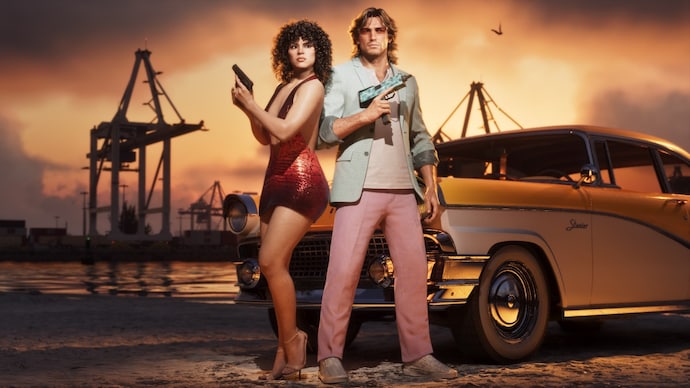
As Rockstar Games readies Grand Theft Auto VI for its November 19 launch, India Today Tech takes a deep dive into why GTA is more than just another video game: it is part of India's gaming DNA.
It is a warm June afternoon in the mid-2000s. Outside, the midday heat burns the asphalt, but inside a dimly lit cybercafe in suburban Delhi, a dozen-odd teenagers are huddled over bulky monitors, the air heavy with the scent of burning plastic from overworked power supplies. Between frantic rounds of Counterstrike and Dota, a pulsing synth-bassline kicks in. A virtual Tommy Vercetti (voiced by the legendary Ray Liotta of Goodfellas fame) appears, steals a moped – or Faggio in GTA parlance – and cruises down a sun-drenched boulevard of Vice City.
For a generation of millennial Indians, Grand Theft Auto wasn’t just a routine afternoon escape. It was more than a game. It was a cultural awakening.
“Vice City and San Andreas are games that millennial kids would play in between LAN cafe matches,” recalls Nishant Patel, Senior Vice President at NODWIN Gaming. “I guess what I’m trying to say is that GTA is a part of India’s gaming DNA.”
Cut to 2026, the cybercafes have mostly vanished, replaced by multi-million-dollar esports arenas, high-end gaming laptops, and a domestic market of over 500 million gamers and counting. Yet, as Rockstar Games prepares to launch the highly anticipated and twice-delayed Grand Theft Auto VI on November 19, the frenzy that is doing the rounds proves that while India’s infrastructure may have evolved, our collective obsession for GTA has remained largely unchanged.
The game, the myth, the legend
GTA, as it turns out, is more than just another Western export in India. While GTA III and its immediate successors built a foundational legacy on Sony’s PlayStation 2, the true democratisation of the franchise happened on the PC.
“From an India perspective, GTA did have its roots on the PS2,” explains Rishi Alwani, a seasoned gaming expert and former journalist. “The promise of what it offered in terms of open-world gameplay is what shaped its legacy to begin with. But while it got its start on the PlayStation 2, the real boom came on PC.”
Alwani points out that India truly came into its own as a core market for the franchise during the launch of Grand Theft Auto IV. In the late 2000s, buying a console game was an expensive luxury that some might say, extends to this day. GTA 4 cost Rs 2,490 on PS3 and Xbox 360. On PC, it was much more affordable.
“India came into its own as a market for the franchise with GTA 4 because while it probably sold around half a million units in India on consoles, best-case situation, it still did a lot more on PC,” Alwani says. “Your PC price was Rs 499, and I think their day-one quantity alone was 50,000 units. Because at that time you had physical copies, it was easy to get a bead on what the sales figures were like. Because the PC pricing was so good, sales went through the roof.”
This turned GTA into a sleeper hit. It joined FIFA and Call of Duty to form the holy trinity of Indian gaming. “The same audience grows up. They get their own friends to check it out,” Alwani notes. “The games promise a certain level of freedom and empowerment that really works well with that edgy audience that tends to persist across generations. I mean, which other game has you being able to run down pedestrians on the street sidewalk?”
By the time Grand Theft Auto V arrived in 2013, the Indian retail scene was in a phase of transition. E-commerce platforms like Flipkart were emerging, desperate to capture the disposable income of young tech enthusiasts. What followed was a retail free-for-all.
“The situation of GTA V was a little different, where you had a slightly larger install base and a lot more hype because e-commerce was pretty much on the up and up,” says Alwani. “Flipkart did pre-orders where they had a price lower than MRP. And they were doing freebies, which weren't exactly sanctioned by Rockstar, but they did it anyway. It was a wild time.”
Then came the mobile revolution. The proliferation of affordable smartphones and ultra-affordable mobile data gave rise to mobile battle royales like PUBG Mobile (later BGMI) and Free Fire. Suddenly, the mass audience – the Aam Janata – was gaming on 6.5-inch screens rather than on PCs or consoles. When geopolitical tensions led to sudden bans on major mobile titles, India's massive streaming community needed a fallback option. They found it in Rockstar Games’ Los Santos.
“When PUBG Mobile got banned in India, some of the most watched creators picked up GTA V online, which led to a resurgence in the game’s popularity,” recalls NODWIN Gaming’s Nishant Patel. “GTA V was everywhere. Even vernacular streamers on Facebook ran custom mods climbing an endless stairway to the clouds while engaging with viewers in chat.”
GTA V is one of the longest running games ever made in history. More surprisingly, it got better with time. Roleplay (RP) servers allowed gamers to don alternative lives from police officers, local thugs, corporate executives, to politicians within the game world. This sandbox became an economic engine for a new class of Indian entertainers.
Rohit Agarwal, Founder & Director of the gaming talent agency Alpha Zegus, believes the upcoming GTA VI could be an even bigger catalyst for this segment.
“Custom roleplay, storytelling, and mod-driven experiences significantly expand the addressable creator base because you no longer need to be an elite player to build an audience,” Agarwal notes. “You need to be an engaging storyteller.”
“When a title of this scale launches into a market with one of the world's fastest-growing creator ecosystems, it creates far more than game sales,” Agarwal continues. “It creates new advertising inventory, creator IP, branded entertainment opportunities, and recurring revenue through livestreams, memberships, sponsorships, and UGC. I expect GTA VI to become one of the biggest catalysts for gaming creator monetisation in India over the next three to five years.”
The creators themselves are treating the November 19 launch as a career-defining milestone. For Parv Singh, known to millions online as Soul Regaltos, GTA VI could mean an entry into an entirely new genre of entertainment.
“Apart from GTA Vice City and GTA San Andreas, I haven't really spent much time playing story-driven games, which is why GTA VI feels like the perfect entry point for me,” Singh says. “As a creator, I'm looking forward to experiencing the game from a fresh perspective and sharing that journey with my audience. I'm planning a marathon stream when the game launches.”
For Sunny Jha, the creative mind behind Pitaji Playz, GTA VI is an opportunity to revive and evolve the regional characters that made him famous.
“During GTA V, one of my most popular roleplay characters was a Bihari character with a unique accent that audiences really connected with,” Jha says. “With GTA 6, I want to bring that same creativity back, whether through that character or entirely new ones. My focus will be on immersive roleplay, strong storytelling, and creating content that feels fresh and entertaining.”
Jha is pulling out all the stops for the launch, coordinating with a tight-knit community of fellow streamers to maximise their impact. “I have a group of 15-20 friends who will be playing GTA VI, and we're planning multiple collaborations around the game. Given the scale of the map and the possibilities it offers, I think GTA VI has the potential to completely transform the roleplay scene.”
Prajwal Kali, known digitally as red parasite, has spent the last twelve months quietly preparing his audience for the transition.
“For me, GTA VI is more than just a game. I genuinely believe it's going to change my life as a creator,” Kali states bluntly. “I've actually been preparing for GTA VI for the past year without people realising it. I've been creating custom GTA 5 roleplay stories with custom maps, vehicles, and cinematic-style episodes. That helped me build a strong and loyal audience that enjoys story-driven GTA content.”
The great digital divide
The launch of GTA VI hasn’t been without its share of controversies. If the delays – the game was announced in 2022 with initial launch pegged for 2025 – weren’t enough, Rockstar Games’ decision to focus heavily on digital-only pre-orders has become the talk of the town globally and not in a good way. Particularly in India, where local infrastructure varies drastically and the traditional retail network remains incredibly vital, selling a digital-only copy for Rs 5,999 (Rs 7,499 for ultimate edition), could be a double-edged sword.
“The hype endures,” Alwani notes. “It's just that the lack of a physical copy is going to be detrimental to retail, more so when you consider that most gamers who want to buy the game may not have that fast internet connection or may not be able to check it out on day one because of the issues that come with buying digital-only copies.”
Unlike Western markets where big-box retailers or direct digital downloads dominate, the Indian retail space relies heavily on community-based, independent storefronts.
“The split is so bizarre here where like 50 per cent is mom-and-pop stores like Maya Toys or Game Mart in Delhi,” Alwani reveals. “The remaining 30 per cent is quick commerce. Blinkit has been killing it on this front, taking 20 to 30 per cent easily, and the rest is online. When you think about it from that infrastructural point, how do most of the sales happen? Over the counter or over WhatsApp.”
By making the initial launch digital-only, Rockstar may have alienated the very store owners who kept the franchise alive during the lean years. Offline chains are responding in kind, with several stores like Video Games Plus and Loot Box Gaming in the US choosing to boycott the launch, because it will lack a physical release. “To see Rockstar treat emerging markets like ours like this is extremely sad,” Alwani remarks. “Retail isn't too happy.”
Moreover, physical media serves a vital economic purpose for the budget-conscious Indian gamer: the secondary used-game market.
“Usually, there's a delta of roughly 500 bucks’ difference between digital and physical,” Alwani explains. “The used market is pretty active here. It's pretty vibrant, and it gets a lot of people off the ground. People keep talking about the ‘next billion gamers’ in markets like Brazil and India. But within the next billion gamers, the next generation can't afford anything. For them, the step-up is used hardware and used games. In an Indian consumer's mind, the thought process is: ‘I can play it and then recoup some of my costs by selling it.’”
Alwani emphasises that Indian gamers lack the rigid brand loyalty seen in Western markets. They are intensely practical consumers. “Any loyalty towards the franchise only exists as long as the content is good, and once they're done with it, if it makes sense to sell, they'll sell. The Indian gamer doesn't care. They'll refund the game on Steam if it's free on the Epic Games Store. There is no loyalty that's baked in.”
Historically, a new GTA game has been a massive driver of hardware adoption in India. The PlayStation 2 hit its historic one-million-unit milestone in India largely on the back of Vice City and San Andreas. The PlayStation 3, the PSP, and the PlayStation 4 all saw distinct hardware sales spikes whenever a Rockstar title launched. But GTA VI enters an entirely different macroeconomic climate. Current-generation consoles are facing unprecedented pricing pressures, and supply lines have been deeply inconsistent.
“We are in a situation where not only is hardware overpriced, but hardware is also under-supplied,” Alwani warns. “We're sitting right now at probably 7,00,000 PS5s, and – being obscenely charitable – 1,00,000 Xbox Series X and S. Even if you round that up to a million current-generation consoles, a million units is nothing compared to a PC audience which is a lot bigger. You're still a rounding error.”
Because of this console supply bottleneck, creators like Arpit Wadhawan, known as 8bit Headflicker, have had to make proactive investments just to stay competitive ahead of the launch.
“Since GTA VI is launching on consoles before it arrives on PC, I didn't want to miss out on the launch experience,” Wadhawan says. “The moment the release date was officially announced, I started preparing. I went ahead and bought a PS5 along with a capture card so I could create content and stream the game from day one. My entire setup is ready now.”
Despite these individual efforts, Alwani believes the real cultural and financial explosion for GTA VI in India will be delayed until the game eventually arrives on PC.
“Laptops sales have stayed steady. The average laptop that sells comes with at least an NVIDIA RTX 4050, which should at least be able to run the game,” Alwani notes. “I don't think the real boost will happen until it hits PC, particularly in India. That's where we're going to see the big wins.”
Rumours suggest that GTA VI cost between $1 billion and $2 billion to make, making it one of the most expensive pieces of media ever created. A significant portion of that massive operation has seemingly been executed quietly right here in India, through Rockstar’s local studios handling Quality Assurance (QA), testing, and art assets.
“The rumour is between one and two billion. It is a big amount, but I don't think it's warranted,” Alwani says candidly. “No game justifies that amount of cost. If you're still in the range of a billion or two billion dollars while sourcing a large chunk of your work to India, it means that something is terribly wrong with how this entire company is run.”
Alwani notes that while outsourcing to India gives global studios great optics regarding cost reduction, it has occasionally led to the export of problematic corporate habits –such as the gaming industry's infamous “crunch” culture – to regions with less stringent labour protections.
“Ubisoft India teams don't crunch, but Rockstar's history of crunch has basically been exported to India from everything I know,” Alwani claims.
The irony, Alwani notes, is that the massive global gaming industry continues to justify soaring game prices by pointing to inflated development costs, even though it is possible to make a high-quality game with fewer resources today.
“The fact that the industry seems to nicely backslide into the excuse that everything needs to be more expensive because 'we said so' is the stupidest thing ever,” Alwani argues.
Regardless of the retail tensions, the steep hardware barriers, and the corporate complexities, Grand Theft Auto VI remains an unstoppable cultural force. It is a title that transcends the boundaries of traditional software to become a living, breathing social case study.
Vishal Parekh, Chief Operating Officer of CyberPowerPC India, views the launch as a massive educational and inspirational milestone for the next generation of digital professionals.
“Every major Rockstar release sets new benchmarks in world-building, game design, visual fidelity, storytelling, and technical execution,” Parekh explains. “GTA VI will likely become a major case study for students, aspiring developers, designers, and professionals working across the gaming industry. For many young people exploring careers in game development, design, animation, and interactive entertainment, GTA VI will be as much a learning opportunity as it is a game release.”
Parekh believes that the ultimate legacy of GTA VI in India will be measured by the fresh creative styles it unlocks. “Much like BGMI helped create a generation of competitive gaming creators in India, GTA VI could help shape the next generation of entertainment-first gaming creators who build audiences around creativity and storytelling rather than purely competitive gameplay.”
Ahead of D-Day, the broader community isn't just preparing to play a video game. They are getting ready to participate in a shared, massive cultural moment. The conversation is shifting away from mere frame rates and polygon counts – in part because much of the game’s technical prowess remains a mystery even less than 6 months before launch – toward a deeper, collective exploration of how an audience interacts with an incredibly high-fidelity world that Rockstar team has promised.
“I want to see how the culture forms around a game like this,” Alwani says, reflecting on how Rockstar's previous masterpiece, Red Dead Redemption 2, changed the cultural landscape. “To this date, there's this subculture of content creation and critique which revolves around comparing every game ever made to Red Dead 2 because of how high-fidelity and how detailed it was. To me, I'm very curious to see how audiences interact with GTA 6 and what their interpretation of it becomes. Will that itself turn into its own zeitgeist?"
It is a warm June afternoon in the mid-2000s. Outside, the midday heat burns the asphalt, but inside a dimly lit cybercafe in suburban Delhi, a dozen-odd teenagers are huddled over bulky monitors, the air heavy with the scent of burning plastic from overworked power supplies. Between frantic rounds of Counterstrike and Dota, a pulsing synth-bassline kicks in. A virtual Tommy Vercetti (voiced by the legendary Ray Liotta of Goodfellas fame) appears, steals a moped – or Faggio in GTA parlance – and cruises down a sun-drenched boulevard of Vice City.
For a generation of millennial Indians, Grand Theft Auto wasn’t just a routine afternoon escape. It was more than a game. It was a cultural awakening.
“Vice City and San Andreas are games that millennial kids would play in between LAN cafe matches,” recalls Nishant Patel, Senior Vice President at NODWIN Gaming. “I guess what I’m trying to say is that GTA is a part of India’s gaming DNA.”
Cut to 2026, the cybercafes have mostly vanished, replaced by multi-million-dollar esports arenas, high-end gaming laptops, and a domestic market of over 500 million gamers and counting. Yet, as Rockstar Games prepares to launch the highly anticipated and twice-delayed Grand Theft Auto VI on November 19, the frenzy that is doing the rounds proves that while India’s infrastructure may have evolved, our collective obsession for GTA has remained largely unchanged.
The game, the myth, the legend
GTA, as it turns out, is more than just another Western export in India. While GTA III and its immediate successors built a foundational legacy on Sony’s PlayStation 2, the true democratisation of the franchise happened on the PC.
“From an India perspective, GTA did have its roots on the PS2,” explains Rishi Alwani, a seasoned gaming expert and former journalist. “The promise of what it offered in terms of open-world gameplay is what shaped its legacy to begin with. But while it got its start on the PlayStation 2, the real boom came on PC.”
Alwani points out that India truly came into its own as a core market for the franchise during the launch of Grand Theft Auto IV. In the late 2000s, buying a console game was an expensive luxury that some might say, extends to this day. GTA 4 cost Rs 2,490 on PS3 and Xbox 360. On PC, it was much more affordable.
“India came into its own as a market for the franchise with GTA 4 because while it probably sold around half a million units in India on consoles, best-case situation, it still did a lot more on PC,” Alwani says. “Your PC price was Rs 499, and I think their day-one quantity alone was 50,000 units. Because at that time you had physical copies, it was easy to get a bead on what the sales figures were like. Because the PC pricing was so good, sales went through the roof.”
This turned GTA into a sleeper hit. It joined FIFA and Call of Duty to form the holy trinity of Indian gaming. “The same audience grows up. They get their own friends to check it out,” Alwani notes. “The games promise a certain level of freedom and empowerment that really works well with that edgy audience that tends to persist across generations. I mean, which other game has you being able to run down pedestrians on the street sidewalk?”
By the time Grand Theft Auto V arrived in 2013, the Indian retail scene was in a phase of transition. E-commerce platforms like Flipkart were emerging, desperate to capture the disposable income of young tech enthusiasts. What followed was a retail free-for-all.
“The situation of GTA V was a little different, where you had a slightly larger install base and a lot more hype because e-commerce was pretty much on the up and up,” says Alwani. “Flipkart did pre-orders where they had a price lower than MRP. And they were doing freebies, which weren't exactly sanctioned by Rockstar, but they did it anyway. It was a wild time.”
Then came the mobile revolution. The proliferation of affordable smartphones and ultra-affordable mobile data gave rise to mobile battle royales like PUBG Mobile (later BGMI) and Free Fire. Suddenly, the mass audience – the Aam Janata – was gaming on 6.5-inch screens rather than on PCs or consoles. When geopolitical tensions led to sudden bans on major mobile titles, India's massive streaming community needed a fallback option. They found it in Rockstar Games’ Los Santos.
“When PUBG Mobile got banned in India, some of the most watched creators picked up GTA V online, which led to a resurgence in the game’s popularity,” recalls NODWIN Gaming’s Nishant Patel. “GTA V was everywhere. Even vernacular streamers on Facebook ran custom mods climbing an endless stairway to the clouds while engaging with viewers in chat.”
GTA V is one of the longest running games ever made in history. More surprisingly, it got better with time. Roleplay (RP) servers allowed gamers to don alternative lives from police officers, local thugs, corporate executives, to politicians within the game world. This sandbox became an economic engine for a new class of Indian entertainers.
Rohit Agarwal, Founder & Director of the gaming talent agency Alpha Zegus, believes the upcoming GTA VI could be an even bigger catalyst for this segment.
“Custom roleplay, storytelling, and mod-driven experiences significantly expand the addressable creator base because you no longer need to be an elite player to build an audience,” Agarwal notes. “You need to be an engaging storyteller.”
“When a title of this scale launches into a market with one of the world's fastest-growing creator ecosystems, it creates far more than game sales,” Agarwal continues. “It creates new advertising inventory, creator IP, branded entertainment opportunities, and recurring revenue through livestreams, memberships, sponsorships, and UGC. I expect GTA VI to become one of the biggest catalysts for gaming creator monetisation in India over the next three to five years.”
The creators themselves are treating the November 19 launch as a career-defining milestone. For Parv Singh, known to millions online as Soul Regaltos, GTA VI could mean an entry into an entirely new genre of entertainment.
“Apart from GTA Vice City and GTA San Andreas, I haven't really spent much time playing story-driven games, which is why GTA VI feels like the perfect entry point for me,” Singh says. “As a creator, I'm looking forward to experiencing the game from a fresh perspective and sharing that journey with my audience. I'm planning a marathon stream when the game launches.”
For Sunny Jha, the creative mind behind Pitaji Playz, GTA VI is an opportunity to revive and evolve the regional characters that made him famous.
“During GTA V, one of my most popular roleplay characters was a Bihari character with a unique accent that audiences really connected with,” Jha says. “With GTA 6, I want to bring that same creativity back, whether through that character or entirely new ones. My focus will be on immersive roleplay, strong storytelling, and creating content that feels fresh and entertaining.”
Jha is pulling out all the stops for the launch, coordinating with a tight-knit community of fellow streamers to maximise their impact. “I have a group of 15-20 friends who will be playing GTA VI, and we're planning multiple collaborations around the game. Given the scale of the map and the possibilities it offers, I think GTA VI has the potential to completely transform the roleplay scene.”
Prajwal Kali, known digitally as red parasite, has spent the last twelve months quietly preparing his audience for the transition.
“For me, GTA VI is more than just a game. I genuinely believe it's going to change my life as a creator,” Kali states bluntly. “I've actually been preparing for GTA VI for the past year without people realising it. I've been creating custom GTA 5 roleplay stories with custom maps, vehicles, and cinematic-style episodes. That helped me build a strong and loyal audience that enjoys story-driven GTA content.”
The great digital divide
The launch of GTA VI hasn’t been without its share of controversies. If the delays – the game was announced in 2022 with initial launch pegged for 2025 – weren’t enough, Rockstar Games’ decision to focus heavily on digital-only pre-orders has become the talk of the town globally and not in a good way. Particularly in India, where local infrastructure varies drastically and the traditional retail network remains incredibly vital, selling a digital-only copy for Rs 5,999 (Rs 7,499 for ultimate edition), could be a double-edged sword.
“The hype endures,” Alwani notes. “It's just that the lack of a physical copy is going to be detrimental to retail, more so when you consider that most gamers who want to buy the game may not have that fast internet connection or may not be able to check it out on day one because of the issues that come with buying digital-only copies.”
Unlike Western markets where big-box retailers or direct digital downloads dominate, the Indian retail space relies heavily on community-based, independent storefronts.
“The split is so bizarre here where like 50 per cent is mom-and-pop stores like Maya Toys or Game Mart in Delhi,” Alwani reveals. “The remaining 30 per cent is quick commerce. Blinkit has been killing it on this front, taking 20 to 30 per cent easily, and the rest is online. When you think about it from that infrastructural point, how do most of the sales happen? Over the counter or over WhatsApp.”
By making the initial launch digital-only, Rockstar may have alienated the very store owners who kept the franchise alive during the lean years. Offline chains are responding in kind, with several stores like Video Games Plus and Loot Box Gaming in the US choosing to boycott the launch, because it will lack a physical release. “To see Rockstar treat emerging markets like ours like this is extremely sad,” Alwani remarks. “Retail isn't too happy.”
Moreover, physical media serves a vital economic purpose for the budget-conscious Indian gamer: the secondary used-game market.
“Usually, there's a delta of roughly 500 bucks’ difference between digital and physical,” Alwani explains. “The used market is pretty active here. It's pretty vibrant, and it gets a lot of people off the ground. People keep talking about the ‘next billion gamers’ in markets like Brazil and India. But within the next billion gamers, the next generation can't afford anything. For them, the step-up is used hardware and used games. In an Indian consumer's mind, the thought process is: ‘I can play it and then recoup some of my costs by selling it.’”
Alwani emphasises that Indian gamers lack the rigid brand loyalty seen in Western markets. They are intensely practical consumers. “Any loyalty towards the franchise only exists as long as the content is good, and once they're done with it, if it makes sense to sell, they'll sell. The Indian gamer doesn't care. They'll refund the game on Steam if it's free on the Epic Games Store. There is no loyalty that's baked in.”
Historically, a new GTA game has been a massive driver of hardware adoption in India. The PlayStation 2 hit its historic one-million-unit milestone in India largely on the back of Vice City and San Andreas. The PlayStation 3, the PSP, and the PlayStation 4 all saw distinct hardware sales spikes whenever a Rockstar title launched. But GTA VI enters an entirely different macroeconomic climate. Current-generation consoles are facing unprecedented pricing pressures, and supply lines have been deeply inconsistent.
“We are in a situation where not only is hardware overpriced, but hardware is also under-supplied,” Alwani warns. “We're sitting right now at probably 7,00,000 PS5s, and – being obscenely charitable – 1,00,000 Xbox Series X and S. Even if you round that up to a million current-generation consoles, a million units is nothing compared to a PC audience which is a lot bigger. You're still a rounding error.”
Because of this console supply bottleneck, creators like Arpit Wadhawan, known as 8bit Headflicker, have had to make proactive investments just to stay competitive ahead of the launch.
“Since GTA VI is launching on consoles before it arrives on PC, I didn't want to miss out on the launch experience,” Wadhawan says. “The moment the release date was officially announced, I started preparing. I went ahead and bought a PS5 along with a capture card so I could create content and stream the game from day one. My entire setup is ready now.”
Despite these individual efforts, Alwani believes the real cultural and financial explosion for GTA VI in India will be delayed until the game eventually arrives on PC.
“Laptops sales have stayed steady. The average laptop that sells comes with at least an NVIDIA RTX 4050, which should at least be able to run the game,” Alwani notes. “I don't think the real boost will happen until it hits PC, particularly in India. That's where we're going to see the big wins.”
Rumours suggest that GTA VI cost between $1 billion and $2 billion to make, making it one of the most expensive pieces of media ever created. A significant portion of that massive operation has seemingly been executed quietly right here in India, through Rockstar’s local studios handling Quality Assurance (QA), testing, and art assets.
“The rumour is between one and two billion. It is a big amount, but I don't think it's warranted,” Alwani says candidly. “No game justifies that amount of cost. If you're still in the range of a billion or two billion dollars while sourcing a large chunk of your work to India, it means that something is terribly wrong with how this entire company is run.”
Alwani notes that while outsourcing to India gives global studios great optics regarding cost reduction, it has occasionally led to the export of problematic corporate habits –such as the gaming industry's infamous “crunch” culture – to regions with less stringent labour protections.
“Ubisoft India teams don't crunch, but Rockstar's history of crunch has basically been exported to India from everything I know,” Alwani claims.
The irony, Alwani notes, is that the massive global gaming industry continues to justify soaring game prices by pointing to inflated development costs, even though it is possible to make a high-quality game with fewer resources today.
“The fact that the industry seems to nicely backslide into the excuse that everything needs to be more expensive because 'we said so' is the stupidest thing ever,” Alwani argues.
Regardless of the retail tensions, the steep hardware barriers, and the corporate complexities, Grand Theft Auto VI remains an unstoppable cultural force. It is a title that transcends the boundaries of traditional software to become a living, breathing social case study.
Vishal Parekh, Chief Operating Officer of CyberPowerPC India, views the launch as a massive educational and inspirational milestone for the next generation of digital professionals.
“Every major Rockstar release sets new benchmarks in world-building, game design, visual fidelity, storytelling, and technical execution,” Parekh explains. “GTA VI will likely become a major case study for students, aspiring developers, designers, and professionals working across the gaming industry. For many young people exploring careers in game development, design, animation, and interactive entertainment, GTA VI will be as much a learning opportunity as it is a game release.”
Parekh believes that the ultimate legacy of GTA VI in India will be measured by the fresh creative styles it unlocks. “Much like BGMI helped create a generation of competitive gaming creators in India, GTA VI could help shape the next generation of entertainment-first gaming creators who build audiences around creativity and storytelling rather than purely competitive gameplay.”
Ahead of D-Day, the broader community isn't just preparing to play a video game. They are getting ready to participate in a shared, massive cultural moment. The conversation is shifting away from mere frame rates and polygon counts – in part because much of the game’s technical prowess remains a mystery even less than 6 months before launch – toward a deeper, collective exploration of how an audience interacts with an incredibly high-fidelity world that Rockstar team has promised.
“I want to see how the culture forms around a game like this,” Alwani says, reflecting on how Rockstar's previous masterpiece, Red Dead Redemption 2, changed the cultural landscape. “To this date, there's this subculture of content creation and critique which revolves around comparing every game ever made to Red Dead 2 because of how high-fidelity and how detailed it was. To me, I'm very curious to see how audiences interact with GTA 6 and what their interpretation of it becomes. Will that itself turn into its own zeitgeist?"

