Explained: Why US govt banned Indians, all foreigners from using Anthropic Claude Fable 5 & Mythos
The US has forced Anthropic to block access to its most advanced AI models for all foreign nationals, including Indians. But why is Washington getting possessive about cutting-edge AI, and what does it mean for countries like India that still rely heavily on foreign technology? Lets take a closer look.
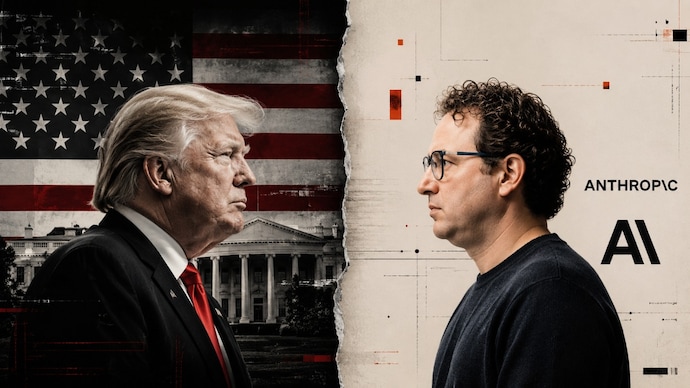
The US government has ordered Anthropic to suspend access to its newest and most powerful AI models, Claude Fable 5 and Mythos 5, for all foreign nationals, including Indians. The order has forced Anthropic to abruptly disable the models worldwide. According to the company, the move is linked to national security concerns raised by US authorities.
Read: US now treats advanced AI like it treats nuclear bomb technology
However, Anthropic says the evidence it was shown does not justify such a broad restriction. Even so, the company says it had no choice but to comply with the government directive while it works to get access restored.
The ban on Mythos 5 and Fable 5 is raising eyebrows around the world, as the decision marks a major shift in how governments regulate artificial intelligence. Until now, restrictions have largely focused on the chips and hardware used to build and run AI systems. However, this is for the first time that a government has restricted access to the AI software itself.
So what exactly happened? Why has the US government stepped in? And why are some people calling this a turning point in the global AI race? Here's a closer look at what led to the ban and what it could mean for users, companies and countries around the world.
1. What are the orders of the US government to Anthropic?
In an officially released public statement, Anthropic revealed it has received an export-control directive from the US government on June 12 ordering it to suspend access to Fable 5 and Mythos 5 for all foreign nationals. The restriction applies whether a person is inside or outside the United States and even covers foreign-national Anthropic employees.
As a result, Indians and other non-US citizens can no longer access the two models. Anthropic said the scope of the directive left it with little choice but to disable the models entirely while it works with authorities to resolve the issue.
“The net effect of this order is that we must abruptly disable Fable 5 and Mythos 5 for all our customers to ensure compliance. Access to all other Anthropic models will not be affected,” says the company.
2. Why did the US government ban foreigners from using Claude Fable 5 and Mythos 5?
According to Anthropic, US officials believe there may be a way to bypass, or "jailbreak", safeguards built into Fable 5. These safeguards are meant to stop users from accessing powerful cybersecurity capabilities contained within the underlying Mythos model.
The US government's concern is that advanced AI systems could be used to find software vulnerabilities or help carry out cyberattacks if they fall into the wrong hands.
The concerns also reportedly stem from a recent research conducted by Amazon researchers, according to The Wall Street Journal. The researchers allegedly used a series of prompts to get Anthropic's model to reveal information about a small number of software vulnerabilities. The findings were then reportedly shared with the US Department of Commerce, which later issued the order restricting access to the models.
Anthropic, however, says the issue was limited and involved only a handful of previously known vulnerabilities. The company argues that other publicly available AI models can identify similar flaws and that the problem does not justify a blanket ban.
However, US officials appear to disagree. They believe powerful AI models could be misused for cyberattacks, particularly against banks, government systems and other critical infrastructure.
Hence, the US authorities are now increasingly treating advanced AI models as a national security issue rather than just another technology product.
3. Anthropic says it is trying to restore the access
Anthropic says the government has not provided evidence of a broad or dangerous security failure.
According to the company, the alleged jailbreak was narrow, limited and capable only of identifying a small number of previously known software vulnerabilities. Anthropic also argued that other publicly available AI models can identify similar issues without requiring any bypass.
The company said it spent weeks testing Fable 5 with US government agencies, the UK's AI Safety Institute and independent researchers before launch. It claims no one discovered a universal jailbreak capable of broadly bypassing the model's safeguards.
Anthropic said it believes there has been a "misunderstanding" and is working to restore access as quickly as possible.
4. US government vs Anthropic
The order against Anthropic comes after months of growing tension between the company and parts of the Trump administration.
Earlier this year, Anthropic reportedly refused to allow its AI models to be used for domestic surveillance and fully autonomous weapons systems. The disagreement is said to have sparked a broader conflict with several government agencies and defence officials.
Anthropic is also challenging a Pentagon decision that labelled the company a "supply-chain risk". Adding to the stakes, the AI firm recently filed confidentially for an initial public offering (IPO), a move that could value it at nearly one trillion dollars, cementing its place as one of the world's most valuable AI startups.
5. Why does this matter for India and the rest of the world?
But why does this matter so much to India and the rest of the world? Because until now, US restrictions have largely focused on AI chips and semiconductor technology, particularly to limit China's access to advanced computing power.
By clamping down on Anthropic, however, Washington seems to have shifted its strategy, treating software access as an immediate national security issue.
In other words, it is no longer just about controlling the hardware that powers AI, governments are now actively deciding who can and cannot use the most powerful frontier software.
And this is raising alarm. Infact, Zoho founder Sridhar Vembu even called the restrictions a massive wake-up call for India, warning that "globalisation is dead" and that the country must rapidly build its own sovereign AI capabilities.
According to Vembu, countries can no longer assume they will always have access to the world's most advanced technologies. He argued that India should invest more heavily in home-grown AI research and make greater use of open-source models rather than relying entirely on foreign AI companies.
So what happens next?
For now, Anthropic says it is complying with the US directive and has disabled access to Fable 5 and Mythos 5 while discussions continue. The company maintains that the government's concerns are based on a narrow issue rather than a major security threat and hopes access can be restored.
However, the bigger question goes beyond Anthropic. The move suggests that advanced AI models may soon be treated much like semiconductors, technologies that governments consider too strategically important to leave entirely to the market. If that happens, countries such as India may have little choice but to accelerate and depend on their own AI ambitions to stay relevant.
The US government has ordered Anthropic to suspend access to its newest and most powerful AI models, Claude Fable 5 and Mythos 5, for all foreign nationals, including Indians. The order has forced Anthropic to abruptly disable the models worldwide. According to the company, the move is linked to national security concerns raised by US authorities.
Read: US now treats advanced AI like it treats nuclear bomb technology
However, Anthropic says the evidence it was shown does not justify such a broad restriction. Even so, the company says it had no choice but to comply with the government directive while it works to get access restored.
The ban on Mythos 5 and Fable 5 is raising eyebrows around the world, as the decision marks a major shift in how governments regulate artificial intelligence. Until now, restrictions have largely focused on the chips and hardware used to build and run AI systems. However, this is for the first time that a government has restricted access to the AI software itself.
So what exactly happened? Why has the US government stepped in? And why are some people calling this a turning point in the global AI race? Here's a closer look at what led to the ban and what it could mean for users, companies and countries around the world.
1. What are the orders of the US government to Anthropic?
In an officially released public statement, Anthropic revealed it has received an export-control directive from the US government on June 12 ordering it to suspend access to Fable 5 and Mythos 5 for all foreign nationals. The restriction applies whether a person is inside or outside the United States and even covers foreign-national Anthropic employees.
As a result, Indians and other non-US citizens can no longer access the two models. Anthropic said the scope of the directive left it with little choice but to disable the models entirely while it works with authorities to resolve the issue.
“The net effect of this order is that we must abruptly disable Fable 5 and Mythos 5 for all our customers to ensure compliance. Access to all other Anthropic models will not be affected,” says the company.
2. Why did the US government ban foreigners from using Claude Fable 5 and Mythos 5?
According to Anthropic, US officials believe there may be a way to bypass, or "jailbreak", safeguards built into Fable 5. These safeguards are meant to stop users from accessing powerful cybersecurity capabilities contained within the underlying Mythos model.
The US government's concern is that advanced AI systems could be used to find software vulnerabilities or help carry out cyberattacks if they fall into the wrong hands.
The concerns also reportedly stem from a recent research conducted by Amazon researchers, according to The Wall Street Journal. The researchers allegedly used a series of prompts to get Anthropic's model to reveal information about a small number of software vulnerabilities. The findings were then reportedly shared with the US Department of Commerce, which later issued the order restricting access to the models.
Anthropic, however, says the issue was limited and involved only a handful of previously known vulnerabilities. The company argues that other publicly available AI models can identify similar flaws and that the problem does not justify a blanket ban.
However, US officials appear to disagree. They believe powerful AI models could be misused for cyberattacks, particularly against banks, government systems and other critical infrastructure.
Hence, the US authorities are now increasingly treating advanced AI models as a national security issue rather than just another technology product.
3. Anthropic says it is trying to restore the access
Anthropic says the government has not provided evidence of a broad or dangerous security failure.
According to the company, the alleged jailbreak was narrow, limited and capable only of identifying a small number of previously known software vulnerabilities. Anthropic also argued that other publicly available AI models can identify similar issues without requiring any bypass.
The company said it spent weeks testing Fable 5 with US government agencies, the UK's AI Safety Institute and independent researchers before launch. It claims no one discovered a universal jailbreak capable of broadly bypassing the model's safeguards.
Anthropic said it believes there has been a "misunderstanding" and is working to restore access as quickly as possible.
4. US government vs Anthropic
The order against Anthropic comes after months of growing tension between the company and parts of the Trump administration.
Earlier this year, Anthropic reportedly refused to allow its AI models to be used for domestic surveillance and fully autonomous weapons systems. The disagreement is said to have sparked a broader conflict with several government agencies and defence officials.
Anthropic is also challenging a Pentagon decision that labelled the company a "supply-chain risk". Adding to the stakes, the AI firm recently filed confidentially for an initial public offering (IPO), a move that could value it at nearly one trillion dollars, cementing its place as one of the world's most valuable AI startups.
5. Why does this matter for India and the rest of the world?
But why does this matter so much to India and the rest of the world? Because until now, US restrictions have largely focused on AI chips and semiconductor technology, particularly to limit China's access to advanced computing power.
By clamping down on Anthropic, however, Washington seems to have shifted its strategy, treating software access as an immediate national security issue.
In other words, it is no longer just about controlling the hardware that powers AI, governments are now actively deciding who can and cannot use the most powerful frontier software.
And this is raising alarm. Infact, Zoho founder Sridhar Vembu even called the restrictions a massive wake-up call for India, warning that "globalisation is dead" and that the country must rapidly build its own sovereign AI capabilities.
According to Vembu, countries can no longer assume they will always have access to the world's most advanced technologies. He argued that India should invest more heavily in home-grown AI research and make greater use of open-source models rather than relying entirely on foreign AI companies.
So what happens next?
For now, Anthropic says it is complying with the US directive and has disabled access to Fable 5 and Mythos 5 while discussions continue. The company maintains that the government's concerns are based on a narrow issue rather than a major security threat and hopes access can be restored.
However, the bigger question goes beyond Anthropic. The move suggests that advanced AI models may soon be treated much like semiconductors, technologies that governments consider too strategically important to leave entirely to the market. If that happens, countries such as India may have little choice but to accelerate and depend on their own AI ambitions to stay relevant.

