US now treats advanced AI as nuclear bomb, hence ban on Anthropic Fable & Mythos
The US cutting off the access to Anthropic Mythos and Fable 5 has the potential to reshape the geo-politics, as well as how countries and organisations look at AI from the US-based companies. Or, as Sridhar Vembu from Zoho says, "globalisation is dead."
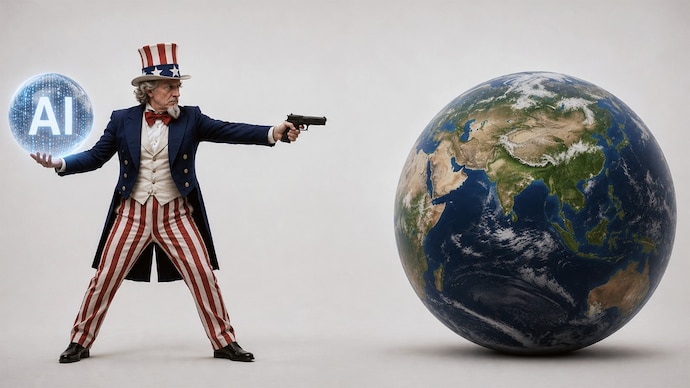
In the manner of the boy crying wolf, Anthropic CEO Dario Amodei has often made a case for AI to be treated like sensitive nuclear bomb technology. “AI is something around which all future geopolitical strategy must be shaped — like nuclear weapons,” he once wrote with his typical flair for hyperbole. On Friday night he got his wish after the Trump administration agreed. Although, what the US government did next was something Amodei did not like.
The US government outrightly banned Anthropic Fable 5 and Mythos, the two most advanced AI models in the world, for all foreigners due to national security reasons. Not even Anthropic employees, who are not US citizens, are now allowed to touch the AI model that they helped create. The boy who cried wolf has been left stunned. Anthropic in a statement said such a move should have been “transparent, fair, clear, and grounded in technical facts.” It noted, “This action does not adhere to those principles.”
In banning the advanced Anthropic AI models, the US government has virtually declared a war on the rest of the world, a war that looks somewhat like the non-proliferation efforts that the country undertakes for the nuclear bomb. It has also changed, arguably forever, how countries and organisations across would be pursuing advanced AI work in the coming months and years.
To highlight the implications of the US government move, Anthropic wrote, “if this standard (using which Fable 5 and Mythos have been banned) was applied across the industry, we believe it would essentially halt all new model deployments for all frontier model providers.”
While Anthropic, which gets the jolt at a time when it is planning to go for a $1 trillion IPO, sees the US ban on its AI model as a threat to its business prospects, the rest of the world is looking at it as Uncle Sam flexing his tech and military might. The US move to deny the rest of the world access to the most advanced AI model is going to fundamentally change the way countries look at AI models.
It is this sentiment that Zoho founder Sridhar Vembu captured in his “first thoughts” that he posted on X. “Technology is the ultimate weapon. National sovereignty, national security, all of it is now about technology,” he wrote. “Globalisation is dead and Bharat must find her own way ahead.”
Vembu is not alone in thinking this way about AI. For the last few years China is already working with the underlying hypothesis that those who lead the AI will also lead the world. Now, there is a chance that every country that can do so, will pursue an AI programme where they own the models and the way those models can be used. Not doing so could prove to be seriously detrimental to a country, just the way not pursuing nuclear weapons seems to have for many in the last two decades.
It is not yet proven that AI can replace humans at their jobs. And yet, even at this early stage, it has become clear that advanced AI models will give serious advantage to countries that can distill and use them in strategically important areas like defence. Tools like Mythos are already in use within the US military where they poke and probe digital systems of their adversaries to find loopholes. Other advanced AI models too are finding different use cases, enabling more granular surveillance to faster and more precise targeting during a war. We see a lot of this happening in the ongoing Ukraine and Iran wars.
In coming years as drone swarms and automated weapons, including smart robots, enter the scene, the importance of AI use will only grow. It will be a technology that will, as we see from what Palantir does, sit as a layer between humans and all their defensive and offensive weapons.
The US knows it all too well, and hence its heavy-handed ban hammer on Mythos and Fable 5. The country has maintained its military supremacy in the last 30 to 40 years due to its unmatched technical capabilities. The US has the best global surveillance network, it has the best targeting technology, it has the best missile defence systems, it has the most-advanced jet engines, it has the most capable agencies — NSA and NRO — that use almost alien-like technology to subdue their adversaries. All of this has been built using research and institutional knowledge accumulated over decades.
Models like Fable 5 and Mythos threaten to create a more level-playing field by making a lot of this knowledge more widely available. This is similar to how the nuclear bomb has a tendency to flatten military differences between two countries because once two countries have it and ability to deliver it, the MAD (mutually assured destruction) principle states that they are equal.
The advanced AI has potential to speed up research as well as act as a harness in places where skilled engineers and scientists might not be available. It can help average people create extraordinary systems. Dario Amodei warned of it in January 2026 in one of his long blogs — he loves writing long blogs. He wrote that AI “will break the correlation between ability and motive.” Now anyone with a motive, if they lack skills and discipline, will have the “capability level of the PhD virologist.”
I believe the US government worries about this particular aspect of AI, that it gives enough expertise and tools to smaller teams and nations to do things that they cannot do at the moment. For example, using AI a country like India or Iran may come up with material that allows them to create jet engines. Or that they may, using something like Mythos, guard themselves against the elite NSA hackers in a manner in which they currently cannot.
Essentially, if nuclear technology could lead to a proliferation of nuclear bombs, the AI tools like Mythos and Fable — and they are just the beginning — will lead to proliferation of everything, from advanced radar tech to novel materials research.
On Saturday the US made clear its stance that such proliferation cannot be allowed. At least, it will make every effort to limit the release of advanced AI. Now, the rest of the world needs to figure out how to navigate this new reality. Does it want to get into something like the Non-Proliferation Treaty? Or will it make sense for every country out there to start their own Manhattan Project? Do they want to rely on AI created within the US and then shared with them? Or do they want to own the tech, even if it is expensive to create and maintain?
In the coming months, the answers will come into sharper focus. But I bet that this weekend, in every serious and somewhat capable country, teams have started exploring possibilities of creating their own sovereign AI models instead of relying on what the US, OpenAI and Anthropic dole out to them.
In the manner of the boy crying wolf, Anthropic CEO Dario Amodei has often made a case for AI to be treated like sensitive nuclear bomb technology. “AI is something around which all future geopolitical strategy must be shaped — like nuclear weapons,” he once wrote with his typical flair for hyperbole. On Friday night he got his wish after the Trump administration agreed. Although, what the US government did next was something Amodei did not like.
The US government outrightly banned Anthropic Fable 5 and Mythos, the two most advanced AI models in the world, for all foreigners due to national security reasons. Not even Anthropic employees, who are not US citizens, are now allowed to touch the AI model that they helped create. The boy who cried wolf has been left stunned. Anthropic in a statement said such a move should have been “transparent, fair, clear, and grounded in technical facts.” It noted, “This action does not adhere to those principles.”
In banning the advanced Anthropic AI models, the US government has virtually declared a war on the rest of the world, a war that looks somewhat like the non-proliferation efforts that the country undertakes for the nuclear bomb. It has also changed, arguably forever, how countries and organisations across would be pursuing advanced AI work in the coming months and years.
To highlight the implications of the US government move, Anthropic wrote, “if this standard (using which Fable 5 and Mythos have been banned) was applied across the industry, we believe it would essentially halt all new model deployments for all frontier model providers.”
While Anthropic, which gets the jolt at a time when it is planning to go for a $1 trillion IPO, sees the US ban on its AI model as a threat to its business prospects, the rest of the world is looking at it as Uncle Sam flexing his tech and military might. The US move to deny the rest of the world access to the most advanced AI model is going to fundamentally change the way countries look at AI models.
It is this sentiment that Zoho founder Sridhar Vembu captured in his “first thoughts” that he posted on X. “Technology is the ultimate weapon. National sovereignty, national security, all of it is now about technology,” he wrote. “Globalisation is dead and Bharat must find her own way ahead.”
Vembu is not alone in thinking this way about AI. For the last few years China is already working with the underlying hypothesis that those who lead the AI will also lead the world. Now, there is a chance that every country that can do so, will pursue an AI programme where they own the models and the way those models can be used. Not doing so could prove to be seriously detrimental to a country, just the way not pursuing nuclear weapons seems to have for many in the last two decades.
It is not yet proven that AI can replace humans at their jobs. And yet, even at this early stage, it has become clear that advanced AI models will give serious advantage to countries that can distill and use them in strategically important areas like defence. Tools like Mythos are already in use within the US military where they poke and probe digital systems of their adversaries to find loopholes. Other advanced AI models too are finding different use cases, enabling more granular surveillance to faster and more precise targeting during a war. We see a lot of this happening in the ongoing Ukraine and Iran wars.
In coming years as drone swarms and automated weapons, including smart robots, enter the scene, the importance of AI use will only grow. It will be a technology that will, as we see from what Palantir does, sit as a layer between humans and all their defensive and offensive weapons.
The US knows it all too well, and hence its heavy-handed ban hammer on Mythos and Fable 5. The country has maintained its military supremacy in the last 30 to 40 years due to its unmatched technical capabilities. The US has the best global surveillance network, it has the best targeting technology, it has the best missile defence systems, it has the most-advanced jet engines, it has the most capable agencies — NSA and NRO — that use almost alien-like technology to subdue their adversaries. All of this has been built using research and institutional knowledge accumulated over decades.
Models like Fable 5 and Mythos threaten to create a more level-playing field by making a lot of this knowledge more widely available. This is similar to how the nuclear bomb has a tendency to flatten military differences between two countries because once two countries have it and ability to deliver it, the MAD (mutually assured destruction) principle states that they are equal.
The advanced AI has potential to speed up research as well as act as a harness in places where skilled engineers and scientists might not be available. It can help average people create extraordinary systems. Dario Amodei warned of it in January 2026 in one of his long blogs — he loves writing long blogs. He wrote that AI “will break the correlation between ability and motive.” Now anyone with a motive, if they lack skills and discipline, will have the “capability level of the PhD virologist.”
I believe the US government worries about this particular aspect of AI, that it gives enough expertise and tools to smaller teams and nations to do things that they cannot do at the moment. For example, using AI a country like India or Iran may come up with material that allows them to create jet engines. Or that they may, using something like Mythos, guard themselves against the elite NSA hackers in a manner in which they currently cannot.
Essentially, if nuclear technology could lead to a proliferation of nuclear bombs, the AI tools like Mythos and Fable — and they are just the beginning — will lead to proliferation of everything, from advanced radar tech to novel materials research.
On Saturday the US made clear its stance that such proliferation cannot be allowed. At least, it will make every effort to limit the release of advanced AI. Now, the rest of the world needs to figure out how to navigate this new reality. Does it want to get into something like the Non-Proliferation Treaty? Or will it make sense for every country out there to start their own Manhattan Project? Do they want to rely on AI created within the US and then shared with them? Or do they want to own the tech, even if it is expensive to create and maintain?
In the coming months, the answers will come into sharper focus. But I bet that this weekend, in every serious and somewhat capable country, teams have started exploring possibilities of creating their own sovereign AI models instead of relying on what the US, OpenAI and Anthropic dole out to them.

