Usernames come to WhatsApp, but why? Money definitely, privacy probably
Over 10 years after Mark Zuckerberg bought WhatsApp, the app still doesn't make him enough money. This could be the reason why the personal chat app is finally bringing usernames to it. WhatsApp cites privacy as the reason behind it, the reality could be more mundane and boring.
Mark Zuckerberg bought WhatsApp in 2014 by paying over $21 billion, making it one of the biggest purchases in the history of tech. Since then it has become the most used app in the world. Since then Zuckerberg has also struggled to make money from it. Now he seems to be getting a little impatient.
It is this Meta’s money trouble with WhatsApp that is behind the two most consequential decisions that the company seems to have taken in the last 10 days. One is the hiring of Kunal Shah, the founder of CRED, to lead WhatsApp. Zuckerberg probably believes that Shah, with his fintech chops honed in the cutthroat environs of the Indian app ecosystem, will succeed where Will Cathcart failed. And two, the announcement that WhatsApp is bringing usernames to the app.
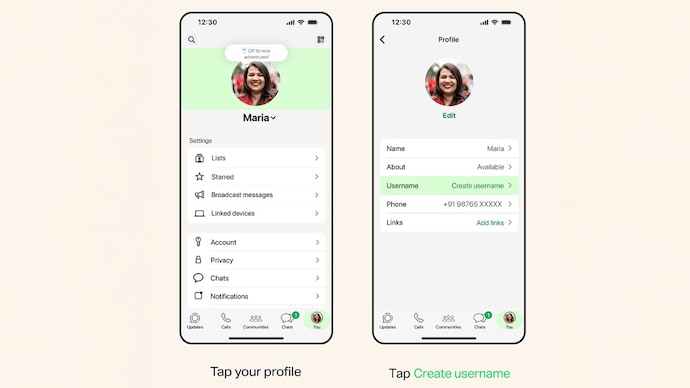
Finally. At last. Years after Telegram implemented it. Long after it has been proven that usernames on chat apps belong to the past, that a phone number is more than enough. Yet, here we are. WhatsApp finally has a provision for usernames.
It is obvious to ask why? WhatsApp has an explanation. The app says it is due to privacy reasons. “Usernames are our latest step to make WhatsApp even more private,” the company explains in a blog. “There's no directory to browse and no suggestions – people will need to know your exact username to contact you for the first time. To help control who can reach you on WhatsApp with your username, we've built an optional username key that others will need to know to message you.”
Sounds good and reasonable at the first glance. But we don’t live in 2010 or 2015. We live in 2026 and by now it is fairly logical, reasonable, and even necessary, to take anything that a tech company says with a pinch of salt and a dollop of scepticism. So, we must ask again: why is WhatsApp bringing usernames to the app?
Not just privacy but think money
Meta, which was earlier called Facebook, bought Instagram for around $1 billion in 2012. In 2026, the social media app has become the main revenue generator for Meta, with reports putting in Instagram annual revenue around $85 billion. In comparison, WhatsApp has an annual revenue of somewhere between $2 to $3 billion, a pittance compared to what it should be doing.
The problem is that WhatsApp, which began its journey as a self-contained and privacy-focussed personal messaging tool, is notoriously difficult to monetise. Most of its user data is behind the End-2-End encryption. The nature of the app is such that most people don’t want to use it for anything other than personal and private messages and calls.
More significantly, Meta cannot dilute the privacy and messaging aspect of the app too much or too soon because the utility that WhatsApp provides is hardly unique. Any decent messaging app can step into its shoes if users suddenly migrate to that.
As WhatsApp announced the username feature, many theories are floating around, trying to explain it. One such theory suggests that through common usernames WhatsApp is hoping to connect accounts of individuals across Instagram, Facebook and WhatsApp. This, I believe, can barely explain it because Meta already has this connection between different accounts through the phone number.
Someone else on X suggested that the username move is a way to defeat SIM-binding that the Indian government wants to implement for apps like WhatsApp. Again, not really. While the username option is here, for WhatsApp the phone number remains the key identifier of a user. Even on Telegram where usernames are allowed, a phone number is the primary identifier of an account. In other words, a phone number is, and will remain, mandatory. And if it is mandatory, SIM-binding can still be forced by any government.
Obviously, I am not privy to what Meta product managers are thinking or what scheme Zuckerberg and Shah are cooking with usernames. It is all a guess work, but the more I think about it, the more I believe that the move is tied to the monetisation plan. Zuckerberg probably believes that after 12 years it is high-time that Meta earns something from the world’s most-used app. Something needs to be done.
This is where usernames come into the picture. A phone number is great for targeted advertising, because it is unique. But WhatsApp cannot do such advertising because as soon as it inserts ads in a chat window, people are going to uninstall the app. Instead, it has to find more creative ways to bump up its revenue. And for creativity you need flexibility.
Compared to phone numbers, usernames allow for more flexibility, something that can be exploited to generate revenue. Again, I am spitballing. But I believe some of these ideas may end up appearing in WhatsApp in coming months and years.
WhatsApp will likely exploit the username feature on the business side of things. There is even some hint in its blog. At one point, it writes: “We know that some people like creators, small businesses, and organisations may want to maintain a consistent presence online.” Hence the username.
Because a number is always verified through an OTP, the potential to charge money for authenticity is limited there. But a username, at least in the case of a business, will need to be verified through paperwork. More so when similar sounding usernames have potential for confusion and impersonation. This creates potential to charge a certain price or subscription fee, similar to how X aka Twitter gives organisations the golden badge at a price of at least $200 per month.
But a verification of a user name for business is a rather basic idea. I believe that WhatsApp is thinking far beyond it. The flexibility that usernames provide can be useful in a number of use cases. Here are three:
1- Imagine you run a company that does a lot of customer outreach, business, and support on WhatsApp. You have 20 employees, from sales to product support, all using the same number and same identity to connect with customers. There is no identifier between the different chats and employees, except the personal signature that an employee may or may not leave in their messages. Usernames solve this issue. Once a company is verified, it can create N number of usernames under one single phone number and verify each one of them with its own verified badge. It simplifies managing the business on WhatsApp.
2- Extend this to AI agents now. We know that AI agents are already here and every platform — and WhatsApp — is looking to integrate them. Currently, I believe that a third-party AI agent on WhatsApp must function through a phone number tied to it. This is not an approach that is going to work. The way to bring in AI bots on the platform would be through usernames. This too could be a service in future where WhatsApp may look to monetise by charging a fee for every bot a user or a business creates.
3- There is another area where usernames can be very handy — anonymity. Anonymity is not needed in personal chats, not even in dating chats. Privacy is needed but not anonymity. Instead, it is needed in group communication.
Again, it is something where WhatsApp has dropped some hints. In its blog, it writes, “Sometimes you just want to chat without handing over your digits. This is also true for group conversations. You want to join the parent chat for the soccer team but you’re not ready to give your phone number to people you've never met.”
I feel WhatsApp wants to monetise communities and groups, particularly the fandoms. It already has Channels, but those are one-way virtual spaces. Instead, it wants two-way communities, say a place where a content creator can go live and then interact with people. To ensure that people participate in such an interaction freely, WhatsApp needs a way to ensure that people can have anonymity. This anonymity is easy to implement through usernames.
This is not to say that WhatsApp is not honest about the privacy aspect of the usernames. It likely is. The feature offers some advantages, and some disadvantages, to individual users. But the move also looks way too significant with WhatsApp pushing it too hard relative to its privacy benefit to users. The privacy benefit, that sharing your username instead of your number like Aamir Khan suggests in the WhatsApp ad, is tangential as well as full of friction in terms of user experience.
There has to be something more to it. While I have suggested three use cases, there are bound to be a few more. For example, usernames potentially allows WhatsApp to create a business directory and then charge business to be included in it. It may even offer business preferential treatment in such a directory by asking them to pay for “sponsored ad”. Sure, no directory or typing suggestion for individual users as WhatsApp says, but it doesn’t rule out directory for business.
We will see what Zuckerberg and Shah are cooking towards the end of the year when the feature gets implemented. But I will eat my hat if the move turns out to be only about privacy and nothing else.
Mark Zuckerberg bought WhatsApp in 2014 by paying over $21 billion, making it one of the biggest purchases in the history of tech. Since then it has become the most used app in the world. Since then Zuckerberg has also struggled to make money from it. Now he seems to be getting a little impatient.
It is this Meta’s money trouble with WhatsApp that is behind the two most consequential decisions that the company seems to have taken in the last 10 days. One is the hiring of Kunal Shah, the founder of CRED, to lead WhatsApp. Zuckerberg probably believes that Shah, with his fintech chops honed in the cutthroat environs of the Indian app ecosystem, will succeed where Will Cathcart failed. And two, the announcement that WhatsApp is bringing usernames to the app.
Finally. At last. Years after Telegram implemented it. Long after it has been proven that usernames on chat apps belong to the past, that a phone number is more than enough. Yet, here we are. WhatsApp finally has a provision for usernames.
It is obvious to ask why? WhatsApp has an explanation. The app says it is due to privacy reasons. “Usernames are our latest step to make WhatsApp even more private,” the company explains in a blog. “There's no directory to browse and no suggestions – people will need to know your exact username to contact you for the first time. To help control who can reach you on WhatsApp with your username, we've built an optional username key that others will need to know to message you.”
Sounds good and reasonable at the first glance. But we don’t live in 2010 or 2015. We live in 2026 and by now it is fairly logical, reasonable, and even necessary, to take anything that a tech company says with a pinch of salt and a dollop of scepticism. So, we must ask again: why is WhatsApp bringing usernames to the app?
Not just privacy but think money
Meta, which was earlier called Facebook, bought Instagram for around $1 billion in 2012. In 2026, the social media app has become the main revenue generator for Meta, with reports putting in Instagram annual revenue around $85 billion. In comparison, WhatsApp has an annual revenue of somewhere between $2 to $3 billion, a pittance compared to what it should be doing.
The problem is that WhatsApp, which began its journey as a self-contained and privacy-focussed personal messaging tool, is notoriously difficult to monetise. Most of its user data is behind the End-2-End encryption. The nature of the app is such that most people don’t want to use it for anything other than personal and private messages and calls.
More significantly, Meta cannot dilute the privacy and messaging aspect of the app too much or too soon because the utility that WhatsApp provides is hardly unique. Any decent messaging app can step into its shoes if users suddenly migrate to that.
As WhatsApp announced the username feature, many theories are floating around, trying to explain it. One such theory suggests that through common usernames WhatsApp is hoping to connect accounts of individuals across Instagram, Facebook and WhatsApp. This, I believe, can barely explain it because Meta already has this connection between different accounts through the phone number.
Someone else on X suggested that the username move is a way to defeat SIM-binding that the Indian government wants to implement for apps like WhatsApp. Again, not really. While the username option is here, for WhatsApp the phone number remains the key identifier of a user. Even on Telegram where usernames are allowed, a phone number is the primary identifier of an account. In other words, a phone number is, and will remain, mandatory. And if it is mandatory, SIM-binding can still be forced by any government.
Obviously, I am not privy to what Meta product managers are thinking or what scheme Zuckerberg and Shah are cooking with usernames. It is all a guess work, but the more I think about it, the more I believe that the move is tied to the monetisation plan. Zuckerberg probably believes that after 12 years it is high-time that Meta earns something from the world’s most-used app. Something needs to be done.
This is where usernames come into the picture. A phone number is great for targeted advertising, because it is unique. But WhatsApp cannot do such advertising because as soon as it inserts ads in a chat window, people are going to uninstall the app. Instead, it has to find more creative ways to bump up its revenue. And for creativity you need flexibility.
Compared to phone numbers, usernames allow for more flexibility, something that can be exploited to generate revenue. Again, I am spitballing. But I believe some of these ideas may end up appearing in WhatsApp in coming months and years.
WhatsApp will likely exploit the username feature on the business side of things. There is even some hint in its blog. At one point, it writes: “We know that some people like creators, small businesses, and organisations may want to maintain a consistent presence online.” Hence the username.
Because a number is always verified through an OTP, the potential to charge money for authenticity is limited there. But a username, at least in the case of a business, will need to be verified through paperwork. More so when similar sounding usernames have potential for confusion and impersonation. This creates potential to charge a certain price or subscription fee, similar to how X aka Twitter gives organisations the golden badge at a price of at least $200 per month.
But a verification of a user name for business is a rather basic idea. I believe that WhatsApp is thinking far beyond it. The flexibility that usernames provide can be useful in a number of use cases. Here are three:
1- Imagine you run a company that does a lot of customer outreach, business, and support on WhatsApp. You have 20 employees, from sales to product support, all using the same number and same identity to connect with customers. There is no identifier between the different chats and employees, except the personal signature that an employee may or may not leave in their messages. Usernames solve this issue. Once a company is verified, it can create N number of usernames under one single phone number and verify each one of them with its own verified badge. It simplifies managing the business on WhatsApp.
2- Extend this to AI agents now. We know that AI agents are already here and every platform — and WhatsApp — is looking to integrate them. Currently, I believe that a third-party AI agent on WhatsApp must function through a phone number tied to it. This is not an approach that is going to work. The way to bring in AI bots on the platform would be through usernames. This too could be a service in future where WhatsApp may look to monetise by charging a fee for every bot a user or a business creates.
3- There is another area where usernames can be very handy — anonymity. Anonymity is not needed in personal chats, not even in dating chats. Privacy is needed but not anonymity. Instead, it is needed in group communication.
Again, it is something where WhatsApp has dropped some hints. In its blog, it writes, “Sometimes you just want to chat without handing over your digits. This is also true for group conversations. You want to join the parent chat for the soccer team but you’re not ready to give your phone number to people you've never met.”
I feel WhatsApp wants to monetise communities and groups, particularly the fandoms. It already has Channels, but those are one-way virtual spaces. Instead, it wants two-way communities, say a place where a content creator can go live and then interact with people. To ensure that people participate in such an interaction freely, WhatsApp needs a way to ensure that people can have anonymity. This anonymity is easy to implement through usernames.
This is not to say that WhatsApp is not honest about the privacy aspect of the usernames. It likely is. The feature offers some advantages, and some disadvantages, to individual users. But the move also looks way too significant with WhatsApp pushing it too hard relative to its privacy benefit to users. The privacy benefit, that sharing your username instead of your number like Aamir Khan suggests in the WhatsApp ad, is tangential as well as full of friction in terms of user experience.
There has to be something more to it. While I have suggested three use cases, there are bound to be a few more. For example, usernames potentially allows WhatsApp to create a business directory and then charge business to be included in it. It may even offer business preferential treatment in such a directory by asking them to pay for “sponsored ad”. Sure, no directory or typing suggestion for individual users as WhatsApp says, but it doesn’t rule out directory for business.
We will see what Zuckerberg and Shah are cooking towards the end of the year when the feature gets implemented. But I will eat my hat if the move turns out to be only about privacy and nothing else.

