AI access becomes hot topic of discussion at G7 summit, trusted partners may soon get access to US models like Mythos
At the G7 summit, leaders discussed letting trusted partners access Anthropic's advanced AI models. Countries are seeking AI access to strengthen cybersecurity against rivals like China.
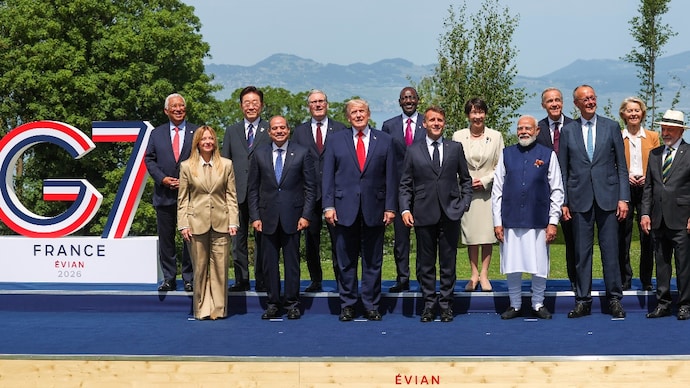
Just days after the US government reportedly asked AI company Anthropic to block access to its most advanced AI models, Fable 5 and Mythos 5, for all foreign nationals, Washington may already be looking for exceptions. Leaders attending the annual summit of the Group of Seven wealthy nations in France reportedly discussed a plan to grant select "trusted partners" access to advanced AI models.
The discussions reportedly took place mainly with U.S. Commerce Secretary Howard Lutnick on the sidelines of the opening G7 summit dinner on Monday in the French lakeside resort of Evian-les-Bains.
According to a Reuters report, the "trusted partners" could be countries or companies, said a second source who declined to be named because the talks were ongoing.
An agreement providing broader access to advanced models would allow G7 countries to use the models to develop stronger cybersecurity defences against rivals such as China.
A balancing act between security and cooperation
A Trump White House official said in a statement to Reuters that the president's team has "an open line of communication with our allies, and we remain committed to addressing national security concerns with Anthropic's model."
The statement suggests Washington is not ruling out broader access entirely, but wants to control who gets it and under what conditions.
AI giants gather at G7
Meanwhile, AI executives from Anthropic, OpenAI and Google, all of which are developing highly advanced AI models, are expected to attend a working lunch on Wednesday to discuss technology issues, including regulation, AI infrastructure and networks, Reuters previously reported.
The discussions are taking place as governments increasingly worry that the same AI models that can strengthen cybersecurity could also make cyberattacks more dangerous.
Cybersecurity experts believe Anthropic's Mythos, a model designed to find flaws in computer code, may turbocharge attacks on banks' technology systems. At the same time, many countries, including India, are seeking access to Mythos to study the model's implications.
That is what makes the debate so complicated.
Before Trump's order, Anthropic had given access to Mythos to select organisations in more than 15 countries so they could use the product to scan their computer systems for vulnerabilities, according to a company statement.
Just days after the US government reportedly asked AI company Anthropic to block access to its most advanced AI models, Fable 5 and Mythos 5, for all foreign nationals, Washington may already be looking for exceptions. Leaders attending the annual summit of the Group of Seven wealthy nations in France reportedly discussed a plan to grant select "trusted partners" access to advanced AI models.
The discussions reportedly took place mainly with U.S. Commerce Secretary Howard Lutnick on the sidelines of the opening G7 summit dinner on Monday in the French lakeside resort of Evian-les-Bains.
According to a Reuters report, the "trusted partners" could be countries or companies, said a second source who declined to be named because the talks were ongoing.
An agreement providing broader access to advanced models would allow G7 countries to use the models to develop stronger cybersecurity defences against rivals such as China.
A balancing act between security and cooperation
A Trump White House official said in a statement to Reuters that the president's team has "an open line of communication with our allies, and we remain committed to addressing national security concerns with Anthropic's model."
The statement suggests Washington is not ruling out broader access entirely, but wants to control who gets it and under what conditions.
AI giants gather at G7
Meanwhile, AI executives from Anthropic, OpenAI and Google, all of which are developing highly advanced AI models, are expected to attend a working lunch on Wednesday to discuss technology issues, including regulation, AI infrastructure and networks, Reuters previously reported.
The discussions are taking place as governments increasingly worry that the same AI models that can strengthen cybersecurity could also make cyberattacks more dangerous.
Cybersecurity experts believe Anthropic's Mythos, a model designed to find flaws in computer code, may turbocharge attacks on banks' technology systems. At the same time, many countries, including India, are seeking access to Mythos to study the model's implications.
That is what makes the debate so complicated.
Before Trump's order, Anthropic had given access to Mythos to select organisations in more than 15 countries so they could use the product to scan their computer systems for vulnerabilities, according to a company statement.

