An electrical engineer turns neurosurgeon, now fitting chips in human brains
An MIT-trained electrical engineer who became a neurosurgeon is now helping implant brain-computer interface devices into patients, bringing futuristic brain-chip technology closer to everyday medical use.
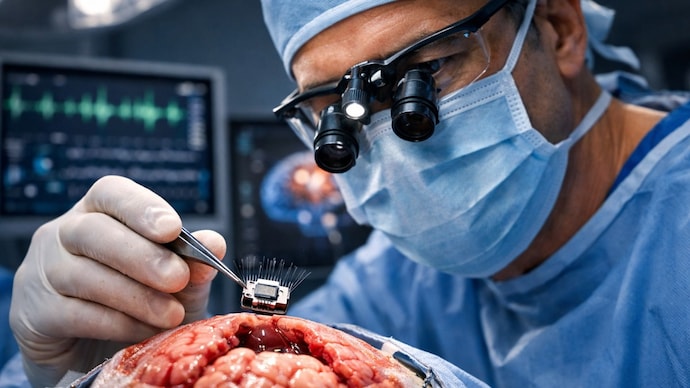
Before brain chips became one of the most talked-about areas in medical technology, Dr. Matthew Willsey was studying electrical engineering at MIT. Today, he is helping implant brain-computer interface (BCI) devices into human brains, a technology that many believe could one day restore communication and movement for people living with severe neurological conditions.
According to Business Insider, Willsey's journey into neurosurgery did not begin in a hospital. He first trained as an electrical engineer, earning both his undergraduate and master's degrees from the Massachusetts Institute of Technology (MIT). His research focused on digital signal processing under renowned professor Alan Oppenheim, one of the pioneers of the field.
Signal processing involves extracting useful information from complex signals, a concept that later became central to his work on brain-computer interfaces. According to Willsey, the turning point came around 2009 when he watched a demonstration showing a person controlling a computer cursor and robotic arm using electrodes implanted in the brain.
"I remember thinking, 'That is the coolest thing I've ever seen in my life,'" he recalled.
That moment pushed him towards medicine. After spending time shadowing a neurosurgeon in Texas, he realised that combining engineering with brain surgery offered an opportunity to work on technologies that could directly improve people's lives.
He later attended Baylor College of Medicine, completed a neurosurgery residency at the University of Michigan, and earned a PhD focused on brain-computer interfaces. Today, his clinical work centres on functional neurosurgery, including deep brain stimulation and epilepsy treatment, while his research lab continues to explore BCI technology.
Helping people communicate again
Brain-computer interfaces are designed for patients whose brains remain functional but who have lost the ability to communicate or move because the connection between the brain and the body has been damaged.
Patients with conditions such as ALS may know exactly what they want to say, but are unable to speak. A BCI records neural activity, identifies patterns linked to a person's intentions, and converts those signals into digital commands. These commands can then be used to type text, move a computer cursor, or even control robotic devices.
The technology has attracted worldwide attention as companies race to commercialise it. Elon Musk's company, Neuralink, is currently conducting human trials in the United States, while China recently approved what has been described as the world's first commercially available brain-chip system called NEO.
Willsey recently took part in implanting a brain-computer interface developed by Paradromics, a company building fully implantable systems designed for long-term use.
Unlike earlier research devices that required wires to pass through the skin and connect to external computers, the Paradromics system is intended to operate entirely from inside the body. The goal is to allow patients to use the technology without being physically connected to external equipment.
The procedure begins with a craniotomy, where surgeons temporarily remove a section of the skull to access the brain. Using imaging systems and surgical navigation tools, doctors identify the exact area where the implant should be placed.
The electrode array is then positioned and inserted into the brain's cortex. After securing the implant, surgeons reconnect the protective layers surrounding the brain and replace the bone. A separate transceiver is implanted in the patient's chest, with a lead running beneath the skin to connect the two components.
The entire operation takes around four hours. According to Willsey, the procedure itself is not dramatically different from surgeries neurosurgeons already perform. That is important because widespread adoption will require doctors to learn the technique without extensive retraining.
"If you want to scale BCI technology, you want neurosurgeons to be able to pick it up very easily," he said.
Despite years of training and research, Willsey admits there were moments during the operation when the significance of the technology became impossible to ignore. As the implant was being placed on the patient's brain, he found himself reflecting on what the procedure could mean for the future of medicine. However, he quickly shifted his focus back to patient safety, which remains the top priority during any surgery. Only after the patient recovered successfully did the full impact sink in.
"Wow, I can't believe we're at this point now where we have somebody implanted with a novel brain-computer interface," he said.
Before brain chips became one of the most talked-about areas in medical technology, Dr. Matthew Willsey was studying electrical engineering at MIT. Today, he is helping implant brain-computer interface (BCI) devices into human brains, a technology that many believe could one day restore communication and movement for people living with severe neurological conditions.
According to Business Insider, Willsey's journey into neurosurgery did not begin in a hospital. He first trained as an electrical engineer, earning both his undergraduate and master's degrees from the Massachusetts Institute of Technology (MIT). His research focused on digital signal processing under renowned professor Alan Oppenheim, one of the pioneers of the field.
Signal processing involves extracting useful information from complex signals, a concept that later became central to his work on brain-computer interfaces. According to Willsey, the turning point came around 2009 when he watched a demonstration showing a person controlling a computer cursor and robotic arm using electrodes implanted in the brain.
"I remember thinking, 'That is the coolest thing I've ever seen in my life,'" he recalled.
That moment pushed him towards medicine. After spending time shadowing a neurosurgeon in Texas, he realised that combining engineering with brain surgery offered an opportunity to work on technologies that could directly improve people's lives.
He later attended Baylor College of Medicine, completed a neurosurgery residency at the University of Michigan, and earned a PhD focused on brain-computer interfaces. Today, his clinical work centres on functional neurosurgery, including deep brain stimulation and epilepsy treatment, while his research lab continues to explore BCI technology.
Helping people communicate again
Brain-computer interfaces are designed for patients whose brains remain functional but who have lost the ability to communicate or move because the connection between the brain and the body has been damaged.
Patients with conditions such as ALS may know exactly what they want to say, but are unable to speak. A BCI records neural activity, identifies patterns linked to a person's intentions, and converts those signals into digital commands. These commands can then be used to type text, move a computer cursor, or even control robotic devices.
The technology has attracted worldwide attention as companies race to commercialise it. Elon Musk's company, Neuralink, is currently conducting human trials in the United States, while China recently approved what has been described as the world's first commercially available brain-chip system called NEO.
Willsey recently took part in implanting a brain-computer interface developed by Paradromics, a company building fully implantable systems designed for long-term use.
Unlike earlier research devices that required wires to pass through the skin and connect to external computers, the Paradromics system is intended to operate entirely from inside the body. The goal is to allow patients to use the technology without being physically connected to external equipment.
The procedure begins with a craniotomy, where surgeons temporarily remove a section of the skull to access the brain. Using imaging systems and surgical navigation tools, doctors identify the exact area where the implant should be placed.
The electrode array is then positioned and inserted into the brain's cortex. After securing the implant, surgeons reconnect the protective layers surrounding the brain and replace the bone. A separate transceiver is implanted in the patient's chest, with a lead running beneath the skin to connect the two components.
The entire operation takes around four hours. According to Willsey, the procedure itself is not dramatically different from surgeries neurosurgeons already perform. That is important because widespread adoption will require doctors to learn the technique without extensive retraining.
"If you want to scale BCI technology, you want neurosurgeons to be able to pick it up very easily," he said.
Despite years of training and research, Willsey admits there were moments during the operation when the significance of the technology became impossible to ignore. As the implant was being placed on the patient's brain, he found himself reflecting on what the procedure could mean for the future of medicine. However, he quickly shifted his focus back to patient safety, which remains the top priority during any surgery. Only after the patient recovered successfully did the full impact sink in.
"Wow, I can't believe we're at this point now where we have somebody implanted with a novel brain-computer interface," he said.

