From cybersecurity to biology and chemistry, all the things Claude Fable 5 AI can't do for you
Anthropic has launched Claude Fable 5 for general use with a new safety system. The model blocks or reroutes risky cyber, biology and distillation requests as capacity limits shape access.
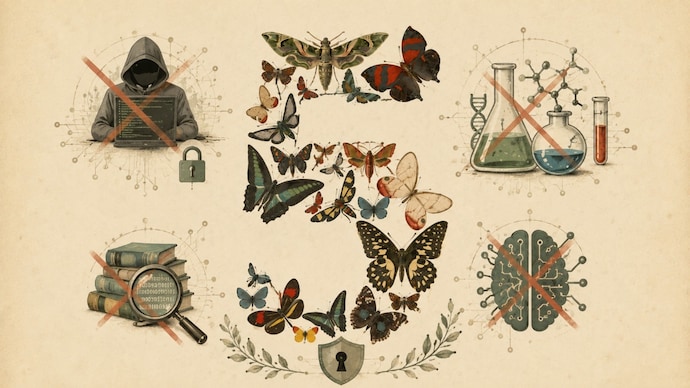
Anthropic has just launched Claude Fable 5, a new AI model that the company describes as a Mythos-class system made available for general use. What makes the launch particularly interesting is that Anthropic says Fable 5 exceeds the capabilities of all of its generally available AI models to date. According to the company, the model has delivered exceptional results across a wide range of AI benchmarks and has shown strong performance in software engineering, knowledge work, scientific research, vision tasks and many other areas.
But there is a catch.
Anthropic says the model's advanced capabilities also come with risks that could potentially be misused to cause serious harm. As a result, the company has launched Fable 5 with a new set of safeguards designed to reliably prevent misuse, even in cases involving sophisticated attempts to bypass the model's restrictions.
The company says these safeguards are intended to prevent Fable 5 from providing information or advice that could help malicious actors cause serious harm that they could not easily obtain elsewhere.
To achieve this, Anthropic has introduced a new layer of classifiers: separate AI systems that monitor requests, detect potential misuse, identify jailbreak attempts and block unsafe responses before they are generated.
In some sensitive areas, Fable 5 does not respond at all. Instead, requests are automatically routed to Claude Opus 4.8, which operates under a different safety framework.
So what exactly can Anthropic's newest AI model not do?
1. It won't help you with offensive cybersecurity tasks
One of the biggest concerns surrounding highly capable AI systems is their potential use in cyberattacks. Mythos-class models are known for their ability to discover and exploit software vulnerabilities. Because of this, Anthropic says it has implemented specialized cybersecurity safeguards in Fable 5.
The company claims its cybersecurity classifiers cover a broad range of exploitation and offensive cyber activities. If users attempt to use Fable 5 for these purposes, the safeguards are designed to stop the model from making meaningful progress on such tasks.
In simple terms, if someone tries to use Fable 5 as a hacking assistant, Anthropic wants the model to refuse.
2. It won't freely assist with biology and chemistry research
Anthropic has also expanded restrictions around biology and chemistry. Previous Claude models already blocked a relatively narrow set of bioweapons-related requests. However, the company says Fable 5's stronger scientific capabilities required a broader approach.
Anthropic argues that well-resourced malicious actors could potentially use advanced AI systems to accelerate highly risky biological research. At the same time, modern AI models are becoming increasingly capable of carrying out real-world scientific tasks.
As a safeguard, most biology- and chemistry-related requests are routed away from Fable 5 and handled instead by Claude Opus 4.8. The goal is to reduce the chances of the model being used in ways that could create significant biological or chemical risks.
3. It won't help companies copy its abilities
The third restriction targets a practice known as AI distillation. Distillation is an open secret within the AI industry. It involves using one model's outputs to help train another model, allowing companies to replicate some of a competitor's capabilities.
Anthropic says it has specifically restricted attempts to distill Fable 5's abilities. The company argues that preventing distillation is important because it reduces the risk of powerful AI capabilities spreading into systems that may not have the same safeguards or safety controls.
In other words, Anthropic wants to make sure that if Fable 5's frontier-level abilities are copied, they are not reproduced without the protections that accompany the original model.
What will Claude Fable 5 cost?
Anthropic is offering both Fable 5 at $10 per million input tokens. The company is also making Fable 5 available at no additional cost on its Pro, Max, Team and seat-based Enterprise plans for a limited period. Users on these plans can access the model from now until June 22 without paying extra.
However, that arrangement is temporary.
Starting June 23, Anthropic will remove Fable 5 from those subscription plans. Users who want to continue using the model after that date will need to spend usage credits.
The company says the temporary arrangement is largely tied to capacity constraints. If enough computing capacity is available, Anthropic may extend the period during which Fable 5 is included with subscriptions.
Anthropic has also said that its long-term goal is to bring Fable 5 back as a standard part of its subscription plans once sufficient capacity becomes available. The company says it intends to do this as quickly as possible.
Anthropic has just launched Claude Fable 5, a new AI model that the company describes as a Mythos-class system made available for general use. What makes the launch particularly interesting is that Anthropic says Fable 5 exceeds the capabilities of all of its generally available AI models to date. According to the company, the model has delivered exceptional results across a wide range of AI benchmarks and has shown strong performance in software engineering, knowledge work, scientific research, vision tasks and many other areas.
But there is a catch.
Anthropic says the model's advanced capabilities also come with risks that could potentially be misused to cause serious harm. As a result, the company has launched Fable 5 with a new set of safeguards designed to reliably prevent misuse, even in cases involving sophisticated attempts to bypass the model's restrictions.
The company says these safeguards are intended to prevent Fable 5 from providing information or advice that could help malicious actors cause serious harm that they could not easily obtain elsewhere.
To achieve this, Anthropic has introduced a new layer of classifiers: separate AI systems that monitor requests, detect potential misuse, identify jailbreak attempts and block unsafe responses before they are generated.
In some sensitive areas, Fable 5 does not respond at all. Instead, requests are automatically routed to Claude Opus 4.8, which operates under a different safety framework.
So what exactly can Anthropic's newest AI model not do?
1. It won't help you with offensive cybersecurity tasks
One of the biggest concerns surrounding highly capable AI systems is their potential use in cyberattacks. Mythos-class models are known for their ability to discover and exploit software vulnerabilities. Because of this, Anthropic says it has implemented specialized cybersecurity safeguards in Fable 5.
The company claims its cybersecurity classifiers cover a broad range of exploitation and offensive cyber activities. If users attempt to use Fable 5 for these purposes, the safeguards are designed to stop the model from making meaningful progress on such tasks.
In simple terms, if someone tries to use Fable 5 as a hacking assistant, Anthropic wants the model to refuse.
2. It won't freely assist with biology and chemistry research
Anthropic has also expanded restrictions around biology and chemistry. Previous Claude models already blocked a relatively narrow set of bioweapons-related requests. However, the company says Fable 5's stronger scientific capabilities required a broader approach.
Anthropic argues that well-resourced malicious actors could potentially use advanced AI systems to accelerate highly risky biological research. At the same time, modern AI models are becoming increasingly capable of carrying out real-world scientific tasks.
As a safeguard, most biology- and chemistry-related requests are routed away from Fable 5 and handled instead by Claude Opus 4.8. The goal is to reduce the chances of the model being used in ways that could create significant biological or chemical risks.
3. It won't help companies copy its abilities
The third restriction targets a practice known as AI distillation. Distillation is an open secret within the AI industry. It involves using one model's outputs to help train another model, allowing companies to replicate some of a competitor's capabilities.
Anthropic says it has specifically restricted attempts to distill Fable 5's abilities. The company argues that preventing distillation is important because it reduces the risk of powerful AI capabilities spreading into systems that may not have the same safeguards or safety controls.
In other words, Anthropic wants to make sure that if Fable 5's frontier-level abilities are copied, they are not reproduced without the protections that accompany the original model.
What will Claude Fable 5 cost?
Anthropic is offering both Fable 5 at $10 per million input tokens. The company is also making Fable 5 available at no additional cost on its Pro, Max, Team and seat-based Enterprise plans for a limited period. Users on these plans can access the model from now until June 22 without paying extra.
However, that arrangement is temporary.
Starting June 23, Anthropic will remove Fable 5 from those subscription plans. Users who want to continue using the model after that date will need to spend usage credits.
The company says the temporary arrangement is largely tied to capacity constraints. If enough computing capacity is available, Anthropic may extend the period during which Fable 5 is included with subscriptions.
Anthropic has also said that its long-term goal is to bring Fable 5 back as a standard part of its subscription plans once sufficient capacity becomes available. The company says it intends to do this as quickly as possible.

